


Cashew Nut Oil Improves Lipid Metabolism and Fat Liver Deposition in High-Fat Diet-Fed C57BL/6J Mice
Marcella Duarte Villas Mishima, Andressa Ladeira Bernardes, Carlos Alexandre Pinheiro, Luisa Gouveia Lana, Iasmim Xisto Campos, Valéria Silva de Lana, Izabela Maria Montezano de Carvalho, Patrícia Fontes Pinheiro, Renata Celi Lopes Toledo, Ana Paula Dionísio, Helen Hermana Hermsdorff, Maria do Carmo Gouveia Peluzio
Lipids; 2026 Jan; 61(1):121-132. doi: 10.1002/lipd.70015.
Abstract
Cashew nut oil adds value to the production chain of this Brazilian oilseed. It is a good source of monounsaturated and polyunsaturated fatty acids and bioactive compounds, such as phenolics. This study investigated the effects of cashew nut oil on the metabolism of animals subjected to a high-fat diet. C57BL/6J mice were fed a high-fat diet (12 weeks), then switched to diets containing cashew nut oil, soybean oil, or lard (12 weeks). Diets were characterized for their fatty acid profile. General parameters, metabolic markers, oxidative stress, gene expression, and liver steatosis were evaluated. Oleic acid was predominant in the cashew nut oil-added diet, linoleic acid in the soybean oil-added diet, and palmitic acid in the lard-added diet. Cashew nut oil reduced blood glucose, triglycerides, uric acid, and liver steatosis, and increased SOD expression and activity and catalase activity. Soybean oil reduced blood glucose, total cholesterol, LDL cholesterol, triglycerides, and liver steatosis. Both vegetable oils, rich in unsaturated fatty acids, demonstrated more benefits than animal fat. Cashew nut oil effects may be mediated by the reduction of hepatic fat accumulation and oxidative stress, leading to lower triglyceride levels, improved insulin signaling, and decreased uric acid, probably due to its fatty acid composition, rich in oleic acid. Phenolic compounds may enhance its antioxidant capacity. The quality of fatty acids and the bioactive compounds is a determinant of the metabolic effect of oils. Cashew nut oil may improve lipid metabolism, reduce liver steatosis, and enhance antioxidant effects.
See https://pubmed.ncbi.nlm.nih.gov/41103188/
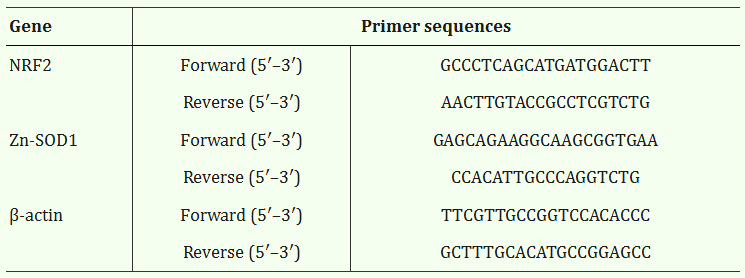
Table 1: Sequence of primers used in the RT‐PCR analysis.
Views: 107