


News & Events
News & Events
Unmasking Tomato Spotted Wilt Virus in Peanuts: From Nucleocapsid Protein Sequence and Localization to Practical Management in Alabama
Thursday, 26/03/2026 | 08:24:01
In 2020, an evaluation of the basal level of incidence of tomato spotted wilt (TSW) in peanut was initiated in Alabama. This was done to understand the viral sequence divergence of tomato spotted wilt virus (TSWV) in a heavily managed system. From 2021 to 2023, 172 leaf samples were collected from peanut plants exhibiting symptoms of TSW from Brewton, Fairhope, and Headland, AL, to investigate genetic changes
NGT-1 Tomato and Eggplant Blooming in the Italian Spring
Thursday, 26/03/2026 | 08:22:02
A new agricultural milestone is happening in Italy this spring as NGT-1 Solanaceae plants, including innovative varieties of tomatoes and eggplants, begin their seasonal bloom. These plants, developed using New Genomic Techniques (NGTs), represent a significant step forward for European sustainable farming. CREA (Council for Agricultural Research and Economics), the largest Italian public research institution in agriculture
Localized nexus solutions could offer a global blueprint for agricultural waste
Thursday, 26/03/2026 | 08:21:02
In the lush agricultural heartlands of Southern Brazil, a crisis is gradually building, as the region becomes a victim of its own success. The state of Paraná is a livestock powerhouse, home to massive dairy, pig and poultry operations that feed the world. However, this productivity comes with a considerable environmental price tag. Firstly, there’s the emitting of vast quantities of methane – a greenhouse gas roughly 80 times more potent than CO2 in the short term.
A sorghum pangenome reference improves global crop trait discovery
Wednesday, 25/03/2026 | 07:59:54
Although the green revolution adapted a handful of crops to homogeneous and high-input industrialized agriculture, much of the global population still relies on the local production of variable crop cultivars by low-input smallholder farms. This diversity of unhomogenized crops1, like that of the grain and bioenergy crop sorghum2,3,4,5, offers raw materials for genetic gain and cultivar improvement. However, breeding efforts can be constrained by highly specialized traits and breeding targets6.
Study Finds Tomatoes, Carrots, and Lettuce Store Wastewater Contaminants in their Leaves
Wednesday, 25/03/2026 | 07:58:25
A new study from Johns Hopkins University has found that many common crops, including tomatoes, carrots, and lettuce, store pharmaceutical byproducts from treated wastewater primarily in their leaves rather than their edible portions. This discovery offers a sigh of relief for food safety, as it suggests the fruits and roots consumed by humans remain largely shielded from chemical contaminants.
FAO celebrates 2026 International Day of Forests and World Water Day
Wednesday, 25/03/2026 | 07:57:29
The Food and Agriculture Organization of the United Nations (FAO) marked International Day of Forests 2026 and World Water Day 2026 on Thursday with a series of high‑level and technical events at its headquarters in Rome.The two UN global observances, celebrated annually on 21 and 22 March respectively, underscore the critical role of forests and water in sustaining local economies, resilient agrifood systems and the Sustainable Development Goals.
Editing strigolactone hormone receptor for robust antiviral silencing in rice
Tuesday, 24/03/2026 | 08:12:56
The small interfering RNA (siRNA) pathway directs broad-spectrum antiviral defense through RNA silencing so that virulent infection requires efficient suppression of the defense mechanism. Here, we show that strigolactone (SL) hormone signaling promotes antiviral silencing in rice plants by transcriptional activation of RNA-dependent RNA polymerase 1 (RDR1) and RDR6. We demonstrate that protein P3 of the rice grassy stunt virus (RGSV) blocks SL signaling by directly sequestering the receptor DWARF14 from DWARF3.
Global Pangenome Map Unlocks Secret to Climate-Resilient Sorghum
Tuesday, 24/03/2026 | 08:11:23
In a study published in Nature, scientists have unveiled a pangenome for sorghum, a staple crop for millions in arid regions. Traditional genomic research relies on a single reference genome, which often fails to account for the significant structural differences found across a species. To bridge this gap, the team constructed a 33-member pangenome reference and analyzed a diversity panel of 1,984 cultivars and landraces. This high-resolution map allows breeders to see hidden DNA variations that influence how plants grow, yield, and respond to environmental stress, transforming our understanding of one of the world's most resilient crops.
Grow Trees. Grow Futures. Restore landscapes with farmers
Tuesday, 24/03/2026 | 08:10:37
MyFarmTrees — a digital platform executed by the Alliance of Bioversity International and CIAT a CGIAR center — is launching a crowdfunding campaign to scale farmer-led, blockchain-verified forest landscape restoration in Kenya. The campaign, Grow Trees. Grow Futures., runs from 18 March to 30 June 2026 with a goal of $25,000 to plant 10,000 native trees empowering benefitting farmers from local communities to drive, monitor and verify their implementation.
Accessing crop genetic diversity via pangenomics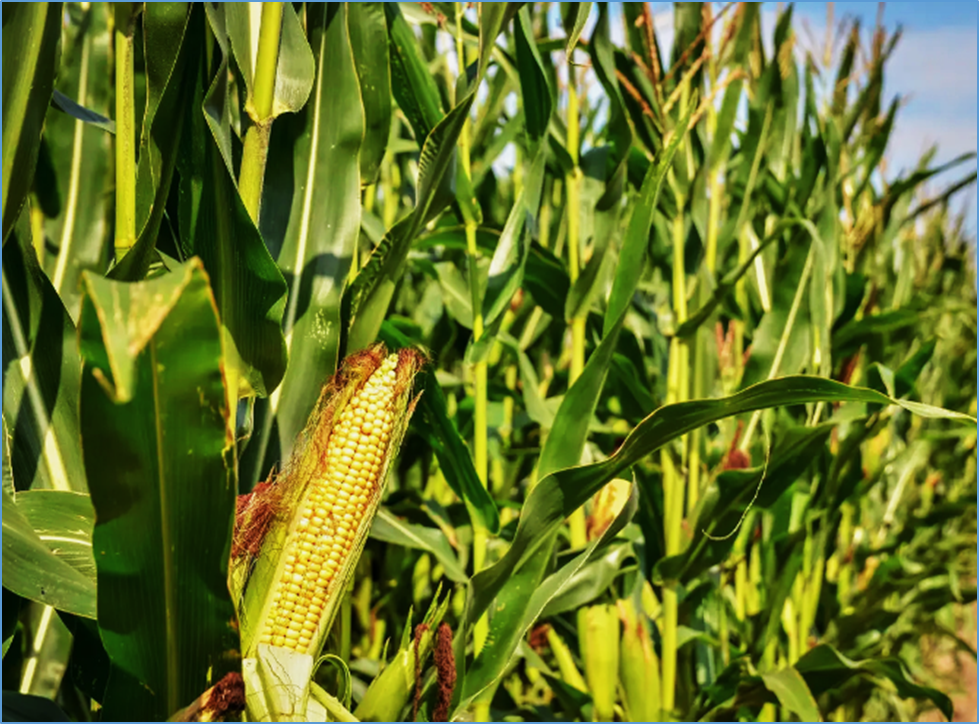
Monday, 23/03/2026 | 08:24:07
With the increasing accuracy and decreasing cost of sequencing technology, the extent of structural variation (SV) and its importance in crop species has become increasingly evident. SVs such as insertions, deletions, and inversions have been associated with genetic variation of agronomically important traits and the diversification of crop species. Pangenomes aim to capture the genetic diversity of a species, population or genus, by incorporating the genomes of multiple individuals.
Study Highlights Benefits and Barriers to GM Crop Adoption in Sub-Saharan Africa
Monday, 23/03/2026 | 08:21:21
A study conducted by researchers from Federal University Otuoke, Genomac Institute, and University of Birmingham highlights that genetically modified (GM) crops could help reduce reliance on chemical pesticides in Sub-Saharan Africa while improving crop yields and farmer livelihoods. The research reviewed studies and policy data from 2010 to 2025, focusing on Nigeria, South Africa, and Burkina Faso, to assess the benefits and challenges of adopting GM crops in the region.
ISAAA Global Report on Biotech Adoption Now Available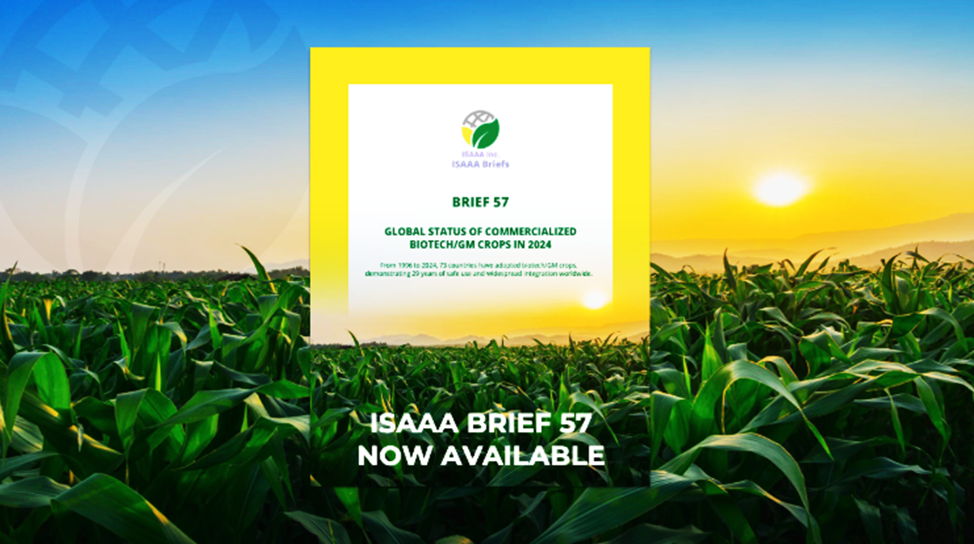
Monday, 23/03/2026 | 08:20:40
From 1996 to 2024, 73 countries have adopted biotech crops, demonstrating 29 years of safe use and widespread integration worldwide, according to the report released by the International Service for the Acquisition of Agri-biotech Applications (ISAAA), Inc., which provides the current landscape of biotech crop adoption globally.