


News & Events
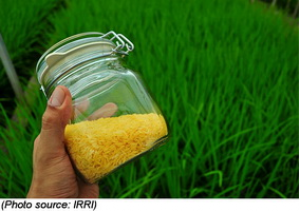
Professor Johnathan Napier, a leading pioneer in plant biotechnology who led the development of plants that produce heart-healthy omega-3 fish oils, says that "misinformation and over-regulation are stopping or slowing several GM foods with the potential to save lives from making it to consumers."
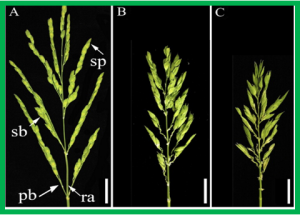
Heading date is a factor closely associated with grain yield in rice (Oryza sativa L). In recent decades, a number of genes responsible for heading time have been identified, the variation of which contributes to the expansion of the rice cultivation area. However, it is difficult to compare the phenotypic effects of these genes due to the different genetic backgrounds. In this study, we generated 14 heading time mutants using CRISPR/Cas9
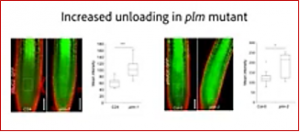
Research teams at the Sainsbury Laboratory Cambridge University (SLCU) and the University of Bordeaux have discovered Phloem Unloading Modulator (PLM), a novel gene affecting nutrient trafficking by altering the channels connecting neighboring plant cells also known as plasmodesmata. These nanoscale membrane-lined channels link plant cells together and enable the transfer of essential substances.
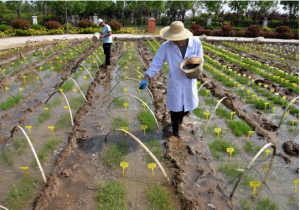
Around 300 new strains of saltwater-tolerant rice have been planted on 670 hectares of experimental alkali fields in China to identify viable varieties that can be grown on formerly barren lands, according to the Saline-Alkali Tolerant Rice Research and Development Center. Initial tests with different strains already revealed a significant difference in average yields.
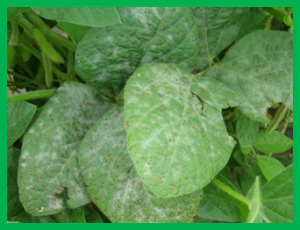
Powdery mildew (PMD), caused by the fungus Microsphaera diffusa Cooke & Peck, leads to considerable yield losses in soybean [Glycine max (L.) Merr.] under favourable environmental conditions and can be controlled by identifying germplasm resources with resistance genes. In this study, resistance to M. diffusa among resistant varieties B3, Fudou234, and B13 is mapped as a single Mendelian locus using three mapping populations derived from crossing susceptible with resistant cultivars.
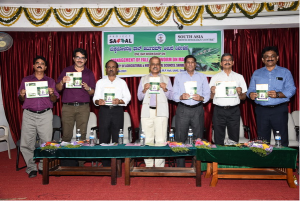
The South Asia Biotechnology Centre (SABC), in collaboration with the University of Agriculture and Horticulture Sciences (UAHS), has started a "mega campaign" on fall armyworm under the project Safeguarding Agriculture and Farmers against Fall Armyworm (Project SAFFAL) at Shivamogga, Karnataka, India on June 8, 2019. The UAHS Shivamogga was first to report the fall armyworm infestation in India in July 2018.

The United States Department of Agriculture (USDA) announced that they are proposing to modernize biotechnology regulations in such a way that the efficient agricultural production to address sustainability is incorporated while also considering the responsible and predictable regulatory oversight to protect the ecology and plant health.
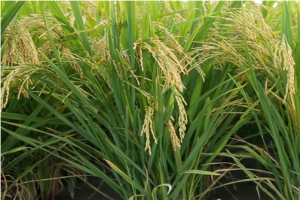
Proline-rich proteins (PRPs) play multiple physiological and biochemical roles in plant growth and stress response. In this study, we reported that the knockout of OsPRP1 induced cold sensitivity in rice. Mutant plants were generated by CRISPR/Cas9 technology to investigate the role of OsPRP1 in cold stress and 26 mutant plants were obtained in T0 generation with the mutation rate of 85% including 15% bi-allelic, 53.3% homozygous, and 16.7% heterozygous and 16 T-DNA-free lines in T1 generation.

In an op-ed article in UConn Today, University of Connecticut Program Specialist Stacey Stearns writes about the benefits of GMOs, citing that while most people associate GMOs with food products, they actually began in the medical field with insulin, an important part of diabetes treatment. Stearns writes that despite documented benefits of GMOs, 80% of respondents to the 2018 Food and Health Survey Report from the International Food Information Council Foundation are confused about food, or doubt their choices because of conflicting information.
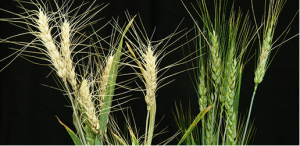
Scientists from the Agricultural Research Service (ARS) led by plant molecular geneticist Guihua Bai have identified a key gene that could be used as an important genetic resource by wheat breeders worldwide to address the constant challenge posed by Fusarium head blight (FHB). Also known as scab, FHB has caused an estimated US$2.7 billion in losses, in the state of Minnesota alone since the 1990s, and forced many wheat and barley farmers there into bankruptcy.
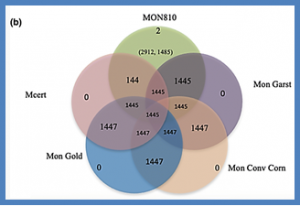
A genetically modified (GM) commercial corn variety, MON810, resistant to European corn borer, has been shown to be non-toxic to mammals in a number of rodent feeding studies carried out in accordance with OECD Guidelines. Insect resistance results from expression of the Cry1Ab gene encoding an insecticidal Bt protein that causes lysis and cell death in susceptible insect larvae by binding to midgut epithelial cells, which is a key determinant of Cry toxin species specificity.
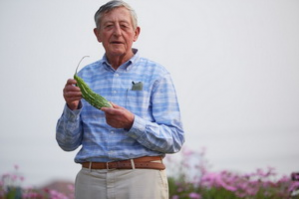
Simon N. Groot, vegetable breeder from the Netherlands and founder of East-West Seed is the 2019 World Food Prize Laureate. The announcement was made at a ceremony at the U.S. Department of Agriculture on June 10, 2019. Mr. Groot won the award for empowering millions of smallholder farmers in more than 60 countries to earn greater incomes through enhanced vegetable production, benefitting hundreds of millions of consumers with greater access to nutritious vegetables for healthy diets.