


Fine mapping and functional verification of the Cf-19 gene controlling leaf mold disease resistance in tomato
Tong Pei, Anqi Hao, Mingtao Lu, He Zhang, Dalong Li, Xiangyang Xu & Tingting Zhao
Theoretical and Applied Genetics; March 13 2026; vol. 139; article 95
 Key message
The Cf-19 gene, which controls tomato leaf mold, was finely mapped to a 130.13-kb region on chromosome 1, strongly suggesting that Solyc01g006550 may be the target gene Cf-19.
Abstract
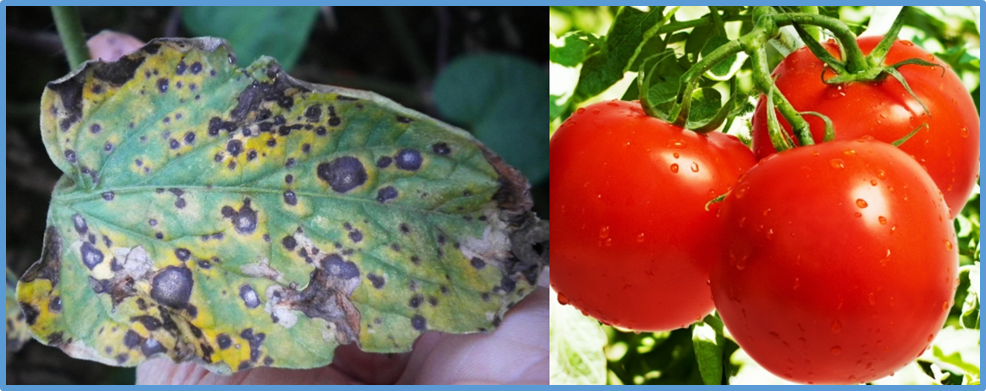
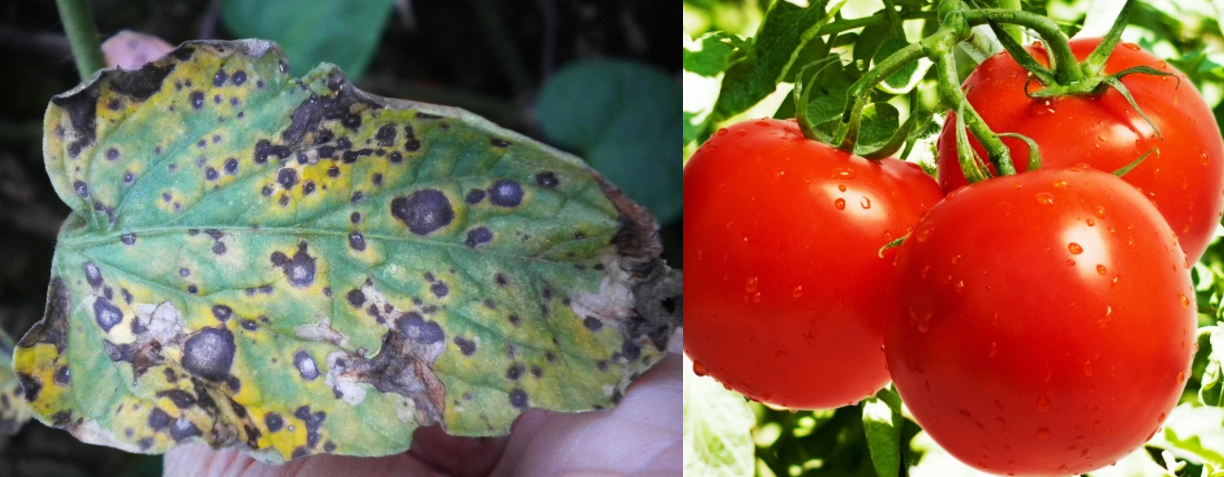
Tomato leaf mold, caused by Cladosporium fulvum (C. fulvum), is a devastating disease affecting tomato production. Natural resistance to this disease is mediated by Cf family genes, with different Cf genes confer resistance to different physiological races of the C. fulvum. As these physiological races continue to evolve, the number of effective resistance genes available for breeding is becoming increasingly limited. Cf-19 is considered a highly effective resistance gene against tomato leaf mold disease, but it has not been successfully cloned yet. In our previous research, we mapped Cf-19 in the 2.14 Mb region of chromosome 1 and predicted seven candidate genes. Due to the large interval, the possibility of some candidate genes cannot be ruled out. In this study, we constructed an F2 population for fine mapping using CGN18423 (disease resistant) and MoneyMaker (disease susceptible) as parental lines. We localized Cf-19 to a 130.13-kb region on chromosome 1 that contained 12 candidate genes. Through functional annotation, protein domain and expression analysis, Solyc01g006550 (annotated as a receptor-like protein Cf-9 homolog) was proposed as a candidate gene. Functional validation revealed that Solyc01g006550 overexpression increased resistance to C. fulvum, whereas Solyc01g006550 knockout reduced resistance. Subcellular localization indicates that the gene is located on the cell membrane. In conclusion, our data collectively suggest that Solyc01g006550 may be the gene Cf-19.
See https://link.springer.com/article/10.1007/s00122-026-05203-y
Views: 90