


Genetically modified foods and human health: a comprehensive review and cross-national time-trend analysis
Ah Young Kim, Bora Lee, Da in Choi & Han Yong Lee
GM Crops & Food; Article: 2634489 - Published online: 02 Mar 2026
ABSTRACT
GMOs have remained at the center of scientific and societal debate since their regulatory authorization and subsequent market introduction in the 1990 s. This review synthesizes epidemiological evidence from the literature, including observational studies and prior systematic reviews, alongside international policy frameworks, to evaluate potential associations between GMO exposure and human health. Current evidence does not support consistent causal links between GMO consumption and cancer, reproductive toxicity, allergies, or other chronic diseases. We systematically searched PubMed, Web of Science, and international health databases, applied predefined inclusion and exclusion criteria, and synthesized national-level epidemiological data using time-trend and Joinpoint regression analyses. Across countries and disease categories, no consistent temporal alignment was observed between GMO authorization and changes in disease incidence, and pooled breakpoint analyses showed heterogeneous patterns with estimates frequently overlapping zero. Overall, the findings provide no consistent epidemiological support for associations between GMO consumption and major chronic diseases.
See https://www.tandfonline.com/doi/full/10.1080/21645698.2026.2634489
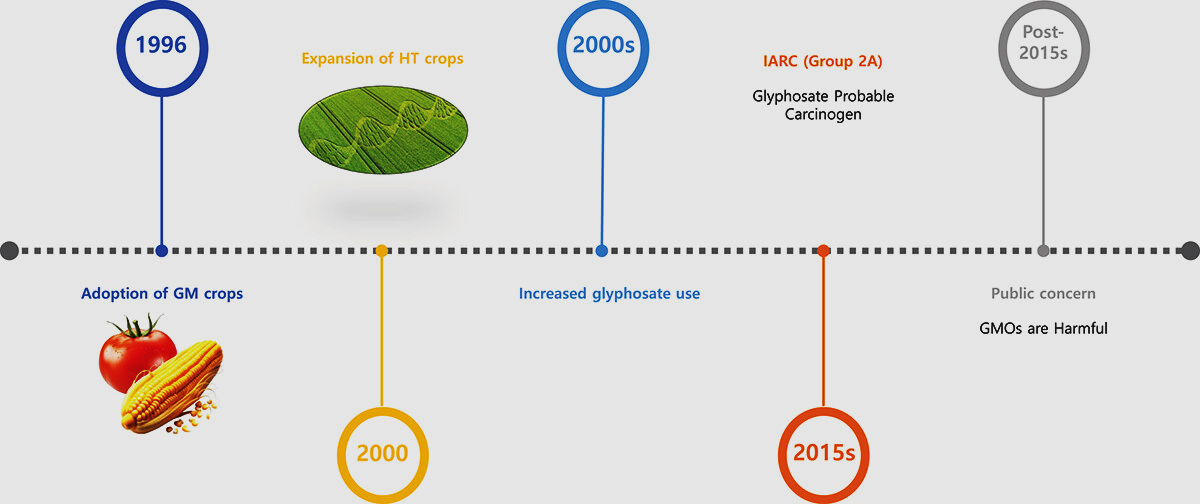
Figure 3. Timeline of GM crop adoption, glyphosate use, and emergence of public concern.
This timeline illustrates the sequence of key events shaping public perception of GMO safety. GM crops were first adopted in 199 6, followed by the expansion of herbicide tolerant (HT) crops in the early 2000s, which led to increased use of glyphosate. In 2015, the International Agency for Research on Cancer (IARC) under the WHO classified glyphosate as a probable human carcinogen (Group 2A). This classification triggered heightened public concern and the widespr ead perception that GMOs are harmful, despite the fact that the classification referred to glyphosate exposure rather than the genetic modification itself.
Views: 1391