


Epigenetic modifications regulate peg elongation and underground fruiting in peanut in response to environmental cues
Plant Genome; 2026 Mar; 19(1):e70202. doi: 10.1002/tpg2.70202.
Abstract
Epigenetic regulation plays a central role in coordinating peanut (Arachis hypogaea L.) fruit pegging, a unique developmental process in which fertilized ovaries transition from aerial growth to subterranean pod formation. This review synthesizes current evidence demonstrating that dynamic interactions among DNA methylation, histone modifications, and small RNA-mediated pathways govern peg elongation, directional growth, and successful pod initiation in Arachis hypogaea L. The methylome and transcriptomic studies reveal that context-specific DNA methylation and reversible histone marks function as regulatory switches that integrate environmental signals such as light, gravity, temperature, and soil conditions with developmental gene expression programs. Activating chromatin states promote cell division and hormone-responsive pathways during peg elongation, whereas repressive marks and RNA-directed DNA methylation maintain genome stability and prevent premature differentiation. Crosstalk between epigenetic regulators and hormonal networks, particularly auxin and ethylene signaling, emerges as a conserved mechanism fine-tuning cellular differentiation and peg curvature during soil penetration. Small RNAs further contribute to this regulatory network by modulating key transcription factors and signaling components at post-transcriptional and epigenetic levels. Most importantly, comparative analyses across genotypes and stress conditions indicate that some epigenetic modifications are developmentally dynamic, while others exhibit stability with potential heritability, indicating their relevance for breeding. Overall, this review concludes that epigenetic mechanisms constitute an integrative regulatory framework linking environmental perception with developmental plasticity in peanut fruit pegging, offering promising opportunities to harness epigenetic variation for improving yield stability, stress resilience, and climate-adaptive peanut breeding strategies.
See https://pubmed.ncbi.nlm.nih.gov/41669967/
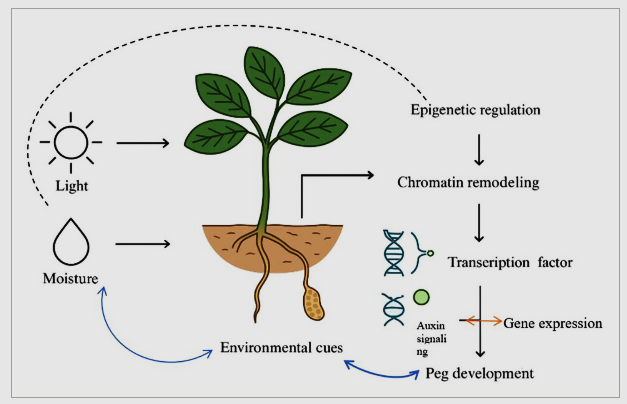
Figure 4: Environmental regulation of peg development in plants.
Views: 108