


Dissection of Fusarium head blight resistance in a modified nested association mapping panel of synthetic and bread wheat germplasm
Anil Karmacharya, Dhondup Lhamo, Krishna Acharya, Qijun Zhang, Han-Chang Chang, Shaobin Zhong, Andrew J. Green, Jason D. Fiedler, Mingcheng Luo, Kirk M. Anderson, Amanda R. Peters Haugrud, Elias M. Elias, Xiaofei Zhang, Yong-Qiang Gu & Steven S. Xu
TAG; February 11 2026; vol.139; article 66
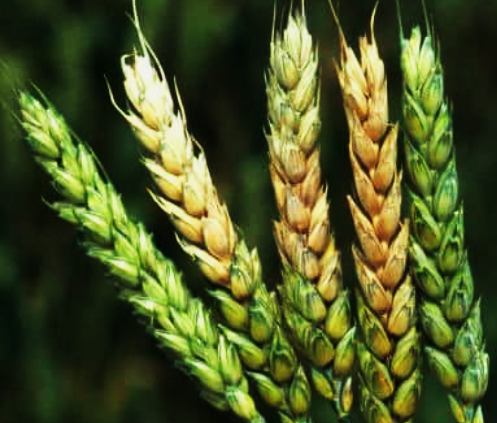
Key message
Three potentially novel loci and sixteen loci overlapping with previously reported regions for Fusarium head blight resistance were identified in a mapping panel derived from synthetic and bread wheat germplasm.
Abstract
Fusarium head blight (FHB), caused by Fusarium graminearum, is one of the most devastating diseases of wheat (Triticum aestivum) and other cereal crops worldwide. Improving FHB resistance has been a major focus in many wheat genetics and breeding programs globally. However, only a few major loci have been effectively deployed, limiting progress in breeding for FHB resistance. To expand the genetic basis of resistance, we developed a modified nested association mapping (NAM) panel comprising four synthetic hexaploid wheat (SHW) lines, ten hard red spring wheat (HRSW) varieties/lines, and 276 BC1-derived progenies. The panel was genotyped using the 90 K SNP (single nucleotide polymorphism) Infinium array and evaluated for Type II FHB resistance across six environments. The disease evaluations revealed that 15 resistant lines, primarily derived from backcrossing SHW line SW183 (T. dicoccum PI 191091/Aegilops tauschii CIae 26) with HRSW ‘Linkert’ or ‘Glenn,’ exhibited resistance levels comparable to the well-known FHB resistance source, Sumai 3. A genome-wide association study (GWAS) identified 19 significant marker–trait associations (MTAs) for FHB resistance. Of these, three SNPs carried resistance alleles from SHW, two from HRSW, and 14 from both parental sources. Sixteen MTAs co-localized with previously reported quantitative trait loci (QTLs) linked to FHB resistance, while three, located on the short arms of chromosomes 1D, 2B, and 4A, appear to be associated with novel resistance loci. The resistant lines developed in this study could serve as new sources for FHB resistance, and their associated resistance loci can be further validated and incorporated into breeding programs.
See https://link.springer.com/article/10.1007/s00122-025-05148-8
Views: 101