


CRISPR/Cas9-mediated promoter editing of OsSWEET11 confers resistance to sheath blight in rice
Vignesh Ponnurangan, R.K., Mohana Pradeep, Raghunandhan Namachivayam, Shanthinie Ashokkumar, Krish K. Kumar, Kokiladevi Eswaran, Arul Loganathan, Paranidharan Vaikuntavasan, Djanaguiraman Maduraimuthu, Varanavasiappan Shanmugam
Physiological and Molecular Plant Pathology: Volume 142, March 2026, 103117
Abstract
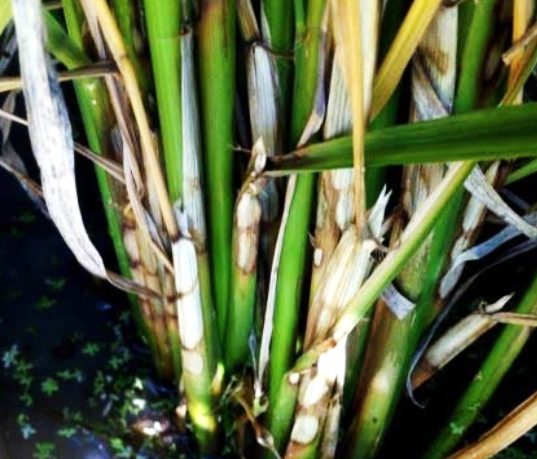
Sheath blight (ShB), caused by Rhizoctonia solani, is one of the most destructive diseases of rice, causing substantial yield losses worldwide. Effective management remains challenging due to the absence of resistant genetic sources and the ability of the pathogen to persist under diverse environmental conditions. The sugar transporter OsSWEET11 acts as a susceptibility factor by facilitating pathogen-induced sucrose efflux, but complete loss-of-function mutations compromise grain filling and yield. In this study, we employed CRISPR/Cas9-mediated promoter editing to fine-tune OsSWEET11 expression in the rice cultivar ASD16, aiming to enhance disease resistance while preserving agronomic performance. Random edits were introduced into distinct regions of the OsSWEET11 promoter, generating four classes of promoter-edited mutants (S11–47, S11–91, S11-157, and S11-189). Homozygous promoter-edited mutants showed approximately 20–35 % lower ShB disease severity compared with the wild-type (WT). Agronomic evaluation of two independent homozygous mutants from each class showed that edits outside the effector-binding element (EBE) region (S11–47, S11-91, and S11-157) maintained normal growth and grain yield, whereas edits overlapping the EBE region (S11-189) resulted in a modest reduction in fertility and yield. From each promoter-edited region, a single transgene-free mutant was selected for subsequent analysis. Upon R. solani infection, promoter-edited mutants exhibited a ∼48.7–∼60.7 % reduction in fungal biomass compared with the WT as determined by qPCR. Basal OsSWEET11 expression was lower in mutants, and after infection, they showed reduced induction (∼2.2–2.4-fold) compared with WT (∼3.3-fold). Similarly, sugar accumulation in mutants (∼40.4–∼68.0 %) was lower than in WT (∼83.6 %) following R. solani infection. The decreased OsSWEET11 expression and lower sucrose levels correlated with reduced susceptibility to ShB in the promoter-edited mutants. Taken together, these results demonstrate that promoter editing of OsSWEET11 is a promising strategy to engineer ShB disease resistance in rice without yield penalties.
See https://www.sciencedirect.com/science/article/abs/pii/S0885576526000081
Views: 191