


Babaco Mosaic Virus (BabMV) Induces Genome-Wide Transcriptomic Reprogramming in Carica papaya
Maria Gabriela Maridueña-Zavala, Hamada AbdElgawad, Mohammad K Okla, Juan Manuel Cevallos, Gerrit T S Beemster, Carlos Noceda
Physiol Plant; 2025 May-Jun; 177(3):e70270. doi: 10.1111/ppl.70270.
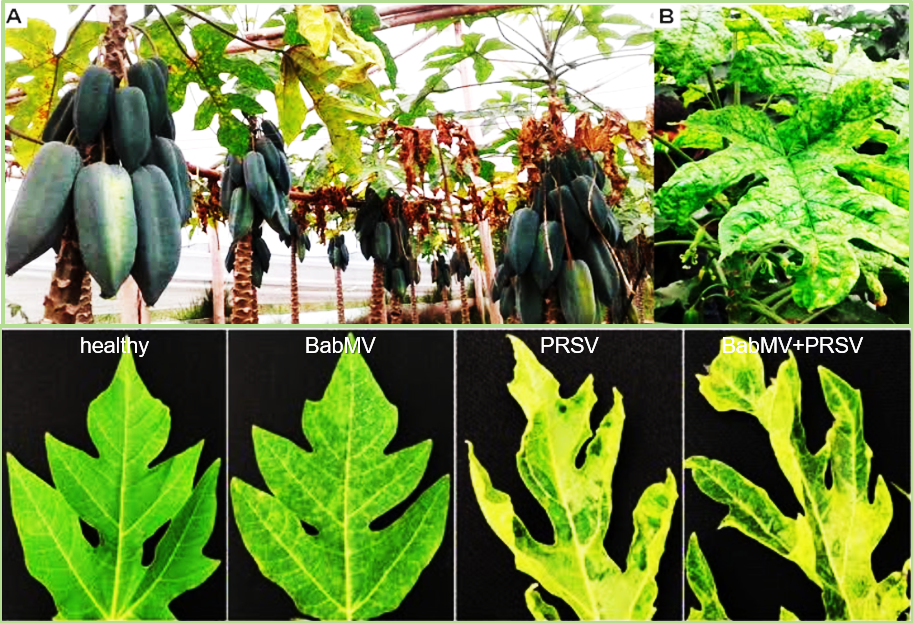
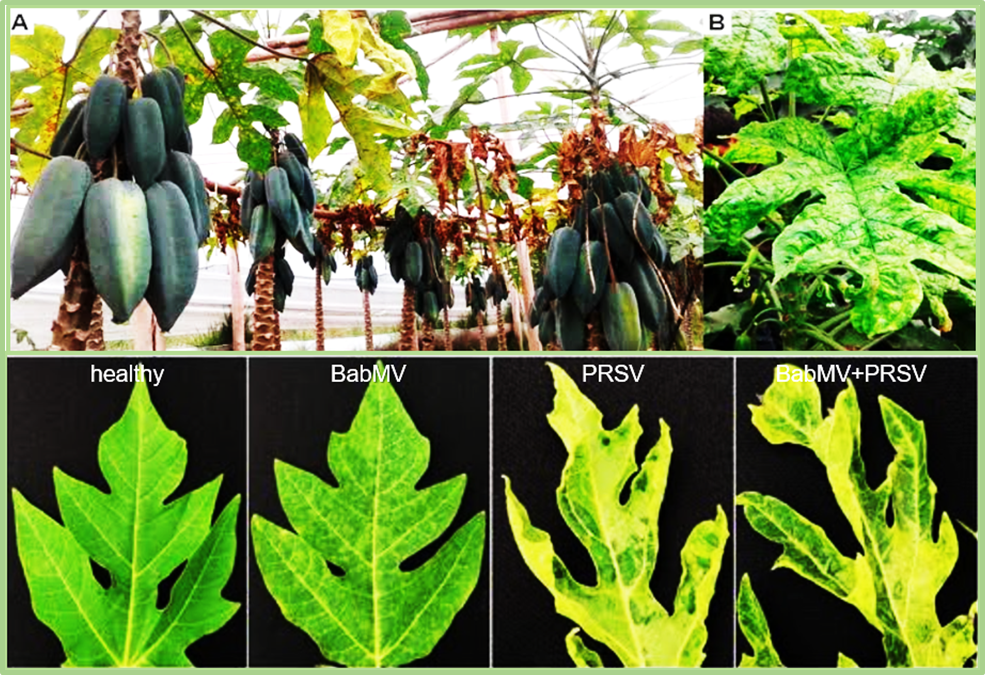
Figure: Papaya BabMV and PRSV Symptoms
Abstract
The recent emergence of Babacco Mosaic Virus (BabMV), a potexvirus known to infect Vasconcellea heilbornii (babaco), has raised concerns about its potential to infect papaya cultivars. To assess the impact of BabMV on papaya plants, we conducted a comprehensive genome-wide transcriptome analysis to evaluate the effect of the virus on gene expression and defense responses in Papaya (Carica papaya). Leaves from papaya plants of 3-4-month-old plants were examined at 2, 10, 15, and 30 days post-infection (dpi) with BabMV and compared to uninfected controls. In mock and virus-infected plants at 2 and 10 dpi, more than 90% of the RNAseq reads were mapped with the papaya genome. In contrast, at 15 and 30 dpi, only 31% mapped to the papaya genome in BabMV-infected leaves, while the remaining 69% of the reads aligned to the virus genome, demonstrating a high viral load. Overall, 1585 papaya genes were differentially expressed between mock and BabMV-inoculated leaves. At 2-10 dpi, early responses included increased expression of genes related to sugar metabolism and cell wall modification, including lignin synthesis. At 30 dpi, late responses included the induction of genes involved in reactive oxygen species (ROS) production and antioxidants, potentially via cytochrome P450 enzyme activation. This explained the upregulation of Mitogen-Activated Protein Kinases (MAPK3,18) and transcription factors including WRKY40,60,70 and Ethylene Response Factor 1 (ERF1), known to induce the expression of genes encoding pathogenesis-related proteins (PR1) and activating the plant defense mechanisms. This research enhances our understanding of BabMV infections, enabling the development of effective strategies for disease control.
Views: 147