


An extra-large panicle gene ELP1 from wild rice Oryza officinalis increases grain number and grain yield
Jiachen Ma, Mei Li, Yanan Lin, Jinjin Lian, Yizhengnan Zhu, Jing Yang, Wenfan Hu, Luyi Zhang, Shuting Li & Weilin Zhang
Theoretical and Applied Genetics; December 20 2025; vol. 139; article 11
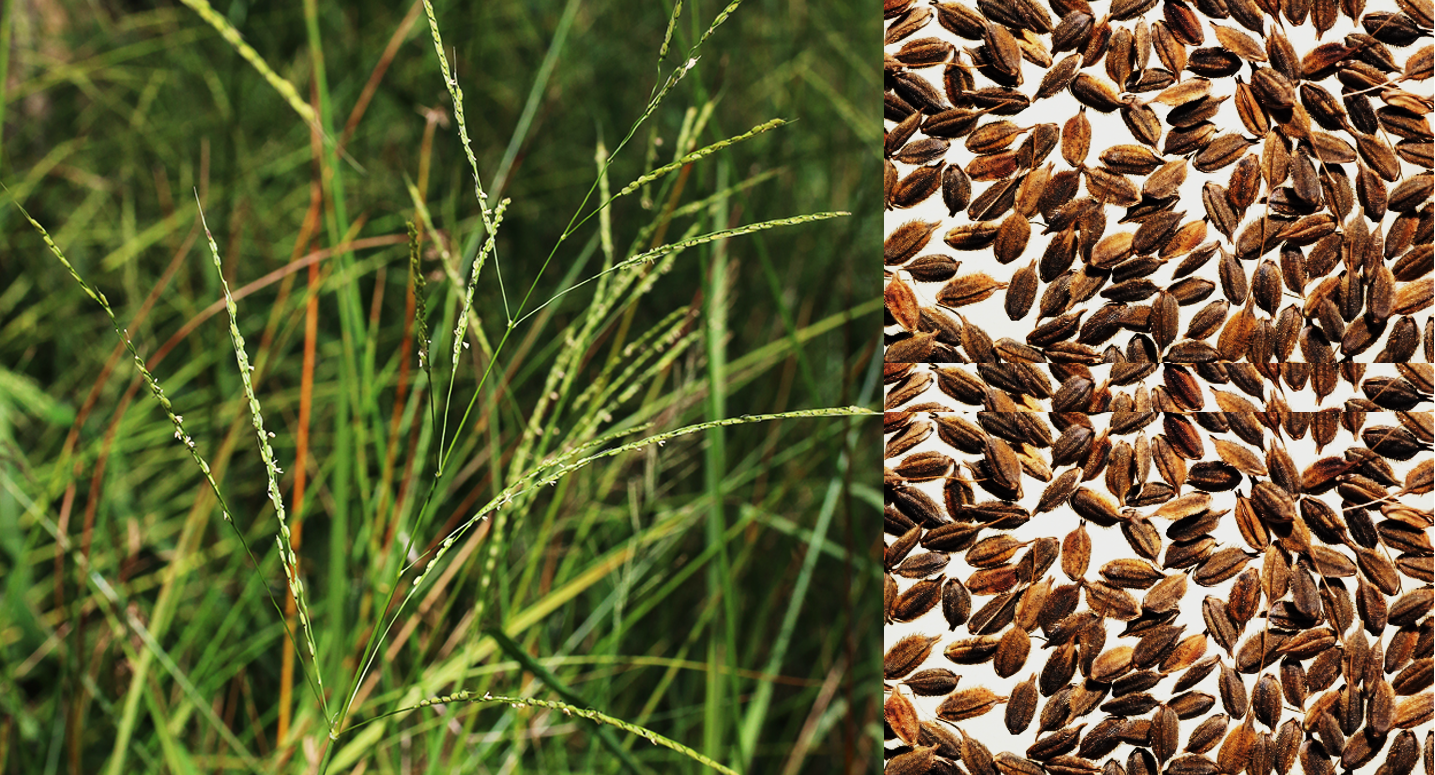
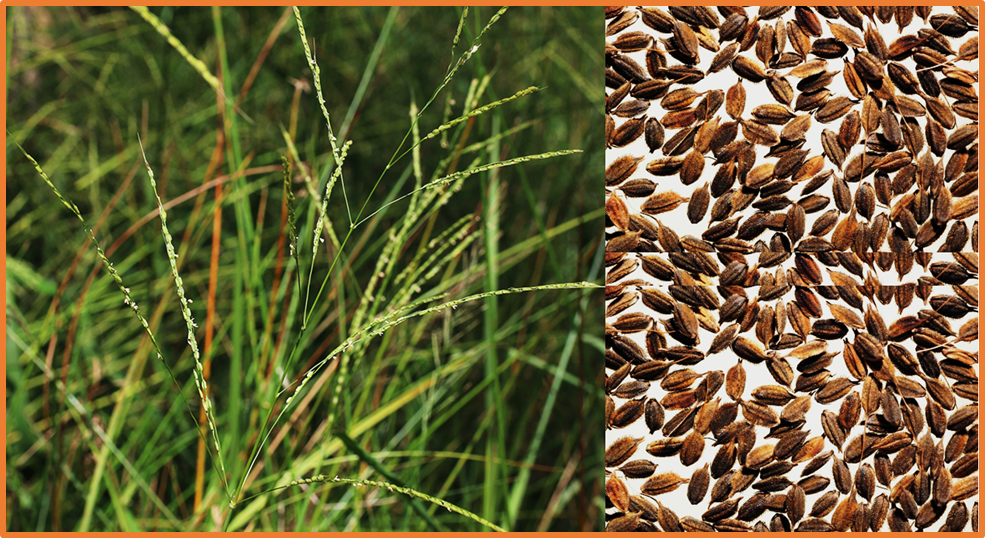
Figure: Oryza officinalis in Mekong Delta (BCB photo)
Key message
The desirable yield gene extra-large panicle 1 (ELP1), which increased grain yield per plant by approximately 30%, was cloned from wild rice Oryza officinalis through a map-based cloning strategy.
Abstract
Grain number per panicle (GNP) is a crucial determinant of rice yield. The wild rice Oryza officinalis, an accession of extra-large panicle (ELP) type, produces numerous grains (700 ± 100 grains) in its main stem panicle. However, mainly due to weedy traits, incompatibility barrier and linkage drag, this desirable yield trait ELP in O. officinalis has not yet been successfully exploited. Here, interspecific distant hybridization between 93-11 and O. officinalis was performed. One plant with 700 grains in its main stem panicle was obtained from BC4F4 progeny. Genetic analysis showed that the ELP trait was quantitatively controlled. By coupling bulked segregant analysis with whole genome re-sequencing and association analysis, three quantitative trait loci (QTLs) controlling the ELP trait were identified, and the QTL mapped on chromosome 4 was identified as one major QTL (designated ELP1) and thereafter finely mapped to a 44-kb region. The ELP1 encodes a putative F-box domain-containing protein (OsFBX148) with a previously poorly characterized function and undergoes alternative splicing. The two resulting isoforms, ELP1L and ELP1S, oppositely regulate the GNP. Overexpression of the short isoform ELP1S increased tiller number and GNP by approximately 37.5% and 37.6%, respectively, consequently increasing grain yield per plant by approximately 30%. Haplotype analysis showed that ELP1 O. officinalis allele was a valuable and novel haplotype. Our work not only provides one successful story of identifying a favorable yield gene from O. officinalis but also uncovers a novel regulatory mechanism by which alternative splicing regulates rice GNP.
See: https://link.springer.com/article/10.1007/s00122-025-05115-3
Views: 135