


A synthetic transcription cascade enables direct in planta shoot regeneration for transgenesis and gene editing in multiple plants
Arjun Ojha Kshetry, Kaushik Ghose, Anshu Alok, Vikas Devkar, Vidhyavathi Raman, Robert M. Stupar, Luis Herrera-Estrella, Feng Zhang and Gunvant B. Patil.
Molecular Plant; November 6 2025; 18: 1-16
Abstract
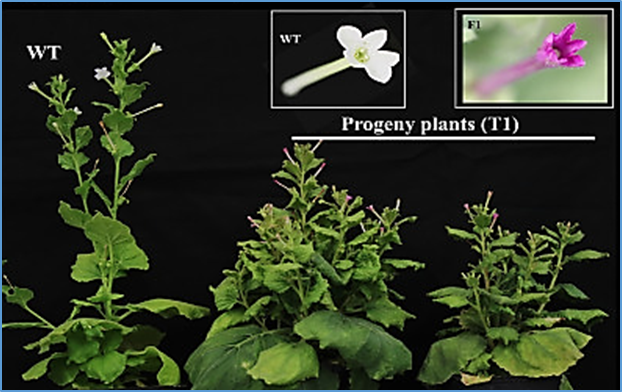 Developing transgenic and/or gene-edited plants largely depends on tedious, lengthy, and costly in vitro regeneration protocols. While plants have remarkable regeneration ability, not all species, genotypes, or even explants exhibit the same transformation and regeneration potential under in vitro conditions. To tackle this bottleneck, we have developed a seamless and user-friendly system to induce transgenic and gene-edited de novo meristems via a synthetic cascade comprising a wound-induced regeneration pathway, plant developmental regulators (DRs), and gene-editing reagents. WOUND INDUCED DEDIFFERENTIATION 1 (WIND1) was used as a transcriptional regulator to control the expression of various DR genes driven by ENHANCER OF SHOOT REGENERATION 1 (ESR1) promoter. This cascade was strategically applied in planta to the non-meristematic internode of Nicotiana benthamiana to induce meristematic activity and regenerate de novo shoots with knockout mutations of the phytoene desaturase (PDS) gene. Among the DR genes tested, the strategic expression of isopentenyl transferase (ipt) driven by the ESR1 promoter under the control of WIND1 proved most effective for efficient regeneration in tobacco. Subsequently, this synthetic toolkit was successfully applied to both tomato and soybean. WIND1 served as a key cellular reprogramming factor, initiating differentiation, while ipt complemented this process by promoting organogenesis through cytokinin biosynthesis. This methodology offers a transformative approach to overcome barriers in plant biotechnology, potentially accelerating the generation of transgenic and gene-edited plants without reliance, or with minimal reliance, on conventional tissue-culture intermediates.
See https://www.cell.com/molecular-plant/fulltext/S1674-2052(25)00322-3
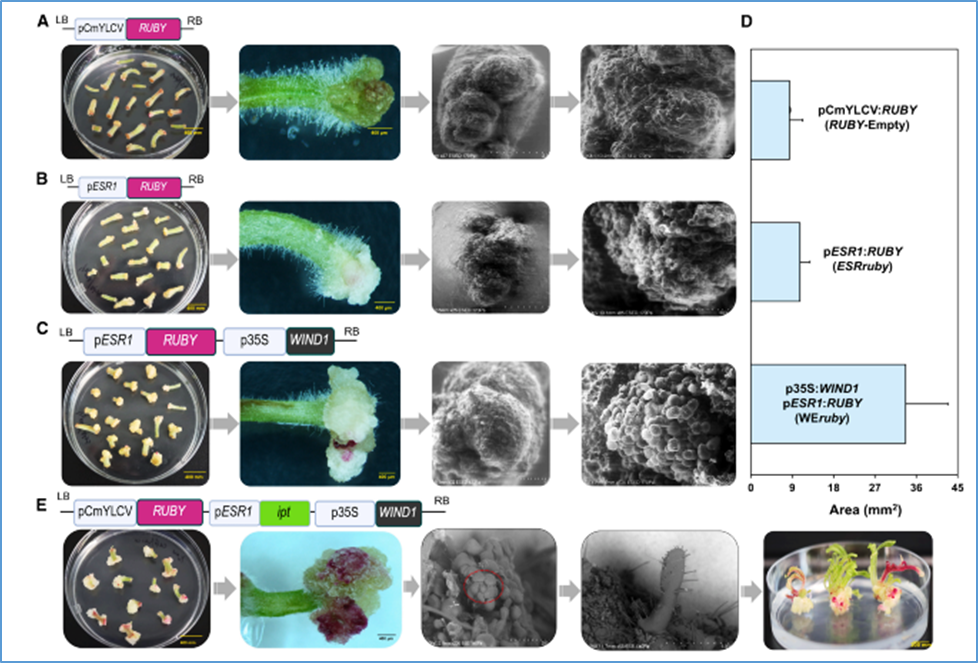
Figure 1: Experimental validation of gene constructs designed to assess proAtESR1-driven gene activation in response to AtWIND1 expression.
Views: 383