


A receptor antagonist counterbalances multiple systemin phytocytokines in tomato
Lei Wang, Louis-Philippe Maier, Nga Pham, Yan L Wang, Xu Wang, Andreas Schaller, Judith Fliegmann, Matthias Erb, Thomas Boller, Georg Felix
Cell; 2025 Nov 13; 188(23):6509-6518.e12. doi: 10.1016/j.cell.2025.07.044.

Abstract
Tight regulation of immune activation is crucial for plant health. How plants control the actions of their immunostimulatory phytocytokines is largely unknown. Here, we identify antiSYS as a natural inhibitor of the tomato cytokine systemin. AntiSYS is a systemin-like peptide encoded in a gene cluster with four additional paralogs, three of which comprise newly identified agonistic systemins. AntiSYS is a potent and specific antagonist of the systemin receptor. Tomato mutants lacking antiSYS show aberrant growth and reduced reproductive fitness. These symptoms of antiSYS deficiency are not observed in plants lacking functional systemin receptors, suggesting a role of antiSYS in counterbalancing agonistic systemins. Thus, reminiscent of antagonistic interleukins controlling immune homeostasis in animals, antiSYS serves a crucial role in the regulation of phytocytokine activity in tomato plants.
See: https://pubmed.ncbi.nlm.nih.gov/40845839/
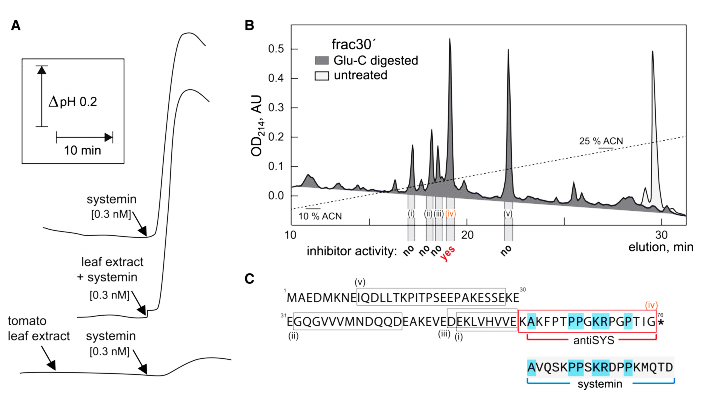
Figure 1: Tomato cells contain an antagonistic systemin-like polypeptide
(A) Changes in extracellular pH in S. peruvianum cultures upon treatment with systemin and tomato leaf extract (extract equivalent to 1 mg of leaf was added to 80 mg of cultured cells). Initial pH was 5.3. The pH tracings shown are representative of more than 3 independent repetitions.
(B) Purification of the systemin inhibitor. The 30-min fraction described in Figure S1F was digested with Glu-C and refractionated. AUs, absorbance units.
(C) The inhibitory peptide in fraction (iv) (highlighted in red in B) comprises the C terminus of a polypeptide and shows similarity to systemin (identical residues highlighted in blue).
Views: 191