


A genome-wide association analysis identifies a key candidate gene controlling plant growth habit in chickpea
Rajib Kumbhakar, Mayulika Mondal, Virevol Thakro, Yashwant K. Yadava, Uday Chand Jha, Shailesh Tripathi & Swarup K. Parida
TAG; January 3 2026; vol. 139; article 22
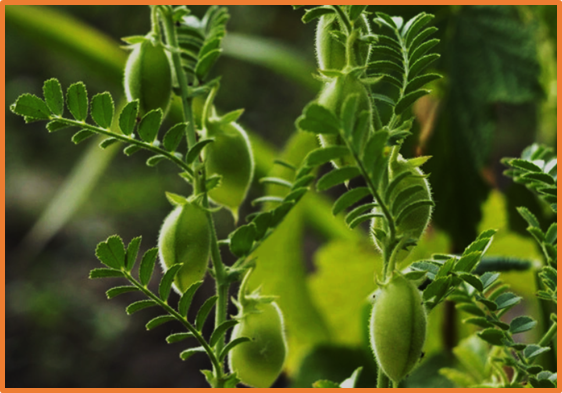
Key message
Integrated genome-wide and haplotype-based association analyses identified a key genomic locus governing plant growth habit (PGH) traits in chickpea.
Abstract
Identification of molecular markers governing plant growth habit (PGH) traits that enable mechanical harvestability is pivotal for boosting production efficiency of crops under changing climates and increasing global food demand. With a combinatorial integrated genomics-assisted breeding strategy comprising of association mapping, haplotype-based association, molecular haplotyping and gene expression analysis in a 286 association panel of chickpea (Cicer arietinum), we dissected the genetic basis of PGH traits. This study employed 382,171 genome-wide SNPs (single-nucleotide polymorphisms) obtained from whole-genome sequencing (WGS) of 286 desi and kabuli chickpea accessions and delineated a major genomic locus associated with PGH traits variation, particularly between erect (E)/semi-erect (SE) versus spreading (S)/semi-spreading (SS) types. Within this genomic loci, CaPAR1 (Cicer arietinum PAR1) and its derived natural alleles/haplotypes was identified as the candidate gene. These findings can facilitate generation of high-yielding, erect/semi-erect, mechanically harvestable cultivars through translational genomics and molecular breeding for genetic enhancement of chickpea.
See https://link.springer.com/article/10.1007/s00122-025-05121-5
Views: 145