


Toward sustainable control of phyto-nematodes: integrating lessons from crops to advance genetic modification in tomato
Syed Muhammad Hassan Askri, Fujun Li, Jihan Wang, Durray Shahwar & Xinhua Zhang
Theoretical and Applied Genetics; April 25 2026; vol. 139; article 133
Key message
Emerging molecular approaches offer promising avenues to enhance tomato defense, demonstrating potential to effectively suppress root-knot nematode infestation and improve crop resilience under diverse environmental conditions.
Abstract
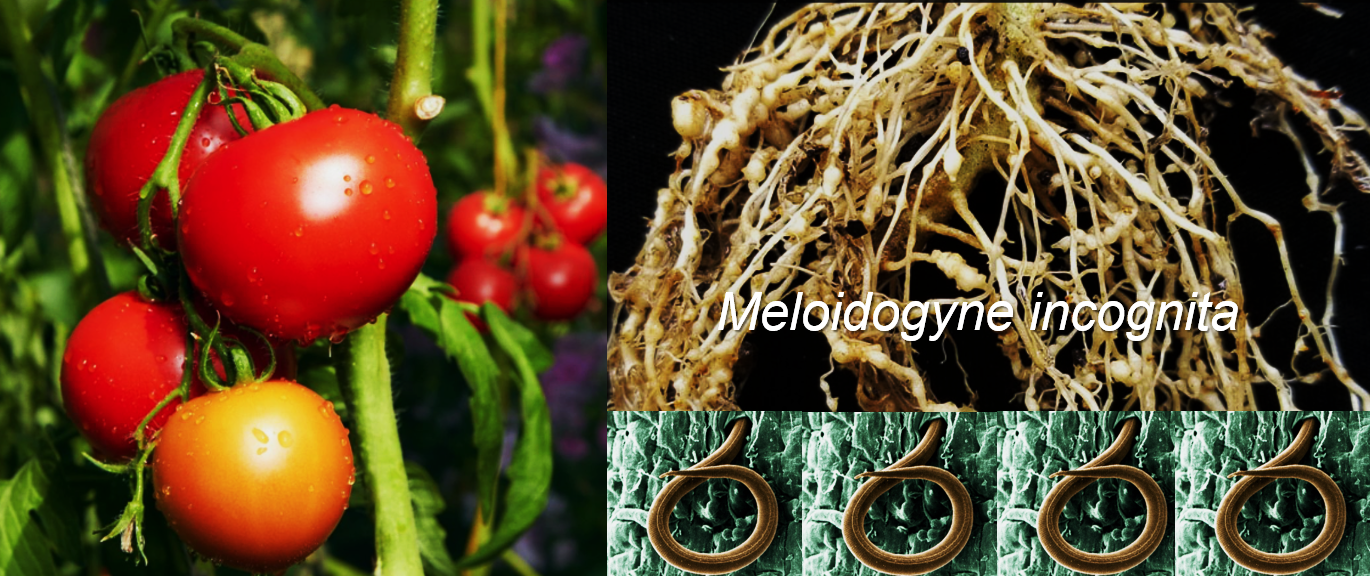
Root-knot nematodes (RKN, Meloidogyne spp.) continue to challenge tomato production by disrupting root architecture, impairing nutrient uptake, and reducing yields. Recent advances in plant biotechnology provide multiple avenues to enhance nematode resistance beyond conventional resistance (R)-gene utilization. This review discusses molecular and transgenic strategies investigated for RKN resistance across diverse plant systems, including the transfer or engineering of R-genes, expression of anti-feedant proteins and nematotoxic peptides, host-induced gene silencing targeting essential nematode genes, and CRISPR/Cas-mediated modification of host susceptibility factors, with an emphasis on their relevance for future use in tomato. Each approach interferes with distinct stages of nematode infection—from host recognition and feeding-site establishment to reproduction—and has demonstrated measurable reductions in gall formation, egg production, or nematode fitness, primarily in controlled-environment studies and selected field evaluations conducted in non-tomato or model crop systems. The review further evaluates progress in translating these cross-species advances into field-relevant tomato production contexts, emphasizing considerations for tissue-specific expression, stacking of complementary traits, and regulatory compliance affecting practical implementation. By highlighting the mechanistic insights gained from these molecular interventions across multiple crops, this work identifies key opportunities for integrating complementary genetic strategies into tomato breeding programs. Collectively, these advances underscore the potential of combining precision genetics and biotechnology to develop durable, broad-spectrum nematode resistance, reducing dependence on chemical nematicides and supporting sustainable horticultural production.
See: https://link.springer.com/article/10.1007/s00122-026-05252-3
Views: 117