


News & Events
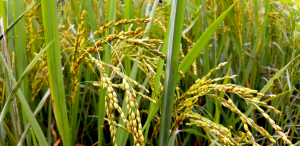
Rice grain yield is significantly influenced by tillering, yet the underlying molecular mechanisms remain poorly understood. A study published in The Plant Journal reveals that the transcription factor OsMADS60 plays a crucial role in suppressing rice tillering and grain yield by enhancing the expression of the auxin transporter OsPIN5b, thus altering auxin distribution.
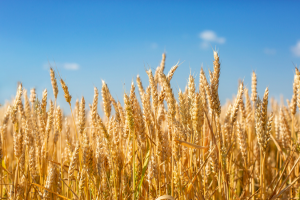
A research team from the Chinese Academy of Agricultural Sciences used gene editing to demonstrate the role of TaFT-D1 in regulating grain weight in wheat. The results of the study are published in Plant Biotechnology Journal. FLOWERING LOCUS T (FT) is known for its multifunctional role in modulating key agronomic traits, such as flowering time and plant height. However, its role in grain development regulation remains unclear.
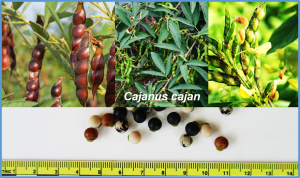
Melatonin plays a crucial role in enhancing plant resistance to salt stress by regulating biosynthesis of specialized metabolites. Phenylpropanoids, especially lignin, contribute to all aspects of plant responses toward biotic and abiotic stresses. However, the crosstalk between melatonin and lignin is largely unknown in pigeon pea under salt stress. In this study, the cinnamyl alcohol dehydrogenase CcCAD10 was identified to be involved in melatonin treatment and salt stress
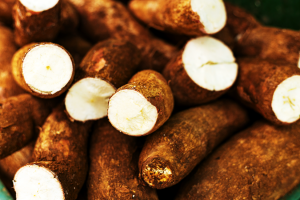
A study by scientists at the Chinese Academy of Sciences has successfully used CRISPR-Cas9 to enhance cassava's disease resistance, drought tolerance, and starch content. Published in Tropical Plants, the study paves the way for more efficient cassava breeding programs. The study identified critical genes associated with cassava mosaic disease (CMD), cassava brown streak disease (CBSD), drought stress response, and starch biosynthesis.

A group of students at the University of Ottawa harnessed the power of biopharming by using a plant as a biofactory for producing a drug for diabetes patients. With their project titled Phytogene, the young researchers took the Ozempic shortage problem as an opportunity to make plant-based medication which led them to win a gold medal at the iGEM competition in Paris.
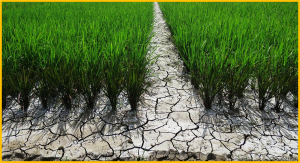
Histone H2B ubiquitination (H2Bub) is positively linked to transcriptional activation, but the genetic programs affected by H2Bub to enhance drought tolerance remain largely unknown. Here, we show that OsbZIP27 interacts directly with OsHUB1/2 to regulate drought tolerance in rice by binding to the promoters of OsHAK1 and OsGLN1 to achieve H2Bub and transcriptional activation. Consistently, mutations in OsbZIP27 reduce transcription of OsHAK1 and OsGLN1, resulting in increased sensitivity to drought stress.
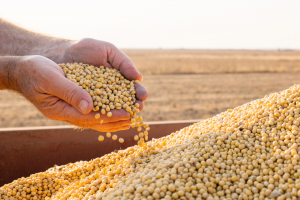
The food safety assessment of genetically modified (GM) soybean DBN9004 × DBN8002 × DBN8205 demonstrated its safety in a subchronic rodent feeding study. The results were published in Food and Chemical Toxicology. The GM soybean variety DBN9004 × DBN8002 × DBN8205 was developed by Beijing Dabeinong Biotechnology Co., Ltd. by incorporating genes conferring resistance to glyphosate (epsps)
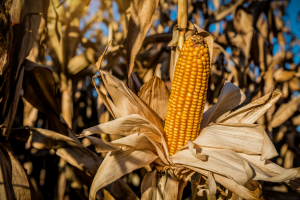
The European Food Safety Authority (EFSA) Panel on Genetically Modified Organisms (GMO Panel) released a Scientific Opinion on genetically modified (GM) maize DAS1131 for import, processing, and food and feed use within the European Union (EU). GM maize DAS1131 was developed to resist certain lepidopteran pests and tolerate glyphosate herbicide by introducing cry1Da2 and dgt-28 epsps genes.

Fodder soybean (Glycine max L.) with high protein and yield is a popular forage grass in northeast China. Seasonal drought inhibits its growth and development during seedling stage. The objective of this study was to observe morpho-physiological changes in fodder soybean seedlings under melatonin (MT) treatments and identify appropriate concentration to alleviate the drought damage. Two varieties commonly used in northeast China were treated with 0, 50, 100, and 150 μM melatonin at soil water content of 30%.
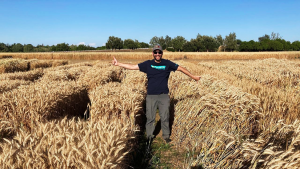
Scientists at the Department of Plant Sciences at the University of California Davis have developed a new genetic tool to easily breed wheat and triticale to grow more efficiently and to be better adapted to different environments. The new method recognizes that, in grasses such as wheat, small and short are different. The method allows breeders to tease apart the genes that control plant height from genes that control the other aspects of a plant's growth and other qualities.

The Australian Gene Technology Regulator (OGTR) is inviting comments on an application from Miruku Australia Pty. Ltd. to conduct a field trial of safflower genetically modified for dairy protein production and altered fat composition. The field trial is proposed to take place at up to 1 hectare of planting in 2025 and increase to 20 sites of up to 35 hectares each in 2029.
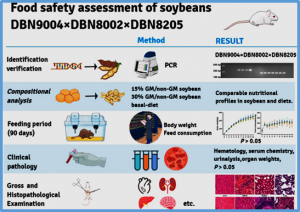
Soybeans provide a nutritionally complete plant-based protein, containing all nine essential amino acids and bioactive compounds. The food safety of a novel triple-stacked genetically modified (GM) soybean, DBN9004 × DBN8002 × DBN8205 was evaluated in a 90-day rat feeding study. The GM soybean, developed through conventional hybridization of three GM lines (DBN9004, DBN8002 and DBN8205), incorporates genes conferring resistance to glyphosate (epsps)