


News & Events
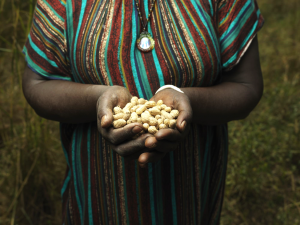
The Nutrition for Growth (N4G) Summit is the flagship international conference on global nutrition. As a multi-stakeholder event, it advocates for ambitious financial and political commitments while fostering dialogue among a diverse range of actors, including governments, international organizations, research institutions, civil society organizations, philanthropies, and private sector entities. Held every four years, this critical event aims to accelerate global progress in ending malnutrition.

The International Rice Research Institute (IRRI) and the Department of Agricultural Extension (DAE), Ministry of Agriculture, Government of Bangladesh, have signed a Memorandum of Understanding (MoU) to strengthen collaboration in research and innovation, technology transfer, extension services, and capacity development in the rice-based agrifood systems in Bangladesh.
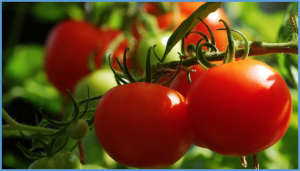
KCS, an endogenous cellular enzyme, catalyzes the elongation of fatty acid chains and plays a crucial role in the biosynthesis of plant epidermal wax. Through processes such as transfer, decarboxylation, and fixation, it contributes to plant growth and adaptation to abiotic and biotic stresses. However, the mechanism by which KCS genes participate in the response of tomato plants to driught remains unclear.
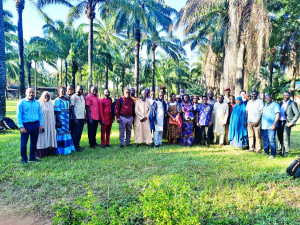
Investments in crop breeding are usually expensive and take 7 to 10 years to yield results. However, market preferences tend to change over time due to various drivers including income changes, urbanization, and climate change. Therefore, market segments identified that were based on historical data are likely to change after 7 to 10 years. The International Institute of Tropical Agriculture (IITA) organized a workshop to support product design teams (PDTs) for cowpea in Western Africa in identifying near-future market segments.
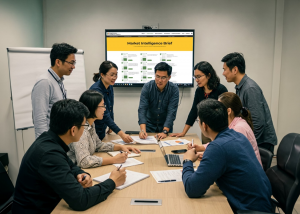
Slow varietal turnover has been a challenge since breeding-investment decisions were largely informed by supply-side considerations rather than client needs. Hence, market intelligence is crucial for CGIAR breeding programs because it ensures that breeding efforts are demand-driven. CGIAR has demonstrated that investment in crop breeding can generate high returns. However, maximizing this potential requires a more market-driven approach.
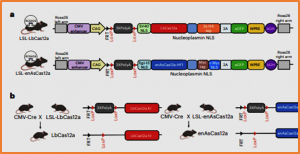
The pleiotropic effects of human disease and the complex nature of gene-interaction networks require knock-in mice allowing for multiplexed gene perturbations. Here we describe a series of knock-in mice with a C57BL/6 background and with the conditional or constitutive expression of LbCas12a or of high-fidelity enhanced AsCas12a, which were inserted at the Rosa26 locus.
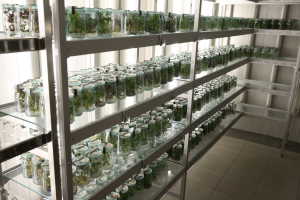
Genetic diversity is key to creating more resilient agrifood systems that withstand challenges such as shifting climate patterns. Since 80 percent of the food we consume is plant-based, preserving a wide range of genetic materials allows farmers to grow crops and varieties suited to their local environments, enhancing food security and livelihoods.
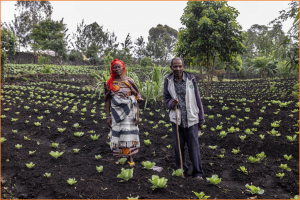
The Food and Agriculture Organization of the United Nations (FAO) and the United Nations World Food Programme (WFP) today announced that new data from the latest Integrated Food Security Phase Classification (IPC) analysis reveals the highest number ever recorded of acutely food insecure populations in the Democratic Republic of the Congo (DRC).
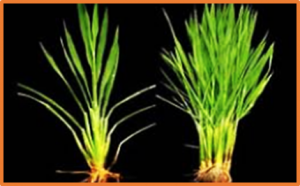
Rice tillering determines grain yield, yet the molecular regulatory network is still limited. In this study, we demonstrated that the transcription factor OsMADS60 promotes the expression of the auxin transporter OsPIN5b to affect auxin distribution and inhibit rice tillering and grain yield. Natural variation was observed in the promoter region of OsMADS60, with its expression level negatively correlated with tiller number and inducible by auxin.

Our forests play a vital role in feeding the world. From wild foods to fresh water, from shelter to energy, forests sustain billions of people and biodiversity. Yet we continue to lose them at an alarming rate through deforestation and land degradation. Between 2015 and 2020, more than 10 million hectares of forest were lost each year—an area roughly the size of the Republic of Korea. Meanwhile, intensifying wildfires and pest outbreaks are further threatening these valuable ecosystems.

Harnessing the power of CRISPR-Cas12a technology, Yale University researchers developed a novel system for dual-gene activation and knockout (DAKO). This new system allows a single treatment to cause two events at the same time- the activation of one gene and the suppression of another. DAKO uses Cas19a and can be as precise as Cas9, with the additional benefit of performing multiple edits at once.
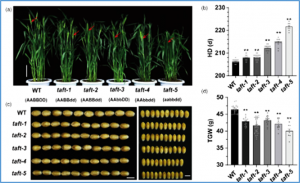
FLOWERING LOCUS T (FT), a multifunctional regulator in crops, modulates multiple key agronomic traits such as flowering time or heading date and plant height; however, its role in grain development regulation is unclear. Herein, through genome-wide association studies (GWAS), we identified TaFT-D1, which encodes a phosphatidylethanolamine-binding protein (PEBP), as a candidate gene for grain weight in wheat.