


News & Events
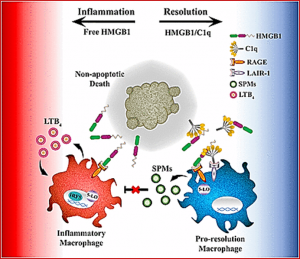
Immunity evolved as an impossibly elegant, yet devastatingly destructive force to combat pathogens, environmental insults, and rogue malignant cellular agents arising from within. The immunologic arsenal developed in a veritable coevolutionary arms race with the world’s pathogens, culminating in lymphocytic weapons of mass destruction. Indeed, T cells and B cells endowed with antigen specificity, the capacity for clonal expansion, and most importantly, long-lived memory, represent the pinnacle of such evolution.
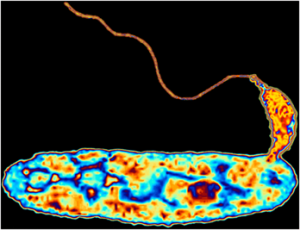
As microbiologists and public health officials scramble for weapons to combat antibiotic resistance, they may end up including an unlikely ally in their arsenal: other bacteria. The prime candidate right now is a predatory bacterium known as Bdellovibrio bacteriovorus. Found in soils and water globally, B. bacteriovorus are free-living, harmless bacteria—harmless to humans, at least. In the microbial world,
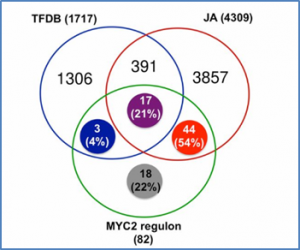
Mechanical stimuli, such as wind, rain, and touch affect plant development, growth, pest resistance, and ultimately reproductive success. Using water spray to simulate rain, we demonstrate that jasmonic acid (JA) signaling plays a key role in early gene-expression changes, well before it leads to developmental changes in flowering and plant architecture. The JA-activated transcription factors MYC2/MYC3/MYC4 modulate transiently induced expression of 266 genes, most of which peak within 30 min, and control 52% of genes induced >100-fold.

Animal mating displays provide some of nature’s most dramatic and curious spectacles. Ring doves (Streptopelia risoria) are a case in point (Fig. 1). According to Cheng (ref. 1, p. 2), “When a male ring dove courts a female, he starts with majestic bowing and cooing (bow coo) interspersed with strutting directed toward the female…

Prof. Richard P. Van Duyne, a National Academy of Sciences member who played a pivotal role in starting the field of plasmonics and promoting nanoscience, died on July 28, 2019, at the age of 73. Rick’s prominence as a great intellect and visionary is apparent by his tremendous academic success, including a host of academic awards, an impressive publication record, and generations of mentees working to live up to the potential he saw in them.

In rapeseed, seed yield is closely associated with silique-related traits such as silique length (SL) and seed weight (SW). Previously identified quantitative trait loci (QTLs) revealed that SL and SW are complex traits and many QTLs overlap. However, the genetic characterization of the association between SL and SW is poorly understood.
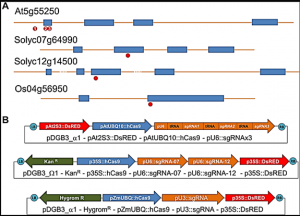
Efficient removal of the editing machinery continues to be a concern in genome editing. To address this challenge, researchers at Universidad Politécnica de Valencia in Spain and Durham University in the UK used the modular cloning system Golden Braid and included a fluorescence-dependent transgene monitoring module to the genome-editing toolbox.
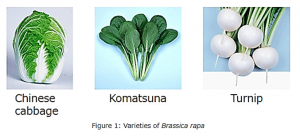
A cross-institutional group of post graduate students and researchers from Japan's Kobe University, Niigata University, NARO Japan, and CSIRO in Australia has revealed the role of genes in controlling flowering time in the Brassica rapa family. The B. rapa family is made up of leafy and root vegetables including Chinese cabbage, pak choi, turnip, and komatsuna. To flower, these plants need vernalization, a period of prolonged cold exposure which triggers flowering.
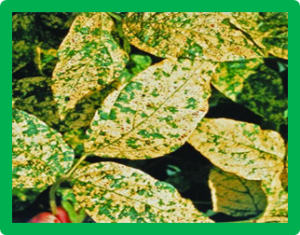
Both Soybean mosaic virus (SMV) and Bean common mosaic virus (BCMV) can induce soybean mosaic diseases. To date, few studies have explored soybean resistance against these two viruses simultaneously. In this work, Raiden, a cultivar resistant to both SMV and BCMV, was crossed with a susceptible cultivar, Williams 82, to fine-map the resistance genes. After inoculating ~ 200 F2 individuals with either SMV (SC6-N) or BCMV (HZZB011), a segregation ratio of 3 resistant:1 susceptible was observed, indicating that for either virus, a single dominant gene confers resistance.

The event is the second installment of training, which is part of the Progressive Manpower Enhancement Program developed by DA Biotechnology Program Office and the International Service for the Acquisition of Agri-biotech Applications (ISAAA). The objective of the training is to increase skilled manpower in research and development, regulatory, managerial, policy, and communication aspects in agricultural biotechnology.
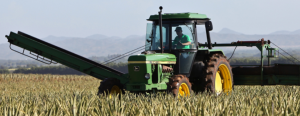
Three new traits for canola, which can increase crop yields and reduce harmful environmental impacts, has been developed by Cibus, a biotechnology company that has pioneered precision gene editing for agriculture. The new traits pertain to pod shatter, resistance to Sclerotinia, and weed control. The new traits precisely edit the canola genome to reduce pod shatter
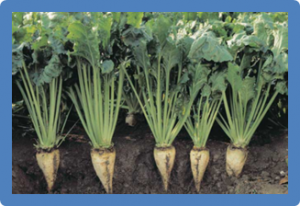
Selection of stable varieties producing the highest amount of extractable sugar per hectare (ha), resistant to diseases, and respecting environmental criteria is undoubtedly the main target for sugar beet breeding. As sodium, potassium, and αα-amino nitrogen in sugar beets are the impurities that have the biggest negative impact on white sugar extraction, it is interesting to reduce their concentration in further varieties.