


News & Events
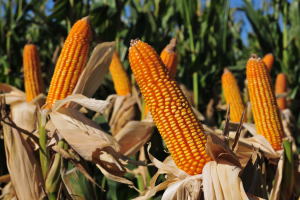
Mexico has officially issued a decree prohibiting the country's use of genetically modified (GM) corn. The government published the decree on March 17, 2025 in the Official Gazette of the Federation (DOF), formalizing the reforms to Articles 4 and 27 of the Constitution regarding the conservation and protection of native corn. It took effect on March 18, 2025.

South Korea's Rural Development Administration announced that genetically modified (GM) potatoes (SPS-Y9) from the U.S. are safe for cultivation in the country. This decision removes the final domestic regulatory barrier for Simplot's GM potatoes' entry to South Korea. The approval was based on the safety assessments conducted by the National Fisheries Research and Development Institute in 2019 and the Ministry of Environment in 2020.
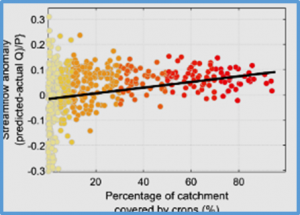
Agriculture is a cornerstone of global food production, accounting for a substantial portion of water withdrawals worldwide. As the world’s population grows, so does the demand for water in agriculture, leading to alterations in regional water–energy balances. We present an approach to identify the influence of agriculture on the water–energy balance using empirical data.
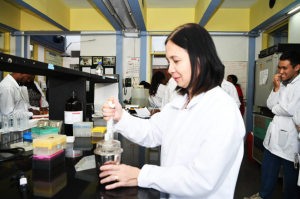
March 11, Hyderabad: Aflatoxin contamination remains a significant challenge for food safety, human health, and livestock, with potentially fatal consequences. To address this issue, ICRISAT, with support from the Ministry of External Affairs, Government of India, held a two-week training program to equip professionals from the Global South with the skills to tackle it.
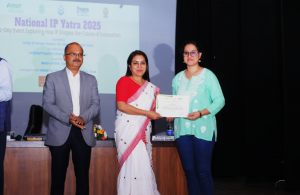
The National IP Yatra served as a pivotal platform for in-depth discussions on intellectual property (IP), innovation, funding, and policy frameworks. With participation from 222 individuals, including industry leaders, legal experts, startup mentors, government representatives, and innovators, the event fostered an engaged dialogue addressing key challenges and opportunities within India’s IP landscape.
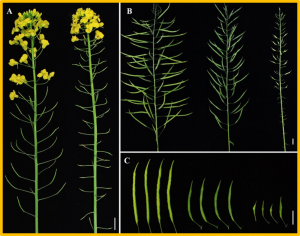
Seed density per silique (SDPS) is a key agronomic trait that directly or indirectly affects seed yield in rapeseed (Brassica napus L.). Exploring the genetic control of SDPS is beneficial for increasing rapeseed production. In this study, we evaluated the SDPS phenotypes of 413 rapeseed cultivars (lines) across five natural environments and genotyped them by resequencing.
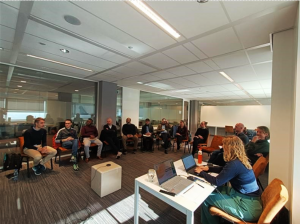
The CGIAR Scaling for Impact Program aims to accelerate the widespread use of research-based innovations by supporting CGIAR, its partners and investors to design, finance, and implement scaling efforts to achieve lasting impact. On March 4, 2025, a hybrid meeting in The Hague co-hosted by the Netherlands Food Partnership (NFP) brought together stakeholders from government, academia, the private sector, and civil society. The discussion focused on strengthening collaboration to scale agricultural innovations in a way that is both local and sustainable.
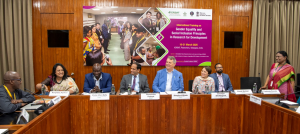
Welcoming the 35 participants from 26 countries across Africa, Asia, Oceania, and the Caribbean—74% of whom were women—Dr Victor Afari-Sefa, Research Program Director-Enabling Systems Transformation, ICRISAT, expressed gratitude to the Ministry of External Affairs for their support. “The diversity in this room reflects the global commitment to gender equality. This training fosters cross-learning to advance inclusivity in research and innovation,” noted Dr Afari-Sefa.
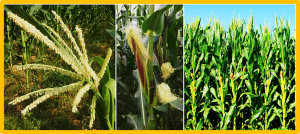
This research aimed to verify whether the presence of B chromosomes alters the female and male flowering time of Zea mays L. For this purpose, four experiments were carried out, three with inbred lines of the Zapalote Chico race and the last one with the hybrid Cateto x Zapalote Chico. These experiments consisted of classes differing in the number of B chromosomes and were designed in complete randomized blocks, with two replications.
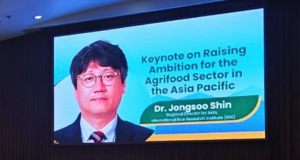
Bringing together government officials and representatives from nearly 20 countries, the Food and Agriculture Organization of the United Nations (FAO) and IRRI hosted a workshop on “Advancing Climate Ambition in the Agrifood Sector: Workshop on NDC 3.0 and COP30 Preparation in Asia-Pacific”. The event provided a platform for countries to exchange knowledge, refine strategies, and drive momentum toward the timely submission of enhanced Nationally Determined Contributions (NDCs) and prepare for the 30th Session of the Conference of the Parties (COP30) in Brazil.
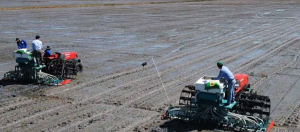
Fertilizer plays a critical role in agriculture, particularly rice production. A 2023 survey by IRRI involving 10,000 farmers in the Mekong Delta found that fertilizer costs make up about 30% of the cost of producing rice. Traditional farming practices worsen this situation by using high seed rates (over 120 kg per hectare) and excessive fertilizer use (more than 110 kg of Nitrogen per hectare).
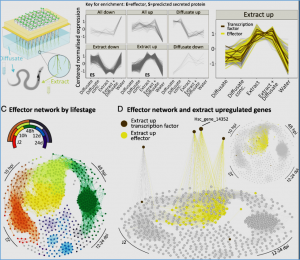
Pathogens must precisely tailor their gene expression to cause infection. However, a signaling cascade from host signal to effector production has remained elusive for metazoan pathogens. Here, we show that plants contain molecular signals, termed effectostimulins, that activate the first identified regulator of plant-parasitic nematode effectors. SUGR-1 directly binds effector promoters, and is central to a transcriptional network that activates 58 effector genes.