


News & Events
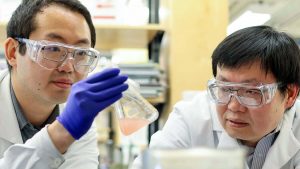
Researchers from the University of Alberta developed an engineered red yeast that converts forestry waste into a high-value fatty acid. This discovery could provide economic advantages to forestry and food industries. The study is published in Bioresource Technology. The researchers genetically modified red yeast by introducing two key enzymes found in pomegranate fruit. The yeast strain produced punicic acid, which has cholesterol-lowering, anti-inflammatory, and anti-carcinogenic properties.
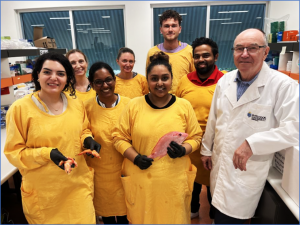
Researchers from James Cook University (JCU) in Australia, in collaboration with JCU's Tropical Futures Institute in Singapore, found that cell-based fish can lead to the production of safer seafood products with vastly diminished allergy risks after analysis of cultivated Japanese eel (Unagi) showed positive signs. Seafood is a leading trigger of food-induced anaphylaxis in many regions worldwide, and the group's research presented at the recent World Allergy Congress revealed that fish allergens in the cultivated Unagi were more than 10-fold lower compared to conventional eel.
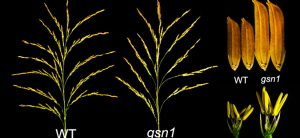
Heading date is a crucial agronomic characteristic in rice that governs the adaptability to different latitudes and the yield of various varieties. Optimizing the heading date of superior cultivars in breeding practice can significantly broaden their potential planting areas. Ghd7 and PRR37 are pivotal genes that control heading date and enhance agronomic traits. In the elite indica rice variety Mei Xiang Zhan 2 (MXZ2)
Vietnam National University researchers reported the development of iron-rich rice using CRISPR-Cas9 gene editing. The results are published in the Journal of Plant Biotechnology. Iron deficiency anemia impacts billions of individuals globally, especially in rice-consuming regions. One of the strategies to combat the further spread of the disease is the development of biofortified rice. Vietnamese rice cultivar TBR225 is an ideal candidate for iron biofortification because of its high-yielding characteristics and superior quality.
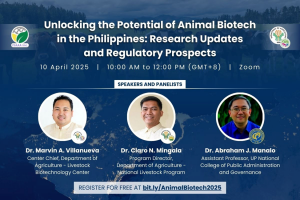
The webinar aims to provide an overview and status of animal biotechnology R&D in the Philippines and other countries and expound on the challenges and potential regulatory directions that can support the responsible and sustainable use of these technologies. The webinar also aims to foster meaningful discussions on animal biotech policies and regulations among stakeholders.
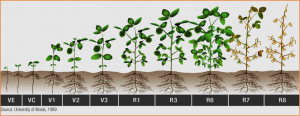
Plant height is an important architectural trait that affects crop growth, yield, and stress resistance. Tremendous efforts have been dedicated to revealing the genetic basis or regulatory mechanism; however, the underlying molecular mechanism remains largely unknown primarily due to the lack of controlling genes. In this study, we conducted a single-nucleotide resolution genome-wide association study (GWAS) of plant height using a diverse soybean panel collected worldwide with 6.7 million genome-wide variants (SNPs and Indels).
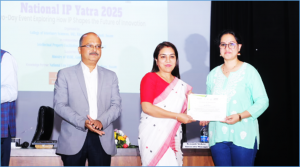
The International Crops Research Institute for the Semi-Arid Tropics (ICRISAT) successfully hosted a two-day National IP Yatra on 10 -11 March 2025, at the College of Veterinary Sciences, Assam Agricultural University, Guwahati. This significant event was organized by the Intellectual Property Facilitation Cell (IPFC) with support from the Ministry of Micro, Small and Medium Enterprises (MSME), Government of India.
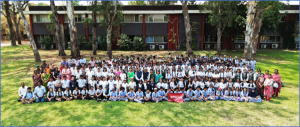
The International Crops Research Institute for the Semi-Arid Tropics (ICRISAT) commemorated its 54th Foundation Day with a milestone event focused on strengthening partnerships, reaffirming its commitment to transforming dryland agriculture and ensuring food and nutrition security in arid regions worldwide. The event brought together esteemed dignitaries, researchers, policymakers, and stakeholders to celebrate five decades of scientific excellence and partnerships. In his Foundation Day Address, Dr Himanshu Pathak, Director General of ICRISAT, highlighted ICRISAT’s pioneering contributions over the past five decades and its roadmap ahead.
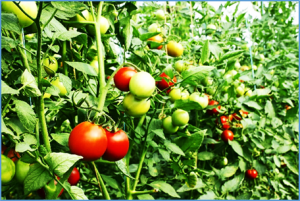
Soil pollution by microplastics (MPs) and cadmium (Cd) poses significant threats to agricultural production, yet their combined toxicity and underlying mechanisms remain poorly understood. Here, we examined the effects of three types of MPs-polyethylene (PE), polyvinyl chloride (PVC) and polypropylene (PP)-with particle sizes of 150 μm and 10 μm, in combination with Cd stress (5 mg/kg) on tomato (Solanum lycopersicum L.) growth. The results revealed that the combined treatment of MPs effectively alleviated the inhibitory effect of Cd stress.
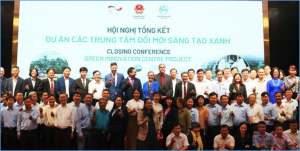
A closing conference for the "Green Innovation Centers" (GIC) project was held in Can Tho City, celebrating the successful collaboration between the Ministry of Agriculture and Environment (MAE) and the German Agency for International Cooperation (GIZ). In Vietnam, the International Rice Research Institute (IRRI), in close partnership with GIC and provincial Departments of Agriculture and Environment, has been implementing innovative techniques to enhance the rice value chain.
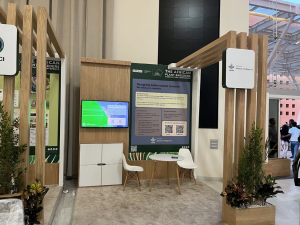
Investment decisions in agricultural research and development (R&D), particularly in plant breeding, often face significant ambiguity. Without clear market intelligence, funds may be spread across many breeding pipelines rather than concentrated in those with the greatest potential impact. A new study from the International Food Policy Research Institute (IFPRI) explored how plant breeding professionals use market information to prioritize R&D investments and how the quality and source of information influence their decision-making.
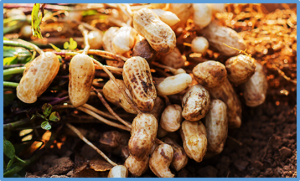
Cadmium (Cd) pollution significantly hampers cleaner production of peanut (Arachis hypogaea L.). Therefore, exploring of tolerance mechanisms to Cd stress and breeding of low-Cd peanut cultivars are urgently needed and require intense efforts. Herein, multi-omics and physiological studies reveal that multiple biological processes, including melatonin (MT) biosynthesis, are involved in the Cd tolerance in peanut plants. Exogenous MT was applied to peanut plants under Cd stress, which decreased Cd accumulation in roots, shoots and seeds for 40%-60%, and promoted the antioxidant capacity.