


News & Events
News & Events
Genetic identification of Pid3-1 and its regulatory role in promoting blast resistance in rice 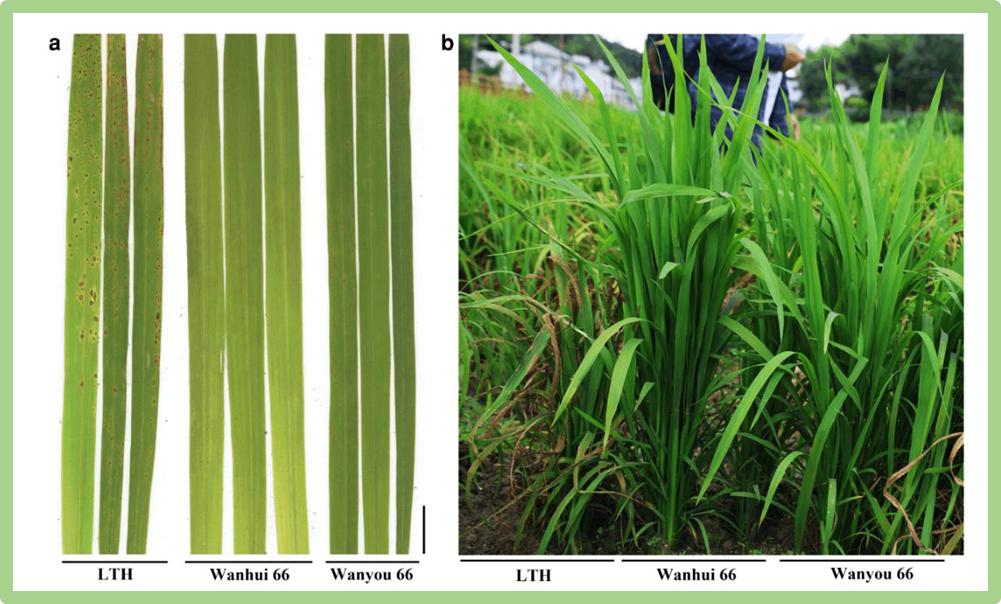
Friday, 05/06/2026 | 07:46:14
Rice blast is a destructive rice disease caused by the fungus Magnaporthe oryzae. Here, we identified a resistance gene from the rice cultivar Wanhui 66 which is resistant to the rice blast Guy11 isolate. Genetic mapping positioned a blast resistance locus to chromosome 6. Employing map-based cloning approach ultimately mapped the novel blast resistance locus to a genomic region of 117 kb that contains the Pid3 gene.
CRISPR Untangles Five-Gene Protein that Helps Plants Grow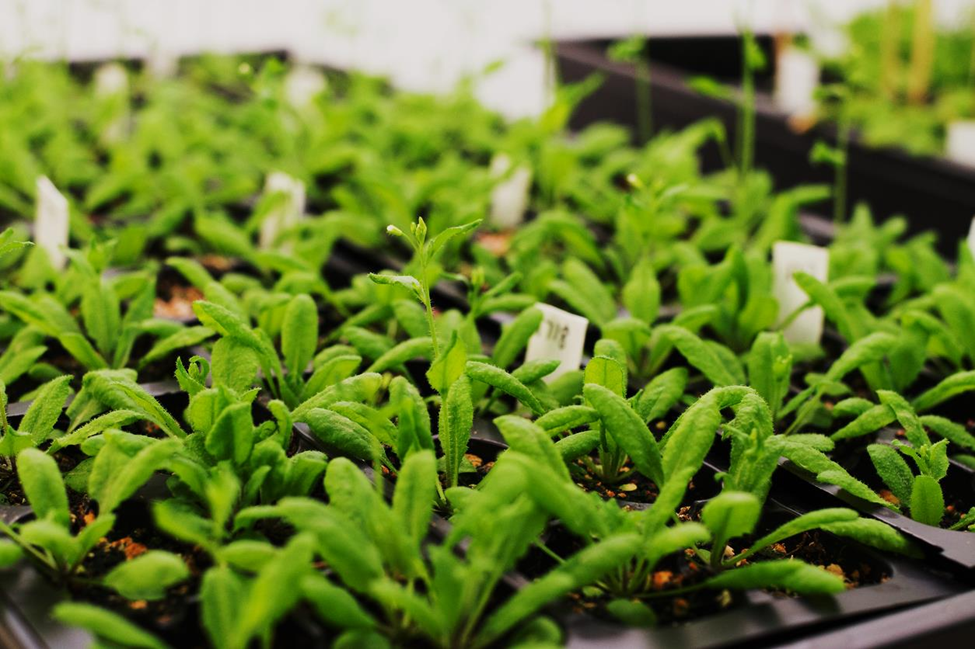
Friday, 05/06/2026 | 07:41:24
Scientists at Rice University have uncovered a critical mechanism that allows young plants to manage their energy and grow before they can harness sunlight. Published in Nature Communications, the study reveals how a specific protein regulates the size of peroxisomes—cellular compartments that process stored fatty acids for fuel during the seed-to-seedling stage. This discovery sheds new light on the delicate biological balancing act required for plants to survive their earliest days.
Ukraine to Harmonize GMO Regulations with EU by August 2026
Friday, 05/06/2026 | 07:40:29
Ukraine is bringing its agricultural biotechnology legislation closer to the European Union (EU) standard by revising its regulations. Starting in August 2026, the country will implement the law "On State Regulation of Genetic Engineering Activities and State Control over the Placement on the Market of Genetically Modified Organisms and Products." The comprehensive framework consolidates existing EU directives into a single document, effectively legalizing the use of genetically modified organisms (GMOs) in Ukraine under strict conditions of official registration.
CRISPR-Mediated Gene Editing for Inducing Thermosensitive Genic Male Sterility and Sheath Blight Resistance in Rice 
Friday, 05/06/2026 | 07:39:24
Recent advances in genome editing enable the researchers to focus more and more on the ability to manipulate genomes at specific sites. Efficient methods for genome editing further promote gene discovery and functional gene analyses in model plants as well as the introduction of novel desired agricultural traits in important species. CRISPR/Cas9 technology enables precise genetic modification through the creation of double-strand breaks in a target region and the generation of desired alterations during the repair process.
Gene Editing Improves Alkaline Tolerance in Grass Carp
Friday, 05/06/2026 | 07:38:29
Researchers from Zhejiang Institute of Freshwater Fisheries and partners in China have identified a gene linked to alkaline stress sensitivity in grass carp. They used CRISPR-Cas9 gene editing technology to improve the fish's tolerance to high-alkaline environments. The study focused on the Cbr1 gene, which was found to play a negative role in the grass carp's adaptation to alkaline water conditions.
Nutrition-Sensitive Trade: What Zanzibar’s Dagaa Fishery Reveals About Food and Nutrition Security
Friday, 05/06/2026 | 07:37:17
A recent study published in the journal of Environmental Research: Food Systems, examines how trade in aquatic foods can contribute to nutrition security across regions, using the dried dagaa (small pelagic fish) fishery in Zanzibar, Tanzania, as a case study. The authors introduce the concept of “nutrition-sensitive trade,” which refers to trade that delivers and balances access to nutrient-dense foods to multiple spatially distant populations, including nutritionally dependent or nutritionally vulnerable groups
(E)-2-Hexenal Combats Rice Sheath Blight Through Direct Pathogen Inhibition and Host Defense Reprogramming 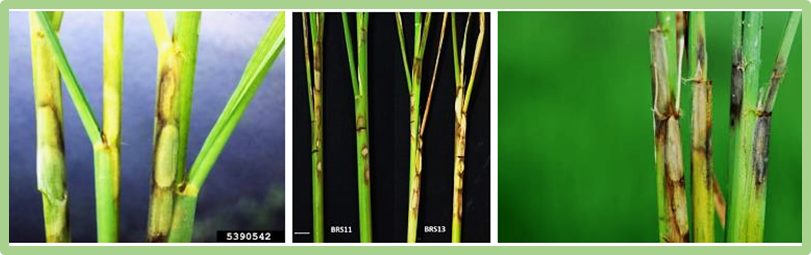
Thursday, 04/06/2026 | 08:28:26
Volatile organic compounds (VOCs) have garnered substantial research interest in recent years due to their biodegradability, low toxicity, and potent antimicrobial properties against various plant pathogens. As a typical herbivore-induced plant volatile (HIPV) elicited by Nilaparvata lugens (Brown planthopper, BPH), (E)-2-hexenal has been identified as a promising natural antimicrobial agent. In this study, we investigated the protective potential of (E)-2-hexenal against Rhizoctonia solani (R. solani) in rice
Study Reveals Limited GMO Knowledge Among Jordanian Adults
Thursday, 04/06/2026 | 08:25:30
Despite growing global use of biotechnology in food production, a study found that many adults in Jordan have limited knowledge and awareness of genetically modified organisms (GMOs). The research examined public understanding, attitudes, and awareness of GMOs among Jordanian adults and identified factors influencing acceptance of GM products.
Closing the gender gap in agrifood systems can help reduce food insecurity and boost global GDP: FAO gender experts
Thursday, 04/06/2026 | 08:24:54
The United Nations-designated The International Year of the Woman Farmer (IYWF 2026), shines a spotlight on the essential yet often overlooked roles women play across agrifood systems - from production to trade.In an interview with FAO Newsroom, Tacko Ndiaye, Gender Team Leader and Mariola Acosta, FAO’s Strategic Coordinator of the International Year of the Woman Farmer, discuss why women farmers are central to food security, nutrition and economic resilience,
Genetic mapping and diagnostic marker development for a co-localization interval conferring resistance to both Aspergillus flavus infection and aflatoxin production in peanut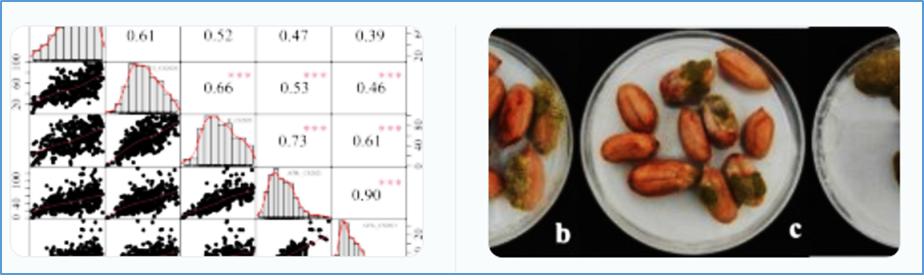
Wednesday, 03/06/2026 | 08:26:04
Aflatoxin contamination caused by Aspergillus flavus threatens the development of peanut industry, breeding aflatoxin-resistant peanut varieties are highly needed. In this study, a recombinant inbred line (RIL) population was developed from a cross between Zhonghua 16 and Kainong H03-3—a high-oleic acid peanut line exhibiting resistance to both A. flavus infection and aflatoxin production. Using this RIL population,
Indian Scientists Develop First AI-designed Genome Editing Tools for Crop Improvement
Wednesday, 03/06/2026 | 08:25:06
Genome editing has emerged as one of the most transformative biotechnological tools for modern agriculture, which enable precise crop improvement with unprecedented speed and accuracy. However, all currently available plant genome editing systems are derived from naturally occurring bacterial or archaeal proteins. In addition, the two most widely used genome editing platforms, Cas9 and Cas12, are protected by complex intellectual property frameworks, limiting their global accessibility and commercial deployment in some regions.
CRISPR Reduces Allergy Risk in Cultivated Beef Cells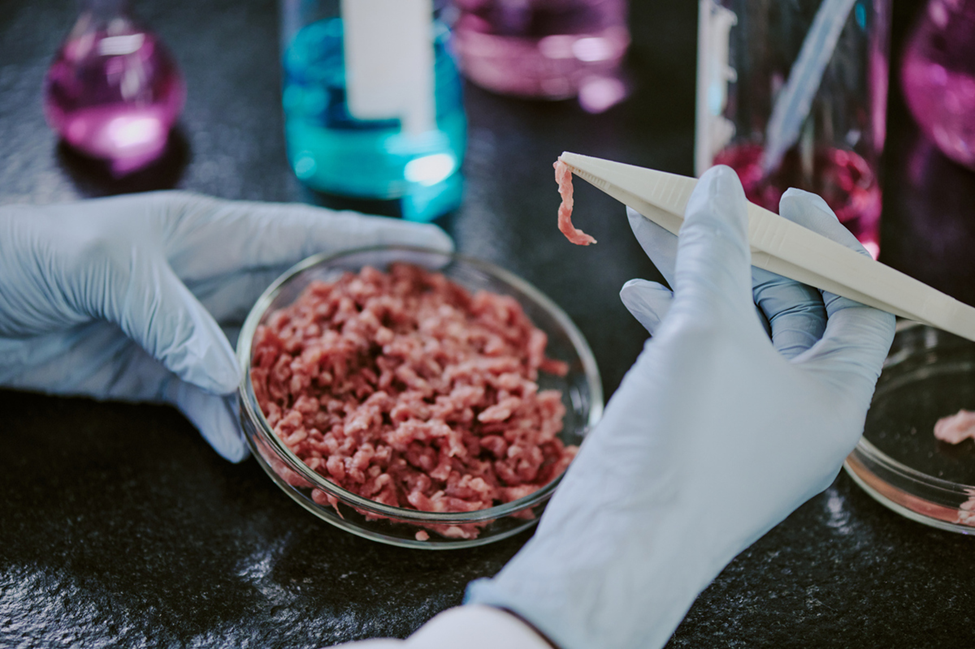
Wednesday, 03/06/2026 | 08:24:08
A new study used CRISPR-Cas9 gene editing to develop bovine muscle cells without alpha-gal, a sugar molecule linked to Alpha-Gal Syndrome (AGS), a potentially life-threatening allergy triggered by mammalian meat. The study presents a proof of concept for producing cultivated meat that may be safer for people affected by the condition.