


News & Events
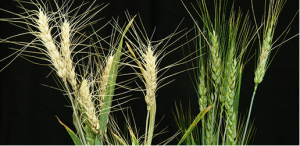
Scientists from the Agricultural Research Service (ARS) led by plant molecular geneticist Guihua Bai have identified a key gene that could be used as an important genetic resource by wheat breeders worldwide to address the constant challenge posed by Fusarium head blight (FHB). Also known as scab, FHB has caused an estimated US$2.7 billion in losses, in the state of Minnesota alone since the 1990s, and forced many wheat and barley farmers there into bankruptcy.
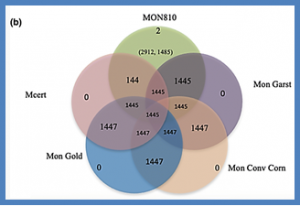
A genetically modified (GM) commercial corn variety, MON810, resistant to European corn borer, has been shown to be non-toxic to mammals in a number of rodent feeding studies carried out in accordance with OECD Guidelines. Insect resistance results from expression of the Cry1Ab gene encoding an insecticidal Bt protein that causes lysis and cell death in susceptible insect larvae by binding to midgut epithelial cells, which is a key determinant of Cry toxin species specificity.
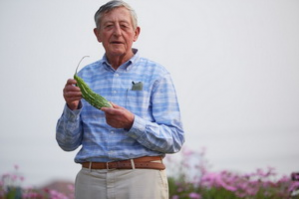
Simon N. Groot, vegetable breeder from the Netherlands and founder of East-West Seed is the 2019 World Food Prize Laureate. The announcement was made at a ceremony at the U.S. Department of Agriculture on June 10, 2019. Mr. Groot won the award for empowering millions of smallholder farmers in more than 60 countries to earn greater incomes through enhanced vegetable production, benefitting hundreds of millions of consumers with greater access to nutritious vegetables for healthy diets.

The International Rice Research Institute (IRRI), together with the Indian Embassy in the Philippines, celebrated Mahatma Gandhi’s 150th birth anniversary with a tree-planting ceremony. “For six decades, IRRI and India have been strong partners in improving the rice sector of the country,” said by H. E. Jaideep Mazumdar, the Ambassador of India to the Philippines.
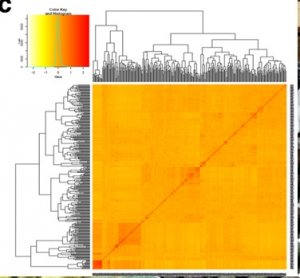
Study identified a total of 37 highly significant MTAs for 20 traits. The false discovery rate (FDR) ranged from 0.264 to 3.69×10- 4, 0.0330 to 1.25×10- 4, and 0.0534 to 4.60×10⁻⁶ in 2015WS, 2016DS and combined analysis, respectively. The percent phenotypic variance (PV) explained by SNPs ranged from 9 to 92%. Among the identified significant MTAs, 15 MTAs associated with the traits including nodal root, root hair length
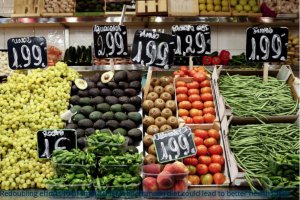
The Mediterranean diet, he said, has successfully combined the available food in the region, often grown by family farmers, for thousands and thousands of years. “If we allow it to disappear, what will be lost is not only the Mediterranean diet itself but also all the culture and the environment that enabled its development,” he said in remarks at a high-level event at the Future of Food symposium at FAO (10-11 June).
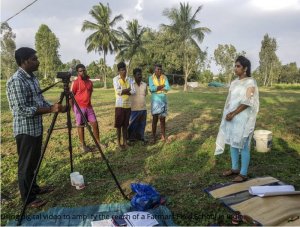
Digital agriculture has the potential to deliver signicant economic, social and environmental benets and, if promoted in an inclusive manner, it can contribute to the Sustainable Development Goals, FAO DirectorGeneral José Graziano da Silva said today. "Information and communications technology has the potential to reshape not only the way we work in agriculture but also our food systems, the way we will eat in the future," he said.
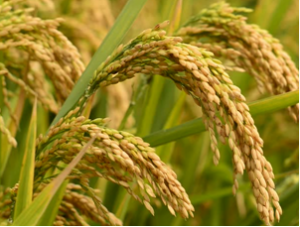
The inhibitor of apoptosis protein (IAP) family has been identified in a variety of organisms. All IAPs contain one to three baculoviral IAP repeat (BIR) domains, which are required for anti-apoptotic activity. Here, we identified a type II BIR domain-containing protein, MoBir1, in the rice blast fungus Magnaporthe oryzae.

While undernutrition persists, we are witnessing an unprecedented rise in obesity and diet-related non-communicable diseases, also in low- and middle-income countries.What is wrong with our food systems? How will we feed a growing and urbanizing world population with natural resources that are more and more limited and depleted?

In a message published in the ISAAA Blog, Dr. Mahaletchumy Arujanan, ISAAA's new Global Coordinator invites agricultural biotechnology stakeholders to join her and ISAAA in a new direction that will to realize the full potential of the technology in achieving agricultural sustainability and development.