


News & Events
News & Events
Director-General advocates for sustainable livestock sector at FAO Livestock Week
Wednesday, 08/10/2025 | 08:08:01
Director-General QU Dongyu addressed significant global livestock events during the Livestock Week held at FAO headquarters from 29 September to 3 October, in which he reinforced FAO’s commitment to achieving a sustainable livestock sector.
The week started with the Global Conference on Sustainable Livestock Transformation, where the Director-General highlighted the socioeconomic importance of the livestock sector, which supports the livelihoods of around 1.3 billion people globally and makes up 40 percent of the world's agricultural GDP, while contributing significantly to food security and nutrition.
Duplication of a conserved mitochondrial enzyme gene arms parasitoid wasps with venom cytotoxicity and oogenesis regulation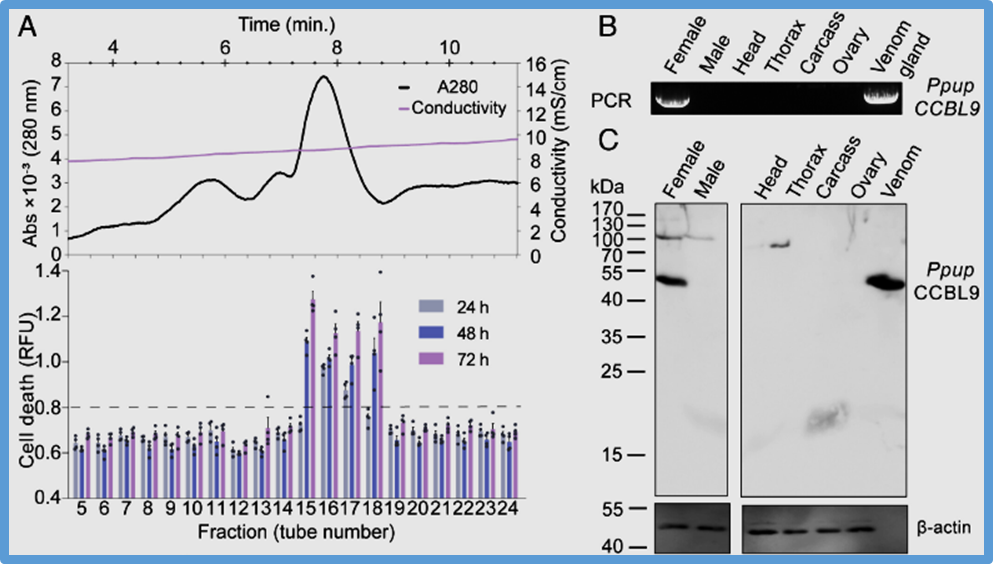
Monday, 06/10/2025 | 15:38:41
Gene duplication, followed by neofunctionalization, is a key mechanism driving the emergence of evolutionary novelties. Despite its significance, the molecular and functional processes underlying this phenomenon remain incompletely understood. By tracing the evolutionary history of cysteine-S-conjugate beta-lyase genes within the kynurenine aminotransferase family, we identified a gene duplication event in parasitoid wasps of the Chalcidoidea superfamily. Notably, a single-copy, highly conserved mitochondria-localized physiological gene underwent a significant duplication, resulting in one copy being recruited into the venom system and acquired cytotoxicity against wasps' hosts.
Argentina Approves GM Soybean DBN8205
Monday, 06/10/2025 | 15:37:22
Argentina’s Ministry of Economy approved the commercialization of genetically modified soybean DBN8205. The decision indicated that the GM soybean is as safe as any other commercial soybean.
DBN8205 was developed by DBN Biotech Argentina to confer soybean plants with resistance to lepidopteran insects and tolerance to glufosinate ammonium herbicide. The approval allows marketing and planting of the stacked insect resistant and herbicide tolerant GM soybean throughout the country after submission of an insect resistance management plan and registration in the National Registry of Cultivars.
Africa’s youth and the future of food: IFPRI’s Key takeaways from AFS Forum 2025
Monday, 06/10/2025 | 15:36:28
Over 60% of Africa’s people are under 25. By 2035, more young Africans will join the workforce each year than in the rest of the world combined, underscoring the urgency of the 2025 African Food Systems Forum (AFS Forum) theme: “Africa’s Youth: Leading Collaboration, Innovation, and Implementation of Agri-Food Systems Transformation.”
The spotlight on youth was clear from the outset. Presidents Bassirou Diomaye Faye of Senegal and Paul Kagame of Rwanda engaged in substantive dialogue with young agrifood entrepreneurs from across the continent. Their energy was sustained through to a jubilant award ceremony celebrating the “Go-Gettaz” along with other prizes honoring young Africans.
Development of Or-gene-based co-dominant markers and their utilization in marker-assisted breeding for ß-carotene biofortification in different maturity groups of cauliflower
Monday, 06/10/2025 | 06:24:53
β-Carotene biofortified crops are the most effective and sustainable components in food-based approaches to tackle vitamin A deficiencies in public. Orange cauliflower (Or gene) is one such options; however, co-dominant marker(s) are an essential requirement to deal with a semi-dominant Or gene for foreground selection in marker-assisted breeding. Thus, the present study aimed to develop and validate co-dominant marker(s) for the Or gene and deploy them for rapid recovery of homozygous OrOr progenies in three different maturity groups of Indian cauliflower. Consequently, three crosses from the early (PA/PKVA-1HM), mid-early (DC 325/PKVA-1HM) and mid-late maturity (DC 244/PKVA-1HM) groups were advanced to F2, F2:3, BC2F1 and BC1F2.
John Innes Centre and Quadram Institute to Conduct Gene-Edited Tomato Food Trial
Monday, 06/10/2025 | 06:23:31
Researchers from the John Innes Centre and the Quadram Institute have developed a tomato that accumulates high levels of pro-vitamin D3—a precursor to vitamin D, also known as the "sunshine vitamin." By precisely tailoring the plant's genes, the tomatoes now contain as much Vitamin D as two eggs, with levels increasing further upon exposure to UV light. This approach offers a sustainable and accessible solution, especially benefiting the nearly one billion people globally who lack sufficient Vitamin D.
ICRISAT Brings Frontier Agricultural Science to the Caribbean in Landmark Partnership
Monday, 06/10/2025 | 06:21:58
The world’s premier institute for dryland agriculture and a globally acclaimed research center, the International Crops Research Institute for the Semi-Arid Tropics (ICRISAT), has brought its frontier science to Jamaica through a landmark partnership with the CARICOM Private Sector Organisation (CPSO) and SEPROD, the region’s largest food and FMCG distributor.
Backed by ICRISAT’s global expertise, the project will fast-track the development of superior forage and dual-purpose sorghum varieties in Jamaica, to address fodder shortages, enhance livestock yields, and improve climate resilience to strengthen food and feed security and help cut CARICOM’s US$6 billion food import bill by 25% by 2030.
A BAC-guided haplotype assembly pipeline increases the resolution of the virus resistance locus CMD2 in cassava
Sunday, 05/10/2025 | 06:44:11
In the present study, we generate BAC libraries of the CMD-susceptible cassava cultivar (cv.) 60444 and the CMD-resistant landrace TME3. We subsequently identify and sequence BACs belonging to the CMD2 region in both cultivars using high-accuracy long-read PacBio circular consensus sequencing (ccs) reads. We then sequence and assemble the complete genomes of cv. 60444 and TME3 using a combination of ONT ultra-long reads and optical mapping
USDA APHIS Deregulates GE Insect Resistant Corn
Sunday, 05/10/2025 | 06:44:46
The U.S. Department of Agriculture's (USDA) Animal and Plant Health Inspection Service (APHIS) has deregulated genetically engineered MON 95379 corn. This corn, developed by Bayer U.S. -Crop Science (Bayer), is resistant to feeding damage caused by certain pests, including fall armyworm, sugarcane borer, and corn earworm.
After a thorough review, APHIS determined that MON 95379 is unlikely to pose a greater plant pest risk than the non-modified comparator and, therefore, is no longer subject to its regulation governing the introduction of certain organisms developed using genetic engineering.
Argentina Approves GM Soybean DBN8205
Sunday, 05/10/2025 | 06:43:08
Argentina's Ministry of Economy approved the commercialization of genetically modified soybean DBN8205. The decision indicated that the GM soybean is as safe as any other commercial soybean.
DBN8205 was developed by DBN Biotech Argentina to confer soybean plants with resistance to lepidopteran insects and tolerance to glufosinate ammonium herbicide. The approval allows marketing and planting of the stacked insect resistant and herbicide tolerant GM soybean throughout the country after submission of an insect resistance management plan and registration in the National Registry of Cultivars.
Nanotechnology-driven coordination of shoot–root systems enhances rice nitrogen use efficiency
Saturday, 04/10/2025 | 07:28:07
Enhancing nitrogen use efficiency (NUE) in agricultural production can reduce fertilizer input, mitigate greenhouse gas emissions and decrease water pollution incidence. However, improving NUE in farming systems without compromising food security remains challenging. Herein, we have successfully developed and applied selenium-based nanotechnology, which capitalizes on above- and belowground synergies to enhance field-scale NUE. Specifically, when N fertilizer application was reduced by 30%, foliar application of selenium nanomaterials significantly enhanced rice photosynthesis by 40.3% compared with reduced N fertilizer treatment (189 kg N/ha).
Researchers Discover Two Rice Proteins That Negatively Modulate Immunity
Saturday, 04/10/2025 | 07:26:40
The Crop Journal highlights the significance of post-translational modifications (PTMs) in regulating rice plant immunity. Through a study conducted by China's Zhejiang University researchers and colleagues, two proteins were found to be vital in the defense response.
The researchers focused on the balance between two opposing PTMs, ubiquitination and SUMOylation, which control two proteins, OsEHD1 and OsEHD2, that act as negative regulators of rice defense against rice blast and bacterial blight. They found that the enzyme OsBBI1 tags OsEHD1 and OsEHD2 with a "destroy" signal (ubiquitin), marking them for degradation. Removing these two proteins led to improved rice plant immunity, confirming their function in weakening the defense response.