


News & Events
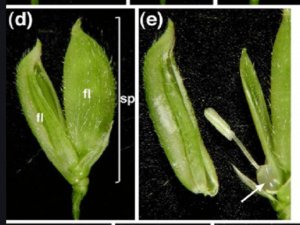
DNA test is broadly used in diagnosis of crop disease and identification of genetic modified organism (GMO) in agriculture. However, rapid, low-cost, user-friendly, and field-deployable DNA test method is still limit. Recently, the RNA programmable nuclease of CRISPR/Cas is engineered as a new nucleic acid detection platform, but their application in plant remains to explore. In this study, we evaluated the Cas12a-based DNA detection for crop disease diagnosis and GMO test. A total of 14 crRNAs were designed to target two Magnaporthe oryzae genes and a synthetic Cry1C gene which encodes Bacillus thuringiensis δ-endotoxin and has been used to develop transgenic rice cultivar (Bt-rice) in China.

The VIB in Belgium has submitted an application for a new field trial for genetically modified (GM) maize with an improved growth factor called AN3. The AN3 gene activates other genes involved in plant growth. When it is overexpressed, cell division continues for a longer period and important plant parts such as leaves become larger, therefore increasing biomass. Greenhouse experiments also showed that the plants will continue to grow better during drought, indicating that the plants would likely be better adapted to the threat of global warming.

An international team of scientists led by Associate Professor Omar Akbari's Lab at the University of California San Diego (UC San Diego) has engineered mosquitoes that stop the transmission of the Dengue virus. The UC San Diego Lab worked with colleagues at Vanderbilt University Medical Center in identifying a broad spectrum human antibody for Dengue suppression. The development marks the first engineered approach in mosquitoes that targets the four known types of Dengue, improving upon previous designs that addressed single strains.

The fruit of ‘Dangshansuli’ pear is yellowish green in colour, while that of its mutant ‘Xiusu’ is russet in colour. A differentially expressed gene, PbSPMS, was screened from the transcriptomes of the exocarps of ‘Dangshansuli’ and ‘Xiusu’ fruit. To understand the role of PbSPMS in the russet exocarp formation of ‘Xiusu’, the expression of the PbSPMS gene in the exocarp of ‘Dangshansuli’ and ‘Xiusu’ at different stages of development was analysed. The functions of the PbSPMS gene in phenolic synthesis and suberin and polyamine (PA) deposition in Arabidopsis plants and the responses to drought and salt stress were also studied.
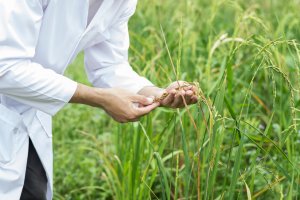
DNA test is widely used for disease detection and identification of GMOs. However, DNA test is expensive and there is a need to develop a rapid, low-cost, user-friendly, and field-deployable DNA test method. Huazhong Agricultural University scientists developed a CRISPR-Cas9-based DNA detection method and the results are released in Molecular Breeding. Fourteen (14) CRISPR RNAs were engineered to target two rice blast fungus genes and a synthetic Cry1C gene used in Bt rice.

Since the first year of commercial planting of biotech crops in 1996, more than 70 countries from all over the world have either planted or imported biotech crops. In 1996, the six founder biotech crop countries, the USA, China, Argentina, Canada, Australia, and Mexico, planted these crops in a total of 1.7 million hectares. In 2018, 70 countries adopted biotech crops - 26 countries planted and 44 imported. The total biotech crop area of 191.7 million hectares in 2018 was grown by 26 countries, 21 developing and 5 industrial countries.
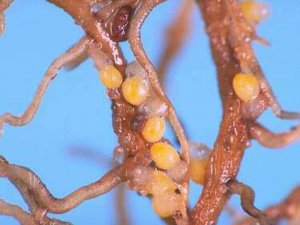
The soybean cyst nematode (SCN), Heterodera glycines, is the most serious pathogen of soybean production throughout the world. Using resistant cultivars is the primary management strategy against SCN infestation. To gain insight into the still obscure mechanisms of genetic resistance to nematodes in different soybean genotypes, RNA-Seq profiling of the roots of Glycine max cv. Peking, Fayette, Williams 82, and a wild relative (Glycine soja PI 468916) was performed during SCN infection at the migratory phase. The analysis showed statistically significant changes of expression beginning at eight hours after inoculation in genes associated with defense mechanisms and pathways, such as the phenylpropanoid biosynthesis pathway, plant innate immunity and hormone signaling.
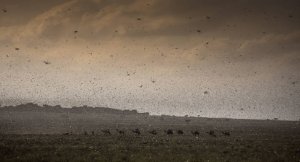
Desert Locust swarms in Ethiopia, Kenya and Somalia - already unprecedented in their size and destructive potential - could swell exponentially and spill over into more countries in East Africa if efforts to deal with the voracious pest are not massively scaled up across the region, FAO warned today. "This has become a situation of international dimensions that threatens the food security of the entire subregion. FAO is activating fast-track mechanisms that will allow us to move swiftly to support governments in mounting a collective campaign to deal with this crisis," said FAO Director-General QU Dongyu.

The Global Forum for Food and Agriculture (GFFA) drew to a close today with the agriculture ministers of 71 nations, thanking FAO and the other International Organisations for developing a concept for the establishment of an International Digital Council for Food and Agriculture, as requested in the 2019 GFFA Final Communiqué. They welcomed FAO's efforts on the concept and call upon FAO's governing bodies to support a process for its establishment. The ministers issed a final communiqué full of pledges to make trade contribute to global food security and help smallholders access larger value chains.
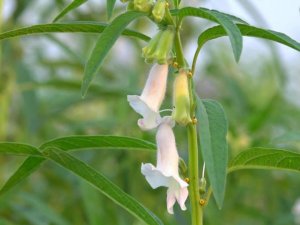
Sesame is a high-height crop. Here we systematically analyzed the morphological and genetic characters of the sesame dwarf mutant dw607 (dwf1 type). The plant height and the internode length of dw607 significantly declined, while the thousand seed weight (TSW) significantly increased (P < 0.01). The cell size of stem parenchyma and pith tissue reduced, and vascular bundle cells and parenchyma tissue arranged much tighter in the dwarf mutant.
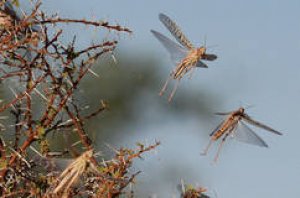
Locusts are the oldest migratory pest in the world. They differ from ordinary grasshoppers in their ability to change behaviour (gregarize) and form swarms that can migrate over large distances. The most devastating of all locust species is the Desert Locust (Schistocerca gregaria). During plagues, it can easily affect 20 percent of the Earth's land, more than 65 of the world's poorest countries, and potentially damage the livelihood of one tenth of the world's population.

A team of scientists from Denmark, Japan, Austria, and Germany explored on how to ensure that crop plants continue to be productive amidst changing climate. The results of their study are published in Nature Communications. The researchers investigated the plant Lotus japonicus, which had limited genomic changes but is still able to adapt to diverse climates in Japan, ranging from subtropical to temperate.