


News & Events
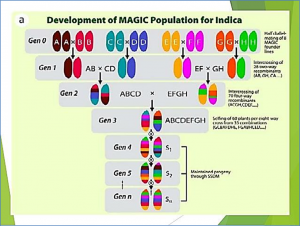
The presumed advantages of multiparent advanced generation intercross (MAGIC) population in quantitative trait locus (QTL) mapping were not fully utilized in the previous studies in which genome-wide association studies (GWAS) were conducted at only single nucleotide polymorphism level. In this study, we genotyped a rice four-way MAGIC population of 247 F7 lines and their parents by sequencing. A total of 5934 bins with an average length of 65 kb were constructed and covered 97% of the genome. The MAGIC population showed low population structure and balanced parental contributions.

The ubiquity, portability and mobility of digital technologies are transforming agriculture and food production. Specifically, in the agriculture and food sector, the spread of mobile technologies, remote-sensing services and distributed computing are already improving smallholders’ access to information, inputs and markets, increasing production and productivity, streamlining supply chains and reducing operational costs.

Director-General QU Dongyu today personally presented engraved silver medals to colleagues who have served the Organization for 25 years, thanking each for their dedication, determination, engagement and contribution. Short biographical notes were read for each recipient, highlighting the wealth and diversity of experience at FAO headquarters and the agency’s network of regional and national offices.
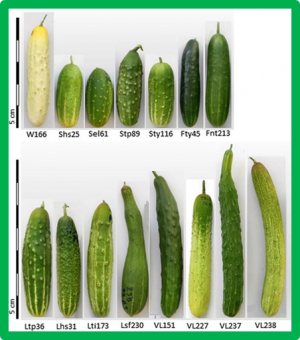
The Cucurbitaceae family hosts many economically important fruit vegetables (cucurbits) such as cucumber, melon, watermelon, pumpkin/squash, and various gourds. The cucurbits are probably best known for the diverse fruit sizes and shapes, but little is known about their genetic basis and molecular regulation. Here, we reviewed the literature on fruit size (FS), shape (FSI), and fruit weight (FW) QTL identified in cucumber, melon, and watermelon, from which 150 consensus QTL for these traits were inferred. Genome-wide survey of the three cucurbit genomes identified 253 homologs of eight classes of fruit or grain size/weight-related genes cloned in Arabidopsis, tomato, and rice that encode proteins containing the characteristic CNR (cell number regulator), CSR (cell size regulator), CYP78A (cytochrome P450), SUN, OVATE, TRM (TONNEAU1 Recruiting Motif), YABBY, and WOX domains.

The US Department of Agriculture (USDA) released the monthly World Agricultural Supply and Demand Estimates, which surprised agricultural analysts. It was anticipated that yields for corn and soybeans would decrease, but USDA reported "a slightly higher production, reduced food, seed, and industrial use, larger feed and residual use, lower exports, and smaller ending stocks" for corn.
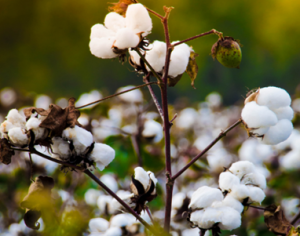
Scientists from Nanjing Agricultural University in China and partners used genome-wide association to reveal genetic variation of lint yield components of cotton under saline conditions. Their findings are published in BMC Plant Biology. The researchers assessed the three main components of lint yield, single boll weight, lint percentage, and boll number per plant, across 316 cotton accessions under four salt conditions for two years.
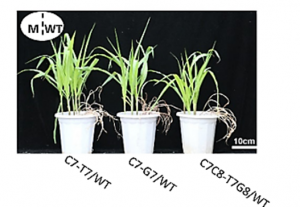
Single-nucleotide polymorphisms contribute to phenotypic diversity in maize. Creation and functional annotation of point mutations has been limited by the low efficiency of conventional methods based on random mutation. An efficient tool for generating targeted single-base mutations is desirable for both functional genomics and precise genetic improvement. The objective of this study was to test the efficiency of targeted C-to-T base editing of two non-allelic acetolactate synthase (ALS) in generating sulfonylurea herbicide-resistant mutants
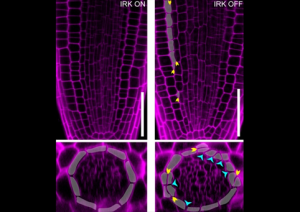
Research conducted at the University of California, Riverside (UC Riverside) has identified a protein that controls plant growth. The protein, IRK, was found in the root cells of a plant related to mustard while researchers were looking for clues to the ways plant cells divide or expand. According to Jaimie Van Norman, assistant professor of plant sciences at UCR and leader of the study, when IRK is present, the root perceives a signal that tells cells not to divide. "This discovery gives us another way to control growth," Van Norman said. "Understanding how the plant itself stops growth can also allow us to accelerate growth."
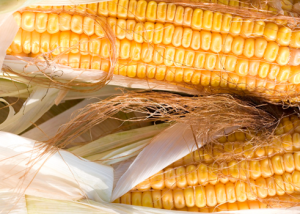
Researchers from Michigan State University (MSU) used information in the corn's RNA to create models and make accurate predictions of its phenotypic traits prior to the corn's full growth and development. The new information documented in their study can help other researchers understand the mechanisms involved in the plant processes and in the selection of breeding lines with desirable traits without having to go through years of traditional breeding selection.
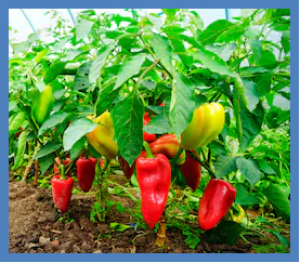
Myzus persicae is one of the most threatening insect pests that adversely affects pepper (Capsicum) cultivation. Resistance to aphids was previously identified in Capsicum baccatum. This study aimed at elucidating the genetics of aphid resistance in C. baccatum. A QTL analysis was carried out for M. persicae resistance in an F2 population derived from an intraspecific cross between a highly resistant plant and a susceptible plant. Survival and reproduction were used as resistance parameters.
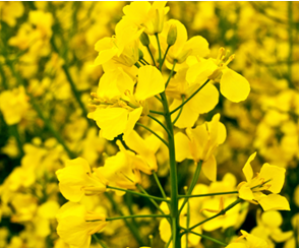
An international consortium of key academic and global seed company leaders from the USA, Canada, Europe, and Israel has successfully sequenced the canola genome. The consortium, led by Dr. Isobel Parkin, research scientist from Agriculture and Agri-Food Canada (AAFC), and Dr. Andrew Sharpe, director of genomics and bioinformatics from the Global Institute for Food Security (GIFS) at the University of Saskatchewan (USask) reached a key milestone in completing the full assembly and mapping the genomes of 10 diverse canola varieties cultivated in Canada, U.S., and Europe.
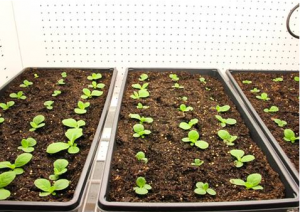
A research group at Massachusetts Institute of Technology (MIT) led by Christopher Voigt, the Daniel I.C. Wang Professor of Advanced Biotechnology, has moved closer to developing nitrogen-fixing cereal crops.To develop nitrogen-fixing cereal grains, the researchers in the Voigt Lab targetted specific genes in the nitrogen-fixing bacteria that operate symbiotically with legumes, called the nif genes.