


News & Events
Fifteen universities in Canada have joined forces to tackle climate change by pledging to follow responsible investment practices. The charter recognizes climate change to have profound social, economic, and environmental changes in Canada and around the world. As such, universities have a responsibility to act constructively to address this challenge.
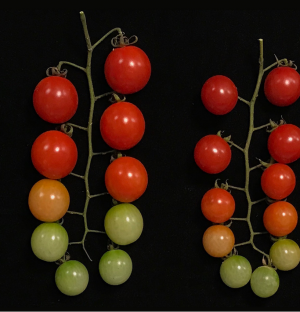
Researchers led by Zachary Lippman at Howard Hughes Medical Institute (HHMI) have identified long-concealed hidden mutations within the genomes of 100 types of tomatoes, including an orange-berried wild plant from the Galapagos Islands, and varieties typically processed into ketchup and sauces. The team's analysis is the most comprehensive assessment of such mutations – which alter long sections of DNA – for any plant and could lead to the creation of new tomato varieties and the improvement of existing ones.
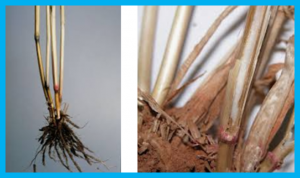
Fusarium crown rot (FCR) is a chronic and severe disease in many dryland wheat-producing areas worldwide. In the last few years, the incidence and severity of FCR progressively increased in China, and the disease has currently become a new threat to local wheat crops. Here, we report a genome-wide association study (GWAS) on a set of 358 Chinese germplasms with the wheat 55 K SNP array.

Computational biologists in the Media Lab's Molecular Machines group and the MIT Center for Bits and Atoms have successfully engineered new proteins with improved genome editing capabilities and patterned from naturally occurring enzymes. This breakthrough reported in Nature Biotechnology significantly expands the spectrum of DNA sequences that can be accurately and effectively accessed.

A social media post-training poll has revealed that 73% of women in biosciences would be willing to write and engage online audiences through Twitter and opinion pieces. This was after the science communication training conducted by African Women for Bioscience (AWfB), in partnership with ISAAA AfriCenter, indicating skill-set attainment and development of self-confidence.
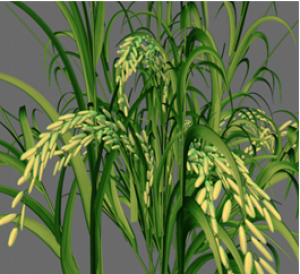
In the future, taking your blood pressure medication could be as simple as eating a spoonful of rice. This "treatment" could also have fewer side effects than current blood pressure medicines. As a first step, researchers reporting in ACS' Journal of Agricultural and Food Chemistry have made transgenic rice that contains several anti-hypertensive peptides. When given to hypertensive rats, the rice lowered their blood pressure. High blood pressure, also known as hypertension, is a major risk factor for cardiovascular disease and stroke.

Researchers were successful in developing a genetically modified (GM) rice that can reduce high blood pressure when consumed, without any side effects. Scientists from the Chinese Academy of Sciences genetically modified a variety of rice by introducing a gene that consisted of nine angiotensin converting enzyme (ACE)-inhibitory peptides plus a blood-relaxing peptide linked together.

ISAAA Webinars present Genome Editing 101: Getting Ready for Business, a webinar hosted by ISAAA AfriCenter and moderated by Dr. Margaret Karembu, Director of ISAAA AfriCenter. It will be held on July 3, 2020, at 1200H to 1330H GMT, and is FREE for all. The webinar will explore the opportunities that genome editing can offer in entrepreneurship and boosting bio-economies.
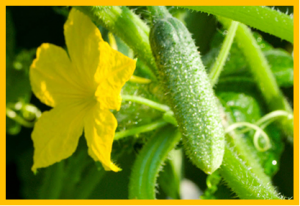
The legendary cucumber inbred line WI2757 possesses a rare combination of resistances against nine pathogens, which is an important germplasm for cucumber breeding. However, WI2757 flowers late and does not perform well under field conditions. The genetic basis for horticulturally important traits other than disease resistances in WI2757 is largely unknown. In this study, we conducted QTL mapping using F2 and recombinant inbred line (RIL) populations from the WI2757 × True Lemon cross that were segregating for multiple traits.
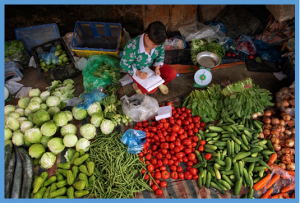
Lately when I read the news I get the frightening sense that the majority of humanity is just waiting. Leaders in politics and business are waiting for the day they can get back to business as usual, while performing the balancing act of protecting the economy versus protecting human lives from the costs of the COVID-19 pandemic. Everyone else besides is just waiting for things to get back to normal. But the trouble is, there is no getting back to normal. Everything is changing.
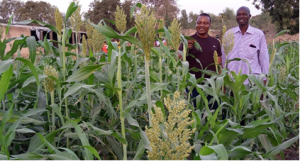
A new variety of sorghum that delivers high yields of grain and stover is gaining popularity in Burkina Faso, a region where livestock feed remains a challenge. The ICRISAT-developed variety, Soubatimi, can be grown in the rainy and post-rainy seasons, benefiting farmers and livestock owners alike. Mr Leon Badiara, from the Ministry of Animal and Fisheries Resources, and founder of Genetic Center, Burkina Faso, first heard about Soubatimi at the SAGE (Société Africaine de Génétique) launching conference in Ouagadougou, in November 2018.
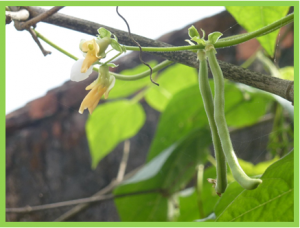
Cooking time is a major factor associated with consumer preference of dry beans (Phaseolus vulgaris L.). The genetic control of cooking time was investigated with a quantitative trait loci (QTL) study on a recombinant inbred line (RIL) population developed from TZ-27 (slow cooking) and TZ-37 (fast cooking). The RIL population of 146 lines was grown on research farms over 2 years in Arusha and Morogoro, Tanzania. Arusha is an important mid-altitude bean-growing region, with moderate temperatures and reliable rainfall, whereas the low altitude and high temperatures in Morogoro make it unfavorable for bean production.