


News & Events
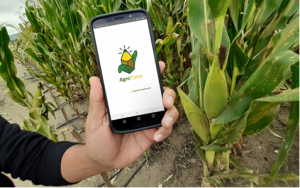
While technology and data analysis have revolutionized farming in high-income countries, farmers in low-income nations have often been left out. New tools developed by CGIAR centers are narrowing the digital divide for smallholder farmers. These tools are increasingly gaining international notice beyond the field of agriculture, as a recent international award attests. The 2020 Innovative Applications in Analytics Award (IAAA) was awarded to the International Maize and Wheat Improvement Center (CIMMYT), the Alliance of Bioversity International and CIAT, and the International Institute for Applied Systems Analysis (IIASA).
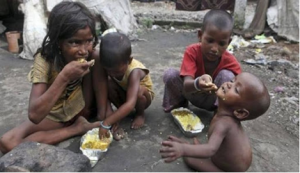
Planned reforms at FAO are aimed mainly at delivering better and more timely services to the world’s most vulnerable people, Director-General QU Dongyu told ambassadors of the G77 countries and China. “If we don’t achieve efficiency, who is the big loser?” he asked. “Poor people.” The Director-General briefed the G77 and China bureau members –the largest intergovernmental organization of developing countries in the United Nations, which provides the means for the countries of the South to articulate and promote their collective economic interests and enhance their joint negotiating capacity – on his planned overhaul of FAO’s organizational structure, which will be under consideration at the upcoming FAO Council Session (6 – 10 July).
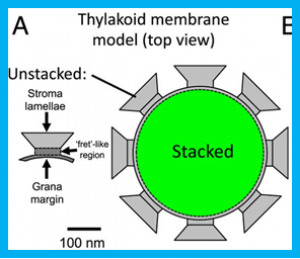
In photosynthetic electron transport, large multiprotein complexes are connected by small diffusible electron carriers, the mobility of which is challenged by macromolecular crowding. For thylakoid membranes of higher plants, a long-standing question has been which of the two mobile electron carriers, plastoquinone or plastocyanin, mediates electron transport from stacked grana thylakoids where photosystem II (PSII) is localized to distant unstacked regions of the thylakoids that harbor PSI.
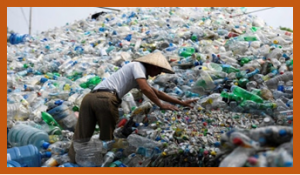
Plastic pollution is one of the most visible and complex environmental issues today. Interested and concerned parties include researchers, governmental agencies, nongovernmental organizations, industry, media, and the general public. One key assumption behind the issue and the public outcry is that plastics last indefinitely in the environment, resulting in chronic exposure that harms animals and humans. But the data supporting this assumption are scant.
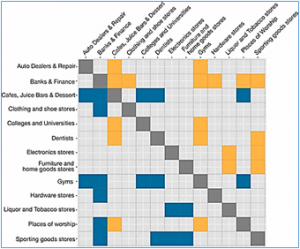
To prevent the spread of coronavirus disease 2019 (COVID-19), some types of public spaces have been shut down while others remain open. These decisions constitute a judgment about the relative danger and benefits of those locations. Using mobility data from a large sample of smartphones, nationally representative consumer preference surveys, and economic statistics,
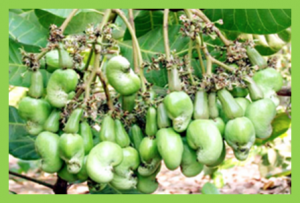
Mr Ngo Minh Dung – a PhD Scholar, submitted his Thesis at Preliminary Session on June 16, with the title of “Study on specific light treatments inducing dragon fruit crop (Hylocereus undatus (Haw) Britt. and Rose) flowering” at the IAS.
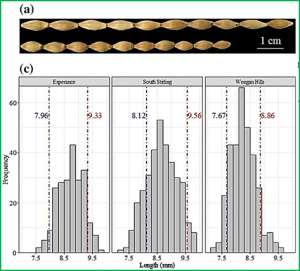
Increasing yield is an important target for barley breeding programs. One approach to increase yield is by enhancing individual grain weights through the regulation of grain size. Fine mapping major grain size-related quantitative trait loci is necessary for future marker-assisted selection strategies, yet studies of this nature are limited in barley. In the present study, we utilised a doubled haploid population derived from two Australian malt barley varieties, Vlamingh and Buloke, coupled with extensive genotypic and phenotypic data from three independent environments.
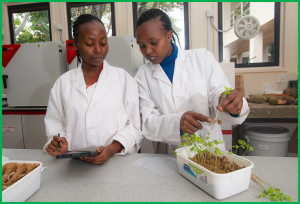
Collaboration among scientists to transform food, land and water systems will be key to feeding the world in the face of climate change, COVID-19 and other challenges, says the world’s largest agricultural research network. CGIAR, a global partnership with almost 50 years’ experience in agricultural research for development, argues that fragmentation of the research agenda into single commodities and other pieces of the problem has limited the potential of science to holistically transform food systems, and advance global goals to end poverty and hunger by 2030.
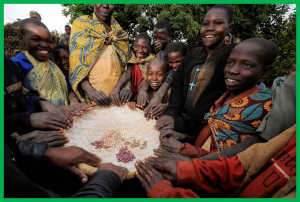
International agricultural science is facing a new era. The research network CGIAR decided on a fundamental reform in mid-June: The 15 research centers, spread over three continents, will be consolidated. This was announced by Marco Ferroni, Chairman of the System Management Board. “The core of the reform is a systemic approach to all areas,” he said at a press briefing. This will include the creation of a superordinate management structure to organize all phases of development more effectively.
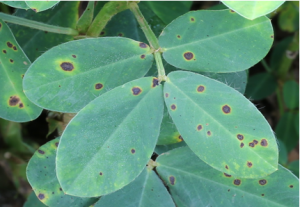
Early leaf spot (ELS) and late leaf spot (LLS) are two serious peanut diseases in the USA, causing tens of millions of dollars of annual economic losses. However, the genetic factors underlying resistance to those diseases in peanuts have not been well-studied. We conducted a genome-wide association study for the two peanut diseases using Affymetrix version 2.0 SNP array with 120 genotypes mainly coming from the US peanut mini-core collection.
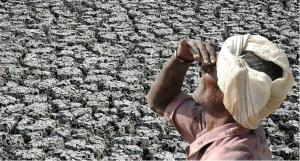
A household’s vulnerability to climate shocks and its resilience to recover can now be measured, suggests a recently published study. The study’s authors have turned their measurement approach into an easy-to-use framework using data from smallholder households facing droughts in India. Vulnerability and resilience are two interrelated factors in climate change research. The authors say vulnerability is determined by exposure, sensitivity and a pre-existing capacity to adapt to the climate shock (in this case, drought), resilience is the ability of households to recover.
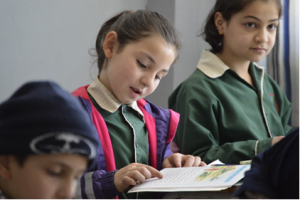
But, too often, the resources that help kids develop reading skills aren’t available to everyone. The majority of the research on literacy best practices focuses only on alphabetic languages rather than logographic systems like Chinese. Meanwhile, many early grade reading teachers work with students who speak a different language at home than at school — and often don’t have access to training in evidence-based practices to help them understand how learning to read changes for those students.