


News & Events

In March, the International Seed Federation (ISF) sought the support of governments around the world to facilitate the international movement of seed under the COVID-19 crisis and not to impose restrictive measures to avoid disrupting the agriculture supply chain. In a new statement, the ISF reinforces this call to assure the world that seed breeders and producers are taking every necessary precaution to prioritize food safety, especially during these challenging times.
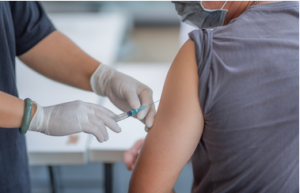
Pew Research Center Survey revealed that most Americans are optimistic that medical advances to prevent COVID-19 will be released in a year, and they will get the vaccine when available. The survey was conducted from April 29 to May 5, 2020, involving 10,957 adults who are members of Pew Research Center's American Trends Panel (ATP), an online survey panel that is recruited through national, random sampling of residential addresses.
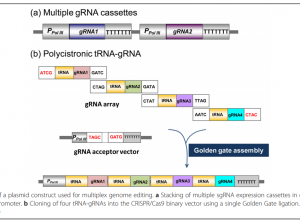
The breakthrough CRISPR (clustered regularly interspaced short palindromic repeat)/Cas9-mediated genome-editing technology has led to great progress in monocot research; however, several factors need to be considered for the efficient implementation of this technology. To generate genome-edited crops, single guide (sg)RNA and Cas9 DNA are delivered into plant cells and expressed, and the predicted position is targeted. Analyses of successful targeted mutations have revealed that the expression levels, expression timing, and variants of both sgRNA and Cas9 need to be sophisticatedly regulated; therefore, the promoters of these genes and the target site positions are the key factors for genome-editing efficiency.
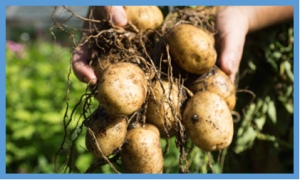
Osaka University and partners reported targeted genome editing in potato using transcription activator-like effector nucleases (TALENs). Genome editing using site-specific nucleases such as clustered regularly interspaced short palindromic repeat–CRISPR-associated protein 9 (CRISPR-Cas9) and TALENs are highly useful in crop breeding. In the study, the researchers infected potato, with Agrobacterium tumefaciens harboring TALEN-expression vector targeting sterol side chain reductase 2 (SSR2) gene and regenerated shoots without selection.

Private investors in Africa have been challenged to support the establishment of genome editing start-ups on the continent. This comes as it emerged that Africa, Asia, and Latin America have untapped entrepreneurship opportunities in genome editing. Speaking in an ISAAA webinar titled ‘Genome Editing 101: Getting Ready for Business', Kudu Biotech Director Dr. Nicholas Grantham explained how the local private sector has an edge, both in terms of capital and expertise, over government when dealing with start-ups in new emerging biotechnologies.
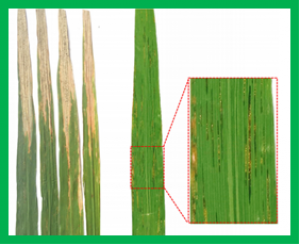
Rice (Oryza sativa L.) is a staple food crop, feeding more than 50% of the world's population. Diseases caused by bacterial, fungal, and viral pathogens constantly threaten the rice production and lead to enormous yield losses. Bacterial blight (BB) and bacterial leaf streak (BLS), caused respectively by gram-negative bacteria Xanthomonas oryzae pv. oryzae (Xoo) and Xanthomonas oryzae pv. oryzicola (Xoc)
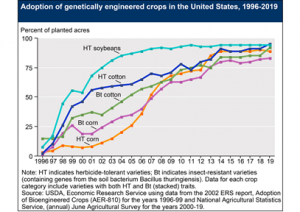
The United States is the top biotech-crop growing country in the world, having commercialized biotech crops in 1996. The adoption of stacked varieties in the U.S. has accelerated in recent years. Approximately 89% of the cotton area and 80% of corn were planted with stacked seeds in 2019. This is according to the Adoption of Genetically Engineered Crops in the U.S. published by the Department of Agriculture Economic Research Service (USDA-ERS).
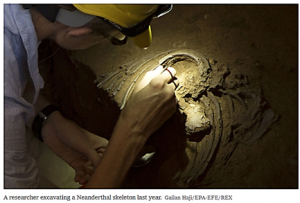
A study conducted by researchers from Max Planck Institute for Evolutionary Anthropology and Okinawa Institute of Science and Technology showed that the genes that make patients experience severe COVID-19 symptoms are inherited from Neandertals who lived 60,000 years ago. The findings are published in bioRxiv.
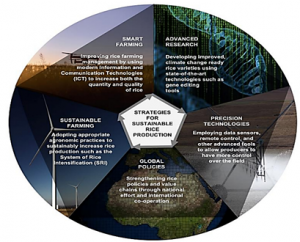
Rice, the first crop to be fully sequenced and annotated in the mid-2000s, is an excellent model species for crop research due mainly to its relatively small genome and rich genetic diversity. The 130-million-year-old cereal came into the limelight in the 1960s when the semi-dwarfing gene sd-1, better known as the "green revolution" gene, resulted in the establishment of a high-yielding semi-dwarf variety IR8.
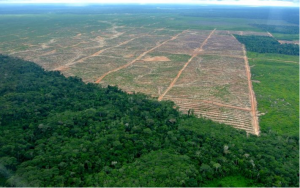
The COVID-19 pandemic brings home a point that Jane Goodall recently echoed in a stern warning to the world. In an interview, the celebrated primatologist said humanity will end if we do not change our ways, specifically how and what we eat, which has caused undue damage to forests.

Talks today between FAO Director-General QU Dongyu and the Executive Vice-President of the European Commission for the European Green Deal and European Commissioner for Climate Action, Frans Timmermans, focused on the need for food systems to be environmentally friendly and innovative while noting that to achieve this, concrete policies with the right incentives are key.
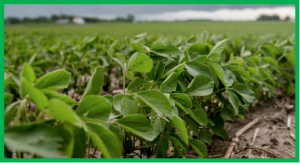
Bentazon is an effective herbicide in soybean cultivation applied at post-emergence stages for control of several broadleaf weeds. However, some soybean cultivars are highly sensitive to bentazon and are killed upon application. In this study, the gene related to the high sensitivity of soybean cultivars to bentazon was mapped to chromosome 16, and its location was narrowed down to a 257-kb region where three cytochrome P450 genes were located.