


News & Events
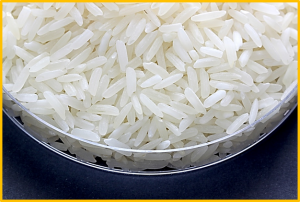
Researchers from the Chinese Academy of Agricultural Sciences and partners used CRISPR-Cas9 technology to engineer broad-spectrum disease resistance on rice. The results of their study are published in the Journal of Integrative Plant Biology. Rice blast and bacterial blight are two of the most destructive diseases of rice caused by the fungus Magnaporthe oryzae and the bacterium Xanthomonas oryzae pv. oryzae (Xoo), respectively.

The Asia-Pacific Economic Cooperation (APEC), ISAAA, United States Department of State, and U.S. Department of Agriculture (USDA) completed the second part of the APEC High-Level Policy Dialogue on Agricultural Biotechnology on June 29-30, 2021. The activity was attended by 14 economy members and focused on genome editing and the readiness of economy members for the technology and its products to enter the market.
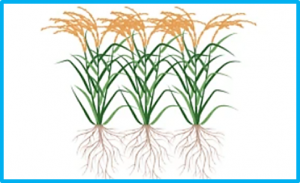
Climate change and an additional 3 billion mouths to feed by 2050 raise serious concerns over global food security. Crop breeding and land management strategies will need to evolve to maximize the utilization of finite resources in coming years. High-throughput phenotyping and genomics technologies are providing researchers with the information required to guide and inform the breeding of climate smart crops adapted to the environment.
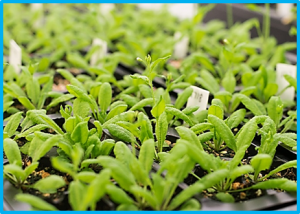
Scientists at the University of California San Diego have developed the first CRISPR-Cas9-based gene drive in plants. The research, led by postdoctoral scholar Tao Zhang and graduate student Michael Mudgett, is published in the journal Nature Communications. Gene drive technology has been developed in insects to help stop the spread of vector-borne diseases. Researchers in Professor Yunde Zhao's lab, along with colleagues at the Salk Institute for Biological Studies

ISAAA, in partnership with the Outreach Network for Gene Drive Research and the Biotechnology Information Centers, will be conducting the third session of the Gene Drive Webinar Series. The next session titled Can gene drive eliminate vector-borne diseases? will be held on July 8, 2021, at 2 PM Manila (7 AM London/4 PM Sydney) via Zoom.

In enhancing the resilience of our crops to the impacts of climate change, selection objectives need to address increased variability in the production environment. This encompasses the effects of more variable rainfall and temperatures than currently experienced, including extreme weather events, and changes in pest and pathogens distribution with the increased likelihood of major pest and disease outbreaks as well as occurrence of novel pathogens.
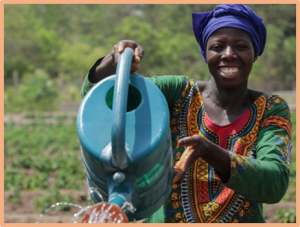
The International Fund for Agricultural Development (IFAD) will provide the Republic of Guinea with a grant to improve the resilience of more than 2,123 poor farming households trying to cope with the COVID-19 pandemic, by ensuring rapid access to inputs, information, markets and cash. Despite its rich natural resources, Guinea is among the poorest countries in Africa. Low agricultural productivity, lack of wage employment, lack of access to financial services and poor rural infrastructure are all factors.
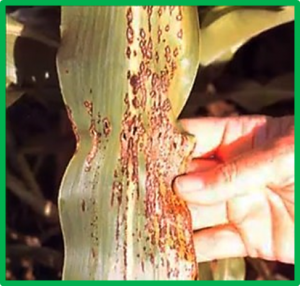
With sorghum poised to become an important crop grown by Pennsylvania farmers, Penn State researchers, in a new study, tested more than 150 germplasm lines of the plant for resistance to a fungus likely to hamper its production. Sorghum, a close relative to corn (maize), is valuable for yielding human food, animal feed and biofuels.
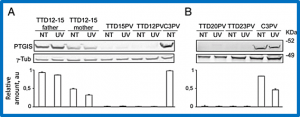
The cancer-free photosensitive trichothiodystrophy (PS-TTD) and the cancer-prone xeroderma pigmentosum (XP) are rare monogenic disorders that can arise from mutations in the same genes, namely ERCC2/XPD or ERCC3/XPB. Both XPD and XPB proteins belong to the 10-subunit complex transcription factor IIH (TFIIH) that plays a key role in transcription and nucleotide excision repair, the DNA repair pathway devoted to the removal of ultraviolet-induced DNA lesions.
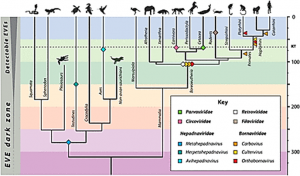
It has always seemed likely that viruses originated early in the history of life. However, until the identification of endogenous viral elements (EVEs), there was little if any direct evidence for most virus groups ever having existed in the distant past (1). EVEs are virus-derived DNA sequences found in the germline genomes of metazoan species. Uniquely, they preserve information about the genomes of viruses that circulated tens to hundreds of millions of years ago.
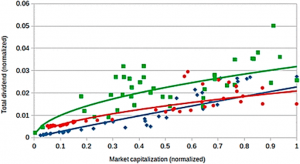
The paper models evolution in pecunia—in the realm of finance. Financial markets are explored as evolving biological systems. Diverse investment strategies compete for the market capital invested in long-lived dividend-paying assets. Some strategies survive and some become extinct. The basis of our paper is that dividends are not exogenous but increase with the wealth invested in an asset, as is the case in a production economy.
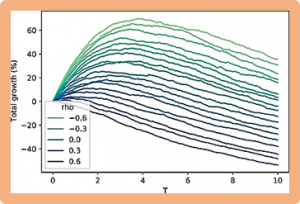
We develop a mathematical theory of how natural selection operates in the presence of interaction between replicating units. Our results show that with interaction, natural selection does more than seek to selfishly maximize fecundity. It also seeks to minimize correlation of fecundity between replicating units. We argue that correlation is a mechanism by which evolution can select for cooperation.