


News & Events

A once in a century new viral outbreak, COVID-19, has caused unfathomable numbers of deaths, toward 4 million. Yet an ancient disease, malaria, endemic to the residents of more than half of Earth, is even more devastating than this pandemic over time: It caused about 12 million deaths in the last 20 y alone, with estimates of tens of millions of deaths in the preceding three decades (1). Arguably the “most successful human pathogen,” the unicellular malaria parasites of the Plasmodium species are a medical and socioeconomic scourge in the zones of their transmission by female Anopheles mosquitoes

Gasoline-powered automobiles seem destined for the rearview mirror. In March 2021, the Swedish company Volvo declared that by 2030 it will sell only fully electric cars. Just weeks earlier, Ford had announced plans to go all-electric in Europe by the same year, while GM is aiming for its cars to be fully electric by 2035. Last year, electric vehicles made up less than 3% of all new car sales in the United States, but a recent analysis by BloombergNEF predicts that their global market share will soar to nearly 60% in just 20 years.
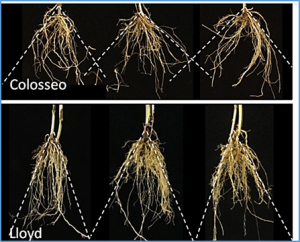
In the coming decades, larger genetic gains in yield will be necessary to meet projected demand, and this must be achieved despite the destabilizing impacts of climate change on crop production. The root systems of crops capture the water and nutrients needed to support crop growth, and improved root systems tailored to the challenges of specific agricultural environments could improve climate resiliency.
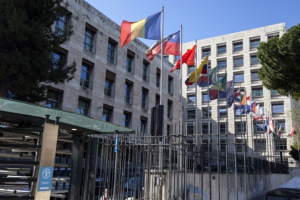
The FAO Director-General, QU Dongyu today met Dr. Abdullah Al Rabeeah, the Supervisor General of KSrelief at FAO Headquarters to discuss ongoing collaboration and avenues of strengthening and scaling it up in the future. The Director-General welcomed the Supervisor General and expressed appreciation for the excellent cooperation between FAO and KSrelief in supporting the most vulnerable.

The Director-General of the Food and Agriculture Organization of the United Nations, QU Dongyu, today urged Foreign Affairs and Development Ministers of G20 countries to make more investments in rural areas and double down on actions to eradicate hunger and poverty. Qu made the appeal at the Italy-presided G20 Foreign Affairs and Development Ministers' meeting where - for the first time - food security and nutrition were at the centre of the agenda.
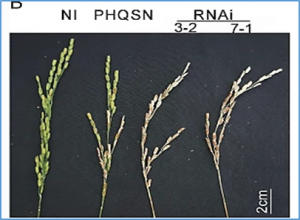
In the present study, we have confirmed that the three Oxalate oxidase (OXO) genes, OsOXO2, OsOXO3 and OsOXO4 from a blast-resistant cultivar BC10 function in panicle blast resistance in rice. The expression of OsOXO2, OsOXO3 and OsOXO4 were induced by panicle blast inoculation. Subcellular localization analysis revealed that the three OXO proteins are all localized in the nucleus and cytoplasm. Simultaneous silencing of OsOXO2, OsOXO3 and OsOXO4 decreased rice resistance to panicle blast, whereas the OsOXO2, OsOXO3 and OsOXO4 overexpression rice plants individually showed enhanced panicle blast resistance.
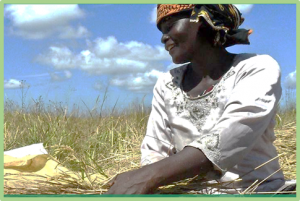
For centuries, rice has played a central role in Asia’s rice-based economies, so central that the crop has become a symbol for wealth, power, and food security. “White gold,” it has often been called. This label is slowly taking on its own meaning in Africa, where rice is increasingly being seen as a strategic crop, a pathway out of poverty, and for women, a significant opportunity.
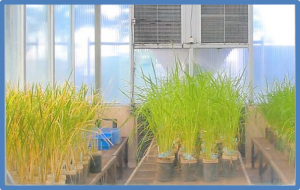
During a virtual launch on June 3, 2021, the International Rice Research Institute (IRRI) introduced its latest model for collaborative agricultural research through its new Bio-Innovation Center (BIC) initiative, and announced that its inaugural research program will be with the hybrid seed company Bioseed, a subsidiary of Indian conglomerate DCM Shriram.
Climate change is rapidly changing how we live, what we eat and produce, the crops we breed and the target traits. Previously underutilized orphan crops that are climate resilient are receiving much attention from the crops research community, as they are often the only crops left in the field after periods of extreme weather conditions. There are several orphan crops with incredible resilience to biotic and abiotic stresses.
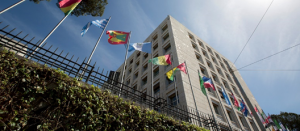
The 42nd Session of FAO Conference, the supreme decision-making body that brings together all FAO Members – 194 countries plus the European Union, concluded last week with an endorsement of the Strategic Framework 2022-31. The document sets out the roadmap of FAO for the next decade: to support the 2030 Agenda for Sustainable Development through the transformation to MORE efficient, inclusive, resilient and sustainable agri-food systems for Better Production, Better Nutrition, a Better Environment and a Better Life, leaving no one behind.
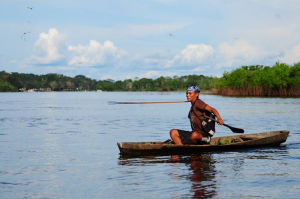
The Food and Agriculture Organization of the United Nations (FAO), together with the Alliance of Bioversity International and The International Center for Tropical Agriculture (CIAT) released today a new study identifying hundreds of diverse plant and animal species that Indigenous Peoples around the world depend on and care for to generate food sustainably and enhance biodiversity - and warning of increasing threats to these sophisticated food systems.
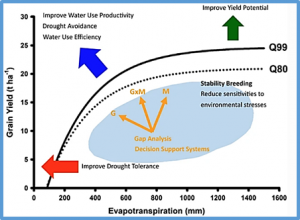
Genotype-by-Environment-by-Management (G × E × M) interactions underpin many aspects of crop productivity. An important question for crop improvement is “How can breeders and agronomists effectively explore the diverse opportunities within the high dimensionality of the complex G × E × M factorial to achieve sustainable improvements in crop productivity?” Whenever G × E × M interactions make important contributions to attainment of crop productivity,