


News & Events
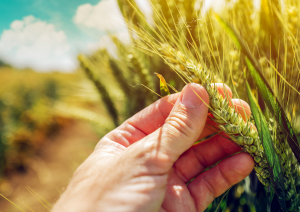
Wild wheat species are proven sources of resistance that can be transferred to commercial varieties. Combining multiple R genes is a widely accepted gene stewardship strategy to help enhance the resistance as the simultaneous defeat of two or more effective R genes is less likely than the defeat of either gene alone.The introgression of stem rust resistance gene Sr26 derived from tall wheatgrass into common wheat is one of the most successful examples of utilization of resistance resources from wheat wild relatives.
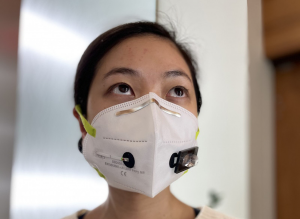
Wearable meets COVID-19 detection. With the breakthrough of researchers at Wyss Institute for Biologically Inspired Engineering at Harvard University and the Massachusetts Institute of Technology, a button-activated mask can detect the SARS-CoV-2 virus in a patient's breath within 90 minutes at levels of accuracy similar to PCR tests. The breakthrough is published in Nature Biotechnology.
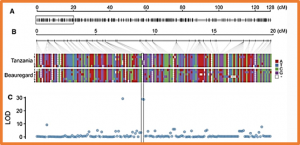
The root-knot nematode [Meloidogyne incognita (Kofoid & White) Chitwood] (RKN) causes significant storage root quality reduction and yields losses in cultivated sweetpotato [Ipomoea batatas (L.) Lam.]. In this study, resistance to RKN was examined in a mapping population consisting of 244 progenies derived from a cross (TB) between ‘Tanzania,’ a predominant African landrace cultivar with resistance to RKN, and ‘Beauregard,’ an RKN susceptible major cultivar in the USA. We performed quantitative trait loci (QTL) analysis using a random-effect QTL mapping model on the TB genetic map.
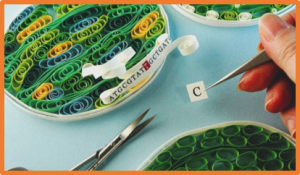
The researchers combined the gene editing tool, TALENs (Transcription activator-like effector nucleases), with an extra "chloroplast-targeting" signal and called it ptpTALECDs. The goal of the study is to create uniform, inheritable modifications to only specific parts of chloroplast DNA. The pairs of large TALENs protein and the chloroplast-targeting component must be expressed simultaneously as a single unit from the nuclear DNA in designing ptpTALECDs DNA sequence. The sequence is then inserted into the Arabidopsis plant and bred with non-modified plants.

The CRISPR 3.0 system focuses on multiplexed gene activation, meaning that it can boost the function of multiple genes simultaneously. The researchers said that this system boosts four to six times the activation capacity of current state-of-the-art CRISPR technology, with high accuracy and efficiency in up to seven genes at once. While CRISPR is more often known for its gene editing capabilities that can knock out genes that are undesirable, activating genes to gain functionality is essential to creating better plants and crops for the future.
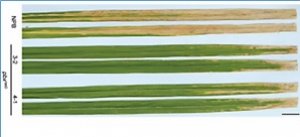
Rice blast and bacterial blight are important diseases of rice (Oryza sativa) caused by the fungus Magnaporthe oryzae and the bacterium Xanthomonas oryzae pv. oryzae (Xoo), respectively. Breeding rice varieties for broad-spectrum resistance is considered the most effective and sustainable approach to controlling both diseases. Although dominant resistance genes have been extensively used in rice breeding and production,
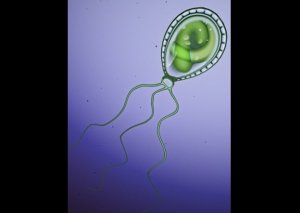
A study led by scientists from Rutgers University that could help improve crop production sheds new light on the evolution of photosynthesis in plants and algae. The scientists reviewed research on the photosynthetic amoeba Paulinella, and published their results in New Phytologist. Paulinella is a model used to explore eukaryote evolution and answer the fundamental question of the single origin of algae and plants

A new peer-reviewed report from the European Union confirms that the herbicide glyphosate is safe and poses minimal risk to human health and the environment.
The EU's Assessment Group on Glyphosate (AGG) has released an 11,000-page report yet again showing that glyphosate is safe when used as directed.
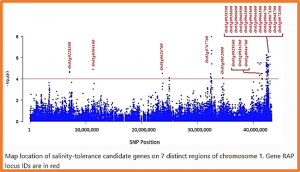
Under stress conditions 151 trait-marker associations were identified that were scattered on 10 chromosomes of rice that arranged in 29 genomic regions. A genomic region on chromosome 1 (11.26 Mbp) was identified which co-located with a known QTL region SalTol1 for salinity tolerance at vegetative stage. A candidate gene (Os01g0304100) was identified in this region which encodes a cation chloride cotransporter.
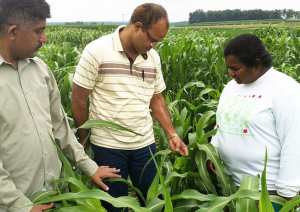
A team of researchers at Pennsylvania State University (Penn State) report that they have discovered sources of resistance to anthracnose leaf blight. The researchers tested more than 150 germplasm lines of the plant for resistance to the fungus and conducted a three-part experiment to evaluate anthracnose problems in sorghum and identify plants that might resist the disease.

The use of fear appeal in reporting biotechnology gradually diminishes over time, according to Ms. Kristine Tome, Program Associate at ISAAA. She mentioned this as she presented about Fear and Modern Biotechnology in the Philippines in the Webinar on Researching Fear organized by the Philippine Association for Communication and Media Research, Inc. (PACMRI) and the Philosophical Association of the Philippines on June 30, 2021, via Zoom and Facebook Live.

We propose a novel computational method, SequencErr, to address this challenge by measuring the base correspondence between overlapping regions in forward and reverse reads. An analysis of 3777 public datasets from 75 research institutions in 18 countries revealed the sequencer error rate to be ~ 10 per million (pm) and 1.4% of sequencers and 2.7% of flow cells have error rates > 100 pm.