


News & Events

The Food and Agriculture Organization of the United Nations (FAO) is at the forefront of efforts to restore and maintain a positive relationship between agri-food systems and conservation by promoting sustainable practices around the world.That was the key message of FAO Director-General QU Dongyu in his address to a High-level dialogue at the World Conservation Congress, currently underway in the French city of Marseille.
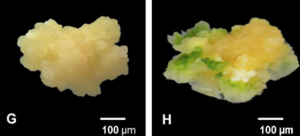
Nurhayati, Ardie SW, Santoso TJ,Sudarsono. 2021. CRISPR/Cas9-mediated genome editing in rice cv. IPB3Sresults in a semi-dwarf phenotypic mutant.Biodiversitas 22:3792-3800.IPB3Sis Indonesian lowland rice and high-yielding cultivar. However, plant height posture makes itprone tolodging whichcould reduce the yield. This study aimed to edit the GA20Ox2gene by introducing CRISPR/Cas9 GA20Ox2construct into IPB3Sand developing the semidwarf rice mutants.

A study reports that consumers' acceptance and willingness to pay for foods derived from new plant engineering techniques (NPETs) such as gene editing tend to increase when they are attributed to benefits. The data can help support future studies in assessing the commercialization efforts of NPET-derived foods.
Bogor Agricultural University researchers used CRISPR-Cas9 to develop semi-dwarf rice plants.Plant height posture is an important factor in rice production. When the rice plant has elevated height, it is prone to lodging, which can affect yield. The researchers targeted editing the GA20Ox2 gene by introducing CRISPR-Cas9 GA20Ox2 construct into Indonesian rice cultivar IPB3S to develop the semi-dwarf rice mutants.
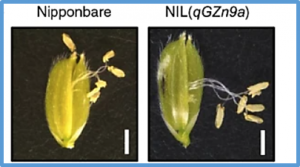
Zinc (Zn) is an essential mineral element in many organisms. Zn deficiency in humans causes various health problems; therefore, an adequate dietary Zn intake is required daily. Rice, Oryza sativa, is one of the main crops cultivated in Asian countries, and one of the breeding scopes of rice is to increase the grain Zn levels. Previously, we found that an Australian wild rice strain, O. meridionalis W1627, exhibits higher grain Zn levels than cultivated rice, O. sativa Nipponbare, and identified responsible genomic loci.
The government of Ukraine has supported two draft laws in the field of genetically modified organisms (GMO) regulation which will be put on a vote in the parliament. The first draft law is aimed at regulating state control over the use of GMOs and the circulation of GM products. The second draft law will provide for the increased liability for violations in the field of GMO management.
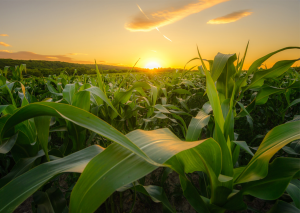
Researchers from the University of Illinois have developed a model that treats photosynthesis as a dynamic process rather than an activity that either is or is not happening, allowing the group to examine the impacts of light fluctuations that crop leaves experience due to intermittent clouds, overlying leaves, and the sun's daily passage across the sky.
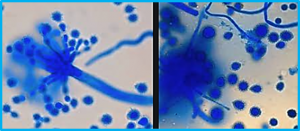
Salt stress is an important abiotic factor that causes severe losses in soybean yield and quality. Therefore, breeding salt-tolerant soybean germplasm resources via genetic engineering has gained importance. Aspergillus glaucus, a halophilic fungus that exhibits significant tolerance to salt, carries the gene AgGlpF. In this study, we used the soybean cotyledonary node transformation method to transfer the AgGlpF gene into the genome of the soybean variety Williams 82 to generate salt-tolerant transgenic soybean varieties.
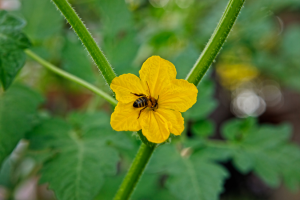
Several reports say that about 75% of the world's crops are dependent on pollinators. A study published by Our World Data suggests that only about 10% of the global food supply is affected by disappearing insect pollinators.According to Our World Data, the previously reported figure stating that 75% of our crops depend on pollinators is not incorrect.
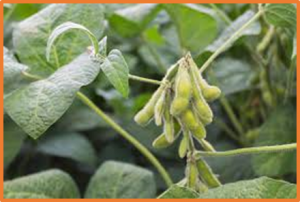
Researchers at Jilin Academy of Agricultural Sciences and partners successfully developed drought tolerant soybean with the help of a gene from the fungus Aspergillus glaucus. The results are published in Transgenic Research.Salt stress is a major concern in soybean production because it impacts yield and quality, leading to significant losses.
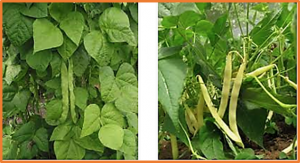
Biofortification is one of the strategies developed to address malnutrition in developing countries, the aim of which is to improve the nutritional content of crops. The common bean (Phaseolus vulgaris L.), a staple food in several African and Latin American countries, has excellent nutritional attributes and is considered a strong candidate for biofortification. The objective of this study was to identify genomic regions associated with nutritional content in common bean grains using 178 Mesoamerican accessions belonging to a Brazilian Diversity Panel (BDP) and 25,011 good-quality single nucleotide polymorphisms.
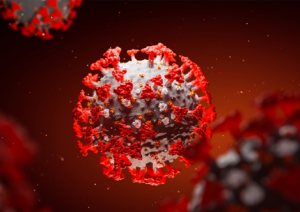
Research conducted by scientists from Western Sydney University reveals a distinct binding interface for both key proteins in COVID-19 – ssDNA and RNA – which work to enable the replication of the virus in host cells.The research results are published as an open-access article in the journal PROTEINS. According to co-lead researcher Dr. Roland Gamsjaeger from the School of Science, this finding is an exciting step in further understanding COVID-19.