


News & Events

The United Kingdom Department for Environment, Food and Rural Affairs (Defra) has granted permission to Rothamsted Research to run a series of field trials of genome-edited wheat. The wheat in the field trial has been edited to reduce the levels of naturally occurring amino acid, asparagine, which is converted to the carcinogenic processing contaminant, acrylamide, when bread is baked or toasted.
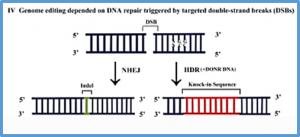
Genome editing, a revolutionary technology in molecular biology and represented by the CRISPR/Cas9 system, has become widely used in plants for characterizing gene function and crop improvement. Tomato, serving as an excellent model plant for fruit biology research and making a substantial nutritional contribution to the human diet, is one of the most important applied plants for genome editing. Using CRISPR/Cas9-mediated targeted mutagenesis, the re-evaluation of tomato genes essential for fruit ripening highlights that several aspects of fruit ripening should be reconsidered.
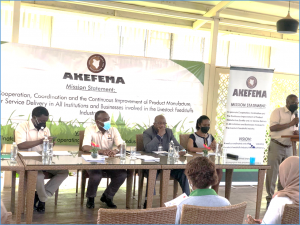
Livestock producers and animal feed manufacturers have asked the Kenyan Government to allow the importation of duty-free genetically modified (GM) yellow maize and soybeans to cushion against a countrywide shortage of major ingredients used in manufacturing animal meals. The Association of Kenya Feed Manufacturers (AKEFEMA), the country's umbrella body for livestock feed producers, has urged the Government to review and vacate its Cabinet memo of 2012 which banned the importation of GM foods into the country.

ISAAA and Southeast Asian Regional Center for Graduate Study and Research in Agriculture (SEARCA) are co-organizing the webinar on SOLVE Info-sufficiency on Genome-edited Crops on September 8, 2021 at 10 AM (GMT+8) via Zoom. Dr. Carl Ramage, Managing Director of Rautaki Solutions, will provide the international perspective on genome editing technology. The Philippine perspective will be tackled by Dr. Saturnina Halos, President of the Biotechnology Coalition of the Philippines.
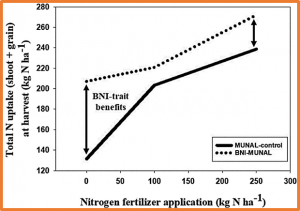
Active nitrifiers and rapid nitrification are major contributing factors to nitrogen losses in global wheat production. Suppressing nitrifier activity is an effective strategy to limit N losses from agriculture. Production and release of nitrification inhibitors from plant roots is termed “biological nitrification inhibition” (BNI). Here, we report the discovery of a chromosome region that controls BNI production in “wheat grass” Leymus racemosus (Lam.) Tzvelev, located on the short arm of the “Lr#3Nsb” (Lr#n),

Prof. Ei-ichi Negishi, winner of the 2010 Nobel Prize in Chemistry, died on June 6, 2021 at age 85. He died of pneumonia following surgery. He was surrounded by his two daughters and their families, his caregiver, and a minister. As his daughter, Charlotte Negishi East, wrote to me, “It was a beautiful time…read[ing] scripture from [the] Japanese Bible and… such meaningful songs and prayers, many stories about our father

The announcement by the Biden Administration to reengage the Paris climate process and lower US greenhouse gas (GHG) emissions 50% by the end of this decade is an essential development in the global effort to avoid the worst impacts of climate change (1). However, promises to reduce US GHG emissions are not new and have thus far delivered little real and sustainable emissions reductions (2).
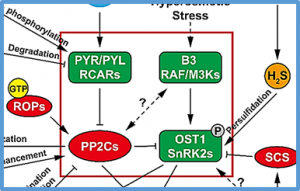
The plant hormone abscisic acid (ABA) plays a central role in the regulation of stomatal movements under water-deficit conditions. The identification of ABA receptors and the ABA signaling core consisting of PYR/PYL/RCAR ABA receptors, PP2C protein phosphatases and SnRK2 protein kinases has led to studies that have greatly advanced our knowledge of the molecular mechanisms mediating ABA-induced stomatal closure in the past decade. This review focuses on recent progress in illuminating the regulatory mechanisms of ABA signal transduction,

The Director-General of the Food and Agriculture Organization of the United Nations (FAO), QU Dongyu, today called on Small Island Developing States (SIDS) to foster the power of innovation and digitalization to accelerate the achievement of the Sustainable Development Goals (SDGs), particularly SDG 1 (No poverty), SDG 2 (No hunger) and SDG 10 (Reduced inequalities). Qu spoke at the opening of the two-day virtual SIDS Solutions Forum (30-31 August), co-hosted by FAO and the Government of Fiji.
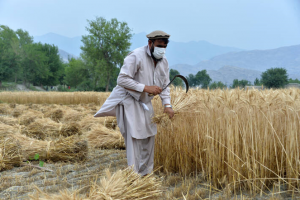
The Food and Agriculture Organization of the United Nations (FAO) has appealed for humanitarian assistance to be scaled up as Afghanistan continues to be hit hard by an ever-worsening drought that threatens the livelihoods of more than 7 million people who rely on agriculture or livestock.Many of these people are already among the 14 million people - one in three Afghans - who are acutely food insecure and need urgent humanitarian assistance.
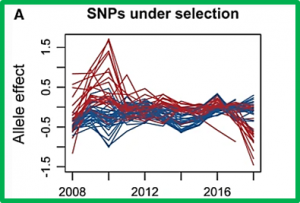
Resistance to stripe rust, a foliar disease caused by the fungus P. striiformis f. sp. tritici, in wheat (Triticum aestivum L.) is both qualitatively and quantitatively controlled. Resistance genes confer complete, race-specific resistance but are easily overcome by evolving pathogen populations, while quantitative resistance is controlled by many small- to medium-effect loci that provide incomplete yet more durable protection.

Japan's Ministry of Health, Labor and Welfare (MHLW) is expected to approve the genome-edited red snapper (tai in Japanese) in September, allowing it to be distributed and sold commercially. Once approved, it will be the first genome-edited fish in the country. Japan has approved genome-edited GABA-rich tomato in March 2021.Kyoto University, Kinki University, and other organizations have been working together to develop the genome-edited red snapper.