


News & Events
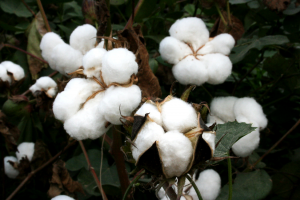
A team of researchers from China investigated the aphid-parasitoid interactions over an eight-year period to study the potential impacts of genetically modified crops on non-target arthropods in terms of food web structure and ecosystem functions. Results showed that the GM crops did not affect the agro-ecosystem of the areas of study. The researchers chose to focus on the aphid-parasitoid interactions and compare the infestation levels of the Aphis gossypii, its associated parasitoid community, and the overall parasitism rate between Bt cotton with Cry1Ac + CpTI and its non-transgenic counterpart.
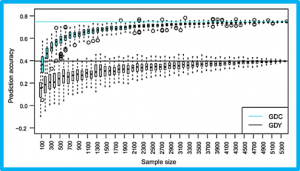
The transition from phenotypic to genome-based selection requires a profound understanding of factors that determine genomic prediction accuracy. We analysed experimental data from a commercial maize breeding programme to investigate if genomic measures can assist in identifying optimal calibration sets for model training. The data set consisted of six contiguous selection cycles comprising testcrosses of 5968 doubled haploid lines genotyped with a minimum of 12,000 SNP markers.
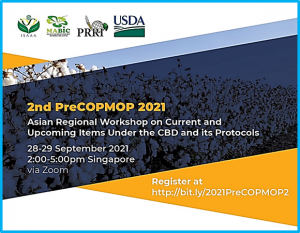
The first Pre-COPMOP2021 workshop organized by ISAAA, Malaysian Biotechnology Information Center, Public Research and Regulation Initiative, and the US Department of Agriculture, was held on August 4-6, 2021. The topics tackled were risk assessment, gene drives, synthetic biology, socio-economic considerations, public engagement, among others. These workshops aim to prepare participants to COP15MOP10, which is scheduled in two parts: part 1 in October 2021 as an online event, which will be followed by the second in-person part later in 2022.
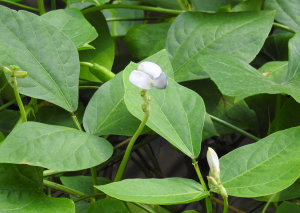
Nanoengineers at the University of California San Diego have developed COVID-19 vaccine candidates that can take the heat. These fridge-free vaccines are made from a plant virus called cowpea mosaic virus and the other is from a bacterial virus or bacteriophage.The two vaccines were made using similar recipes. The researchers used cowpea plants and Escherichia coli bacteria to grow millions of copies of the plant virus and bacteriophage, respectively, in the form of ball-shaped nanoparticles.
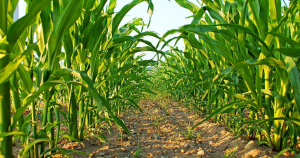
Flowering time is a key trait for cereal adaptation that is controlled by a complex genetic background in maize. The effect of multiple alleles from a quantitative trait locus (QTL) on flowering time remains largely unknown. Here, we fine-mapped a major QTL for flowering time on maize chromosome 10 corresponding to ZmCCT, where a new allele with a 4.2-kilobase (kb) transposable insertion was present in the intron.

The Wageningen University & Research (WUR) has announced that it will provide potential partners with free licenses to work on its patented CRISPR technology to help eliminate hunger around the world. The license must be applied to gene editing plants for non-profit applications.CRISPR-Cas enables genetic material to be changed relatively simply, very accurately, and efficiently. Worldwide there are over 3,000 CRISPR-Cas-related patents, of which WUR also holds several.
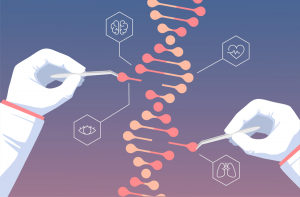
Bioengineers at Stanford University have developed an efficient multi-purpose, mini CRISPR genome editing system, which works like a "molecular Swiss Army knife". This breakthrough is published in Molecular Cell. This new CRISPR system is described to be versatile and allows robust genome editing and base editing. The engineered CasMINI is compact and less than half the size of the commonly used CRISPR-associated (Cas) proteins, Cas9 and Cas12a.
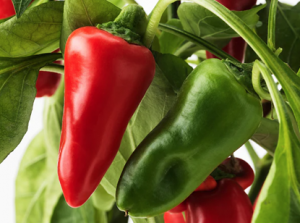
Fruit orientation is an important horticultural and domesticated trait, which is controlled by a single semi-dominant gene (up) in pepper. However, the gene underlying up locus has not yet been identified. In this study, the previously detected major QTL UP12.1 was firstly verified using a backcross population (n = 225) stem from the cross of BB3 (C. annuum) and its wild relative Chiltepin (C. annuum var. glabriusculum) using BB3 as the recurrent parent.

The Food and Agriculture Organization of the United Nations (FAO) today launched its Global Action on Green Development of Special Agricultural Products: One Country One Priority Product (OCOP). This Action aims to develop green and sustainable value chains for special agricultural products, support small and family farmers reap the full benefits of a global market and ultimately help the transformation of current agri-food systems and the achievement of the Sustainable Development Goals (SDGs).
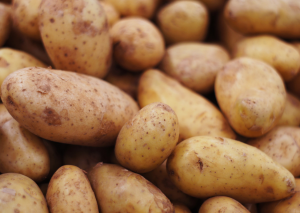
To help reduce huge losses in the potato industry, biochemist Dylan Kosma from the College of Agriculture, Biotechnology & Natural Resources at the University of Nevada, Reno, is using a biochemistry approach to identify genetic characteristics of the wound healing process in potatoes.Potato tuber wound healing involves suberin, a corky material that makes up a large proportion of "skin" that covers wound sites.
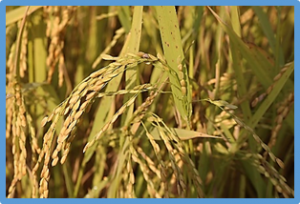
Soil salinity is one of the most significant abiotic stresses hampering plant growth and development, which ultimately translates to reduced crop yield. Soil salinization is exacerbated by excessive use of chemical fertilizers and soil amendments, improper drainage, and seawater ingress. It is estimated that over 6% of the world’s total land area is salt affected, of which over 12 million hectares are irrigated lands posing a serious threat to irrigated agriculture .
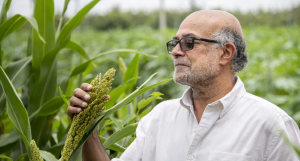
The visit of ICRISAT Governing Board Chair Dr Prabhu Pingali provided an opportunity for staff at headquarters to present the organization’s work and accomplishments and update on the latest research in the pipeline. Interacting with the staff, Dr Pingali shared his appreciation on the work being done. His observations mainly centered on creating greater visibility for ICRISAT’s success and impacts,