


News & Events
News & Events
Designing inclusive digital agroadvisories for climate-resilient food systems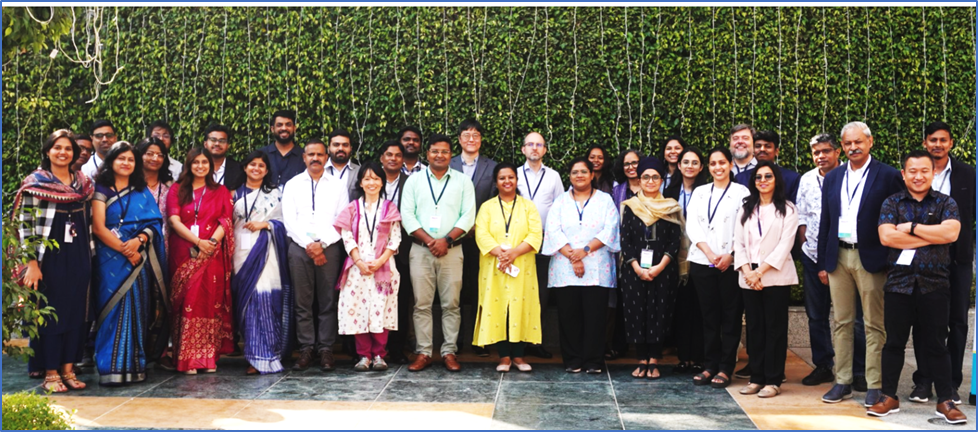
Friday, 06/02/2026 | 13:59:32
Climate change poses growing risks to food systems in India, disproportionately affecting smallholder farmers, women, and marginalised communities. Digital agro-advisories have emerged as a promising tool to support climate-resilient agriculture by delivering timely, localised, and actionable information (FAO, 2024, The unjust climate – Measuring the impacts of climate change on rural poor, women, and youth).
Ethylene-enhanced latex proteome is involved in stimulation of Natural Rubber Production in the Hevea Rubber Tree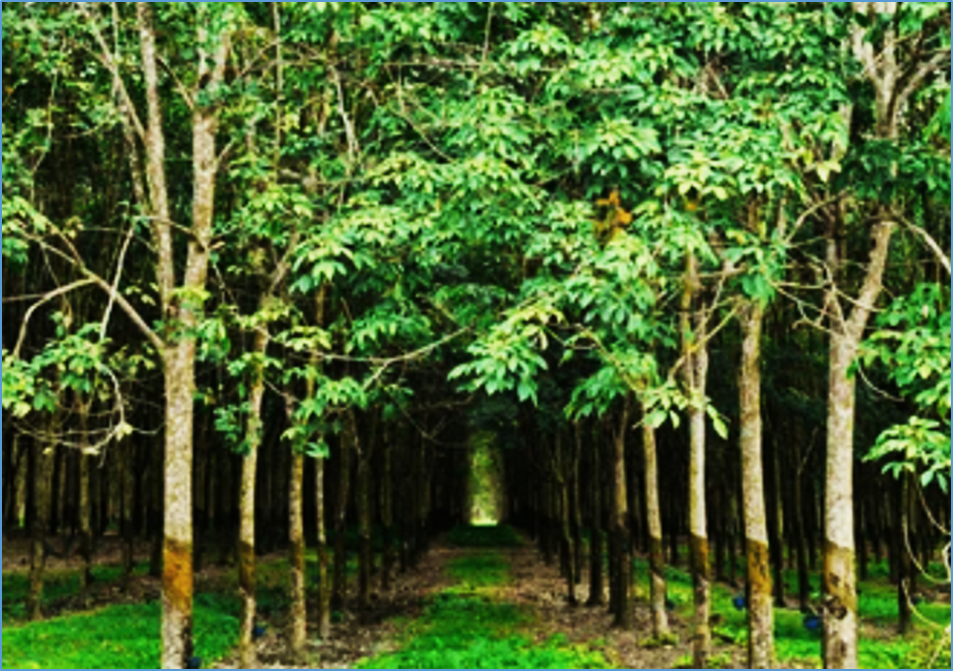
Friday, 06/02/2026 | 08:05:20
The Hevea brasiliensis is the only commercial source of natural rubber. In natural rubber production, exogenous ethylene is widely used as a stimulant for increasing rubber latex yield. To reveal the potential regulation mechanisms for ethylene stimulation of natural rubber production in H. brasiliensis, we performed an integrative analysis of transcriptomics and proteomics for ethylene-stimulated rubber latex. A total of 35,306 genes and 3,620 proteins were successfully identified from the different latex samples upon ethylene stimulation.
Pyramided Genes in Eucalyptus Confer High-dose Resistance to Brown Looper Caterpillar
Friday, 06/02/2026 | 08:03:58
Researchers from the University of Tennessee and partners pyramided cry genes in eucalyptus to control brown looper caterpillar (Thyrinteina arnobia) infestation. The findings are published in GM Crops & Food.
In Brazil, the brown looper caterpillar is a major problem for eucalyptus farms. The pest causes severe defoliation and up to 40% reduction in biomass. To control this devastating pest, the research team used genetic engineering to transform trees to produce three cry insecticidal proteins (Cry1Ab, Cry1Bb, and Cry2Aa) from Bacillus thuringiensis.
FAO AGRIS - International System for Agricultural Science and Technology
Friday, 06/02/2026 | 08:02:34
Farmers have been continuously contributing to evolving crop varieties that fit specific locations and changing conditions. There are different possibilities for recognizing farm innovations in India. The Biological Diversity Act ensures equitable sharing of benefits to the conservers of biological resources, their by-products, creators or holders of traditional knowledge, innovations and practices associated with such resources. The National Innovation Foundation scouts and supports grassroots innovations that have been developed without any help from a formal sector.
Ubiquitination of BAM1 attenuates CLE peptide–mediated signaling in the root apical meristem
Thursday, 05/02/2026 | 08:35:58
The plasma membrane-resident receptor-like kinases (RLKs) and their cognate peptide ligands play crucial roles in plant growth and development. The RLK BARELY ANY MERISTEM1 (BAM1) promotes phloem formation and regulates other aspects of root development. However, the mechanisms governing BAM1 protein degradation remain unclear. In this study, we demonstrate that two closely related ubiquitin ligases, RING DOMAIN LIGASE 1 (RGLG1) and RGLG2, specifically interact with BAM1 and its closest homolog BAM2. RGLG1/2 ubiquitinate BAM1/2 and mediate their degradation,
Media Exposure Influences GMO Perceptions in Montenegro
Thursday, 05/02/2026 | 08:34:53
Researchers from the University of Montenegro in Europe and partner institutions examined how consumer perceptions of genetically modified organisms (GMOs) influence the adoption of agricultural biotechnology in the country. The study, published in GM Crops & Food, revealed significant insights into how public acceptance and concerns about human and animal health and the environment shape consumer attitudes.
CGIAR - Our research and impact
Thursday, 05/02/2026 | 08:33:58
The 2025-30 Research Portfolio is intended to accelerate and strengthen the implementation of CGIAR’s 2030 Strategy. It aims to raise the ambition for our science and innovation by bringing together and leveraging collective capabilities of all CGIAR Research Centers. Our Portfolio focuses on addressing major global challenges such as climate change, gender and social inequalities, poor-quality diets, rural poverty, environmental degradation, and issues stemming from fragility, conflict, and violence.
Cashew Nut Oil Improves Lipid Metabolism and Fat Liver Deposition in High-Fat Diet-Fed C57BL/6J Mice
Wednesday, 04/02/2026 | 08:24:29
Cashew nut oil adds value to the production chain of this Brazilian oilseed. It is a good source of monounsaturated and polyunsaturated fatty acids and bioactive compounds, such as phenolics. This study investigated the effects of cashew nut oil on the metabolism of animals subjected to a high-fat diet. C57BL/6J mice were fed a high-fat diet (12 weeks), then switched to diets containing cashew nut oil, soybean oil, or lard (12 weeks).
EFSA GMO Panel Finds Herbicide Tolerant Soybean MON 94313 Safe
Wednesday, 04/02/2026 | 08:23:24
The European Food Safety Authority (EFSA) Panel on Genetically Modified Organisms (GMO Panel) has released its scientific opinion on the safety of genetically modified (GM) soybean MON 94313 for food and feed uses. Following a comprehensive risk assessment, the Panel concluded that the soybean is as safe as its conventional counterpart and non-GM reference varieties with respect to potential effects on human and animal health and the environment.
Afghanistan: FAO and Asian Development Bank advance $100 million initiative to boost food security and resilience
Wednesday, 04/02/2026 | 08:22:24
The Food and Agriculture Organization of the United Nations (FAO) and the Asian Development Bank (ADB) are implementing a $100 million initiative to bolster food and nutrition security and restore agricultural livelihoods for more than one million vulnerable people across Afghanistan.Over the next two years, the project will support more than 151 000 households (or 1 057 000 people), including returnees from Pakistan and Iran, host communities and families affected by recent earthquakes and floods.
Enhancing genomic prediction ability of blast resistance using genome-wide association study-derived marker weights in two rice (Oryza sativa L.) populations
Tuesday, 03/02/2026 | 08:18:48
Breeding for blast resistance remains a high priority in rice (Oryza sativa L.) improvement, yet the genetic complexity of leaf blast (BL) and panicle blast (PB) continues to challenge prediction accuracy in genomic selection (GS). Traditional GS approaches, such as genomic best linear unbiased prediction (GBLUP), assume equal contribution from all markers, potentially limiting the capture of key resistance loci.
Canada Approves PRRSV-Resistant Pigs for Food and Feed Use
Tuesday, 03/02/2026 | 08:17:22
On January 23, 2026, Health Canada and the Canadian Food Inspection Agency (CFIA) released a statement on the approval of genetically engineered pigs resistant to porcine reproductive and respiratory syndrome viruses (PRRSV) for use in food and feed. Health Canada and CFIA confirmed that foods made from these pigs are safe and effective for human consumption and use in livestock feeds.