


Noodles that nourish and empower
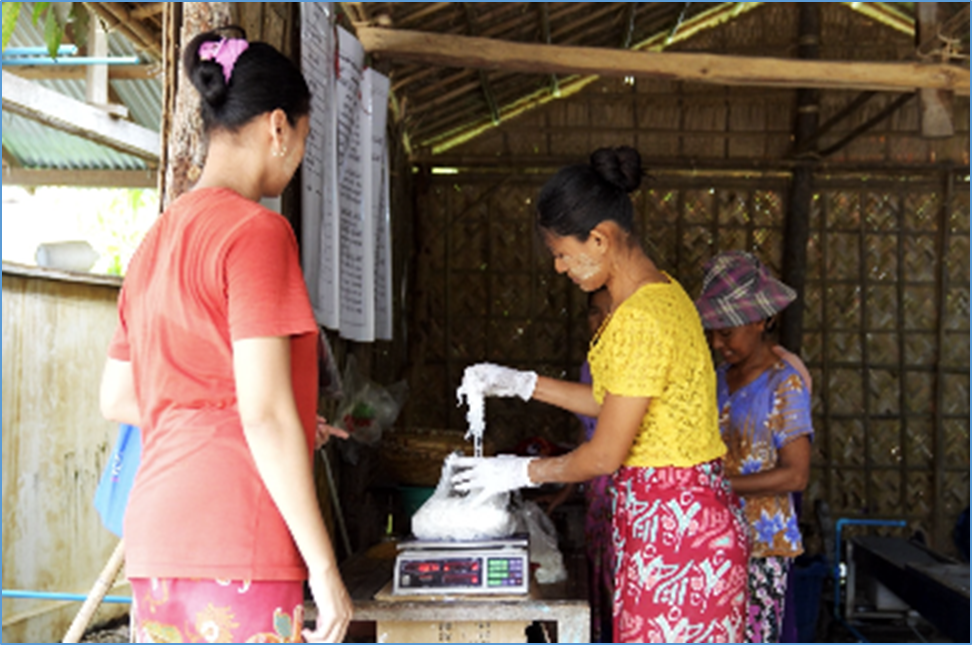
Figure: In Myanmar, FAO helped establish a women-led savings and credit group, through which the women were able to start a small rice noodle production business in their community. ©FAO/Htike Koko Aung
FAO News: 29/01/2026
On the grounds of a primary school situated between the towns of Pwintbyu and Salin in Myanmar’s Magway Region, Maw Maw Hmwe runs a modest food stall where she sells her famous rice noodle salads. Each day, students and teachers stop by for a nourishing meal. This independent noodle shop is just one of the two businesses Maw Maw operates.
“I never imagined I could run a business,” she said. “Now I feel confident and independent.”
Rice noodles are a staple across Myanmar and deeply embedded in the country’s food culture. Served in a variety of dishes from morning to night, they take different forms and places in the cuisine. In Myanmar’s national dish, the fish-based soup mohinga, they appear thick and round, while in Shan noodles, they are thin, and stringy. Beyond their role as a staple, rice noodle dishes remain an affordable and familiar comfort for many.
Maw Maw saw rice noodles as a natural next step to her rice farming, a way to bolster her income and provide some stability to her earnings in a time where climate change means crop yields aren’t consistent anymore.
“Some years we have good yields,” she said. “But the next year, there is nothing. I worried constantly about how we would survive.”
In the last years, floods swept away her crops or droughts scorched the soil, causing her rice, beans, and sesame plants to fail. A mother of a family of eight, Maw Maw would wake up each day worried about putting food on the table, a fear echoed by many.
Things have been further complicated since the 2021 political crisis. Political instability and armed conflict have spread across the country, disrupting economies and pushing rural communities into crisis. Fertiliser, fuel, and seed prices have soared, while farmers have faced shrinking access to markets and few alternative livelihood options. Even when farmers managed to harvest crops, low market prices meant that agriculture alone could not sustain their livelihoods.
For these reasons, Maw Maw could no longer rely on her unstable seasonal income. What she needed the most was access to funds to invest in herself.
The opportunity came to her in 2024, when she overcame her hesitation and decided to join a women’s savings and credit group in her community, supported by the Food and Agriculture Organization of the United Nations (FAO). In rural Myanmar, obtaining loans is difficult for many households, especially for women, since official documentation or collateral is required. As a result, people often turn to informal sources like friends, relatives, or moneylenders, which can carry high or unpredictable interest rates.
To address this gap, FAO helped establish women-led savings and credit groups, through which members pool small, regular savings and access low-interest loans.
Maw Maw recalled: “I was curious but unsure if I could keep up regular savings because of my low income, but the group’s management committee explained how the system worked.”
Soon after joining the savings group, she took a small loan to invest in better-quality seeds and tools, which improved her harvest.
Maw Maw later found more than financial support in this group. It became a space where women could meet to share ideas, discuss challenges and support one another. Amid economic stress, fear and displacement, this sense of connection became a lifeline for the women.
See: https://www.fao.org/newsroom/story/noodles-that-nourish-and-empower/en
Views: 88