


News & Events
News & Events
ICRISAT–ITEC Program Empowers Women and Youth from the Global South to Advance from Primary Production to Profitable Agri-Entrepreneurship
Monday, 23/02/2026 | 07:37:53
This question anchored the International Training on Agri-Entrepreneurship for Women and Youth – Small-Scale Food Processing Enterprises, organized by ICRISAT from 19 - 30 January 2026 under the Indian Technical and Economic Cooperation (ITEC) Programme of the Ministry of External Affairs, Government of India. The international program brought together 35 participants from 22 countries, representing farmers, entrepreneurs, policymakers, and educators from across the Global South. United by a shared objective, the cohort explored practical pathways to move beyond primary production and unlock the economic potential of value addition and market-led agri-entrepreneurship.
Genomic basis underlying alternative transcripts-mediated drought tolerance in maize
Sunday, 22/02/2026 | 07:51:07
Drought is a major abiotic stress that affects the growth and yield of maize. Alternative transcripts are crucial in abiotic stress responses in plants. However, the genetic basis of alternative transcripts mediated drought response in maize remains largely unknown. We characterize thousands of drought-responsive genes based on the transcriptomic dataset of 197 maize association population under well-watered and drought-stressed conditions. We perform mRNA profiling of the seedlings at six-leaf stage under drought stress.
Gene Editing Boosts Drought Tolerance in Sugarcane
Sunday, 22/02/2026 | 07:51:14
Experts from Brazil have identified ScTpx2 as a key gene that plays an essential role in helping sugarcane tolerate drought conditions. The findings of the study, published in GM Crops & Food, suggest that enhancing ScTpx2 expression can reduce the impact of drought in sugarcane and could support the development of more resilient commercial varieties. Sugarcane is a major crop in Brazil that supports sugar and bioethanol production and contributes to lower carbon emissions. However, drought has long been the leading cause of reduced yield. In the model plant Arabidopsis, the research team overexpressed ScTpx2.
ICRISAT–Niger Partnership Sets New Benchmark for Resilient Agriculture in Africa’s Drylands
Sunday, 22/02/2026 | 07:51:22
Over the past four decades of partnership with Niger, ICRISAT has delivered climate-resilient crops and farmer-ready innovations, reaching over 400,000 farmers directly and benefiting more than 1.5 million people across the country. Building on this legacy, ICRISAT hosted a high-level delegation from the Government of Niger, accompanied by Prof. Falalou Hamidou, ICRISAT Niger's Country Representative, at its headquarters from 7–9 February 2026.
Enhanced expression of the ScTpx2 gene confers tolerance to drought stress in transgenic sugarcane
Saturday, 21/02/2026 | 07:43:16
Drought events can have a devastating impact on agriculture, and due to climate change, such extreme events are expected to become more frequent. Sugarcane plays a critical role in the Brazilian economy by producing sugar and bioethanol, contributing positively to the reduction of CO2 emissions. Although sugarcane is considered resilient to drought, this stress remains the primary abiotic factor reducing sugar and biomass yields.
USDA Opens Public Comment on Genetically Engineered Apple T1190
Saturday, 21/02/2026 | 07:41:36
On February 10, 2026, the U.S. Department of Agriculture (USDA)'s Animal and Plant Health Inspection Service (APHIS) announced a 60-day public comment period on a petition to deregulate a genetically engineered apple T1190 developed for early juvenile and near continuous blooming. If approved, the variety would no longer be subject to federal regulation under current biotechnology rules.
FAO experts assess risk of antimicrobial resistance spreading via food loss and waste
Saturday, 21/02/2026 | 07:44:23
Food loss and waste (FLW) can be a reservoir and even an accelerator for anti-microbial resistance (AMR), highlighting that it should be integrated into AMR surveillance and management strategies, according to experts at the Food and Agriculture Organization of the United Nations (FAO). Discarding FLW into landfills or open dumps intensify AMR risks, while some food waste processes such as composting can if done properly reduce antimicrobial resistance genes, according to “Risk of antimicrobial resistance spreading via food loss and waste,” a new scientific review paper published in Infectious Diseases of Poverty, an open access, peer-reviewed journal.
Tracing modern breeding introgressions in European potato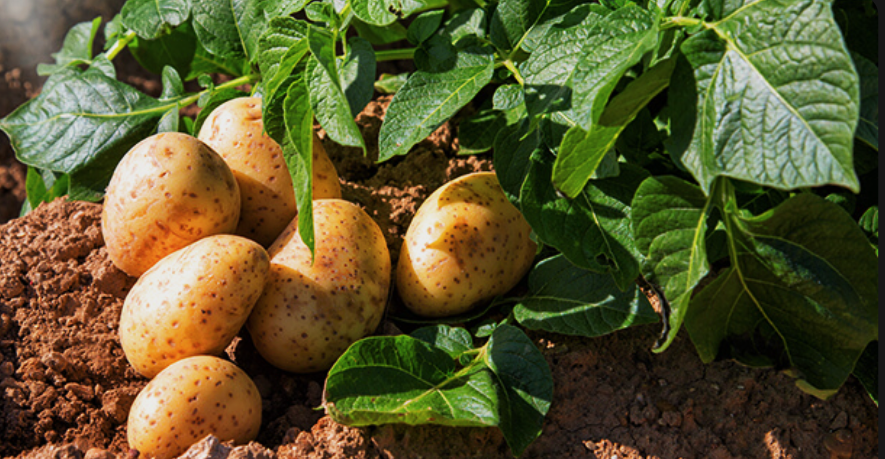
Friday, 20/02/2026 | 06:58:15
The European potato germplasm originated from a few founding genotypes, and its narrow genetic base has since been broadened through introgressions from wild relatives. We combined pedigree records and genome-wide SNP data to trace the origin, spread, and contributing ancestors of modern breeding introgressions in Europe. We first used a curated pedigree database to identify the Major Contributing Ancestors (MCAs) of 1209 varieties from the European Common Catalogue, revealing influential cultivars such as Katahdin, Saskia, and Agria as the top contributors to the modern European gene pool.
Experts Develop Grapefruit Without the Bitterness
Friday, 20/02/2026 | 06:56:59
“Kids usually don't like grapefruit because it's too bitter for them,” says Dr. Nir Carmi from Volcani Center in Rishon LeZion, Israel. Dr. Carmi and team edited a gene that led to a reduction in the bitter-tasting chemicals in grapefruit. Citrus fruits are known for their sourness, which is due to the acidity of the fruits. However, the bitterness of citrus fruits is linked to several compounds. Grapefruit's bitterness is due to a chemical called naringin, as well as from closely related molecules called neohesperidin and poncirin.
ISAAA Webinar: Global Status of Commercialized Biotech/GM Crops in 2024
Friday, 20/02/2026 | 06:55:54
The International Service for the Acquisition of Agri-biotech Applications (ISAAA), Inc. collects data on the annual adoption of biotech crops and analyzes current and future trends. The results are summarized in a brief, which is the most widely cited source of the latest data on global GM crop adoption since 1996, when biotech crop commercialization began. Following the last report released in 2020, ISAAA Inc. will officially release the Global Status of Commercialized Biotech/GM Crops: 2024 (ISAAA Brief 57) through Zoom on February 27, 2026.
Metagenomic and biogenic amine changes in cassava fermentation for tucupi production using Pediococcus acidilactici starter culture
Thursday, 19/02/2026 | 09:03:43
The use of starter cultures is essential for producing fermented foods with desirable standardized characteristics and for preventing pathogens. Pediococcus acidilactici, isolated from cocoa fermentation, was used in the production of tucupi, a widely appreciated sauce made from the juice of cassava root (manipueira) in the Brazilian Amazon. Manipueira was submitted to fermentation with and without Pediococcus acidilactici inoculum at 1 × 10¹² CFU mL-1 (Pa treatment and control treatment (CT), respectively),
Researchers Develop Rapid Testing for Chicken Infectious Anemia Virus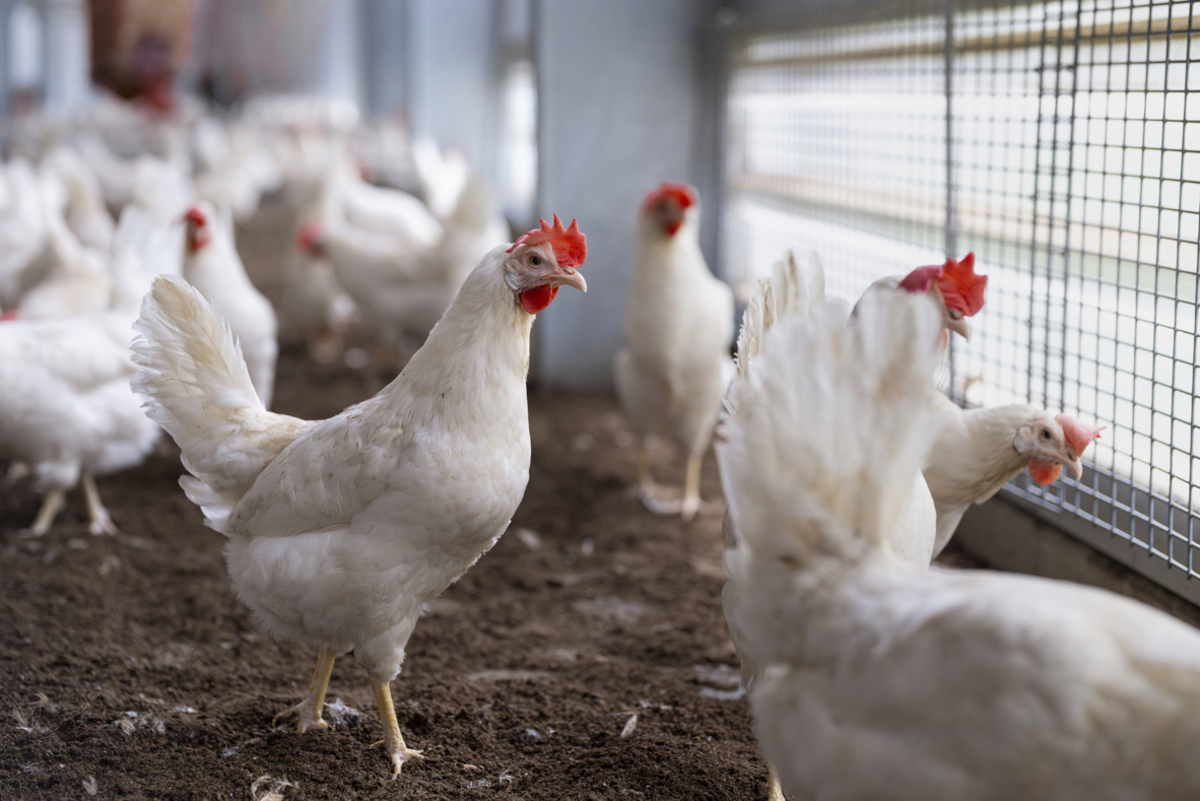
Thursday, 19/02/2026 | 09:03:48
Researchers from China have developed a fast and highly sensitive CRISPR-based test to detect Chicken Infectious Anemia Virus (CIAV), a disease that causes anemia and immune dysfunction, resulting in major economic losses for farmers. The new method uses the CRISPR-Cas12a system to improve accuracy and the rate of virus detection.