


News & Events
News & Events
India's Quiet 'Pulses Revolution' To Serve 100% Homegrown Dal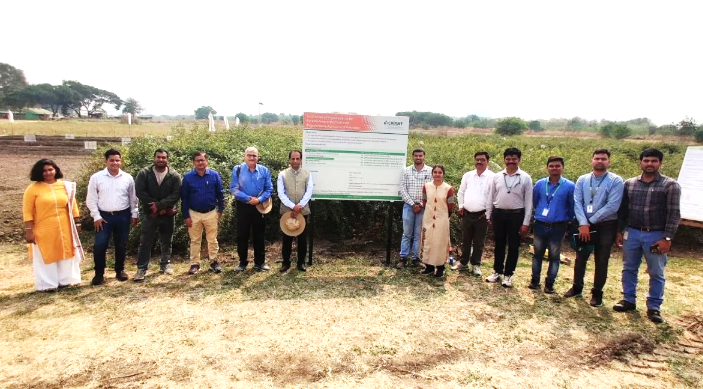
Thursday, 19/02/2026 | 09:03:53
For decades, India has carried a paradox on its plate. The country that feeds the world on dal is also the world's largest consumer, producer, and importer of pulses. From tur and urad to masoor, the protein backbone of Indian diets has routinely come from the US, Africa, Myanmar, Australia and Canada. Every bowl of sambar or dal tadka has quietly carried the weight of global supply chains and volatile imports.
Genomic Organization of the Newly Discovered Cassava Congo Cheravirus Reveals a Unique Maf/HAM1 Motif in the C-Terminal Region of the RNA1 Polyprotein and Suggests the Presence of Two Protein Domains Upstream of the Putative Helicase Domain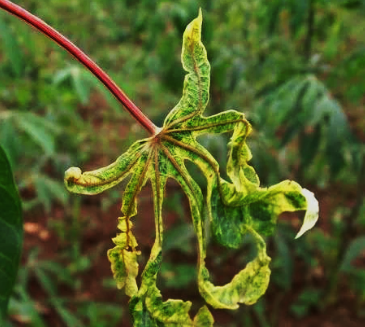
Sunday, 15/02/2026 | 08:03:07
Cassava (Manihot esculenta) is a staple crop in sub-Saharan Africa threatened by several viral diseases. Here, we describe the genome sequence of a novel bipartite cheravirus (family Secoviridae) infecting cassava in the Democratic Republic of Congo and Tanzania. We designate the new virus "cassava Congo cheravirus". Each RNA segment encodes a single polyprotein (P1 and P2 for RNA1 and RNA2, respectively), embedded with various putative cleavage sites (six and three in P1 and P2, respectively), consistent with members of the genus Cheravirus.
Brazilian Researchers Identify Wild Peanut Gene That Boosts Plant Immunity
Sunday, 15/02/2026 | 08:03:13
Researchers at Embrapa Genetic Resources and Biotechnology have discovered a gene from a wild peanut ancestor that acts as a biological "alarm," significantly enhancing a plant's ability to survive drought and resist pests. The gene, known as AdEXLB8, was isolated from Arachis duranensis, a wild ancestor of the modern peanut native to South America.
Malawi Marks Agricultural First with Early-Maturing Vegetable Pigeonpea to Boost Food & Nutrition Security
Sunday, 15/02/2026 | 08:03:02
Officially named Chitedze Pigeonpea 3 (ICPV 182026), the variety is well suited to shorter rainy seasons and delivers high yields, helping farmers adapt to climate pressures while expanding market opportunities for both grain and vegetable pigeonpea. The variety was approved by the Malawi Department of Agricultural Research Services (DARS) following three seasons of multi-location trials across key agricultural zones across the country, including Chitedze, Chitala, Makoka, Baka, Bvumbwe, and Ngabu.
Dissection of Fusarium head blight resistance in a modified nested association mapping panel of synthetic and bread wheat germplasm
Wednesday, 18/02/2026 | 06:55:11
Fusarium head blight (FHB), caused by Fusarium graminearum, is one of the most devastating diseases of wheat (Triticum aestivum) and other cereal crops worldwide. Improving FHB resistance has been a major focus in many wheat genetics and breeding programs globally. However, only a few major loci have been effectively deployed, limiting progress in breeding for FHB resistance.
Scientists Fine-Tune Rice Gene to Fight Sheath Blight
Wednesday, 18/02/2026 | 06:55:19
Researchers from India used CRISPR-Cas9 gene editing technology to improve rice resistance to sheath blight. The disease, caused by the fungus Rhizoctonia solani, leads to significant yield losses and remains difficult to manage due to the limited availability of resistant rice varieties. In the study published in Physiological and Molecular Plant Pathology, the research team was able to reduce rice's susceptibility to the disease while maintaining normal growth and yield.
FAO, UNICEF and France join forces to strengthen food security and nutrition for earthquake-affected families in eastern Afghanistan
Wednesday, 18/02/2026 | 06:55:27
Joint FAO/UNICEF/Ministry for Europe and Foreign Affairs of France News Release Kabul, Afghanistan – The Food and Agriculture Organization of the United Nations (FAO), the United Nations Children’s Fund (UNICEF) and the Government of France are supporting earthquake-affected communities in eastern Afghanistan to restore food security, improve nutrition and protect livelihoods.
CRISPR/Cas9-mediated promoter editing of OsSWEET11 confers resistance to sheath blight in rice
Tuesday, 17/02/2026 | 06:21:42
Sheath blight (ShB), caused by Rhizoctonia solani, is one of the most destructive diseases of rice, causing substantial yield losses worldwide. Effective management remains challenging due to the absence of resistant genetic sources and the ability of the pathogen to persist under diverse environmental conditions. The sugar transporter OsSWEET11 acts as a susceptibility factor by facilitating pathogen-induced sucrose efflux, but complete loss-of-function mutations compromise grain filling and yield.
USDA Seeks Public Comment to Deregulate GE African Marigold
Tuesday, 17/02/2026 | 06:22:06
The U.S. Department of Agriculture's Animal and Plant Health Inspection Service (USDA APHIS) has announced that it is seeking public comment on a petition to deregulate a variety of African marigolds developed using genetic engineering. This variety has been modified to produce red flowers, a trait not typically found in traditional African marigolds.
FAO experts assess risk of antimicrobial resistance spreading via food loss and waste
Tuesday, 17/02/2026 | 06:21:55
Food loss and waste (FLW) can be a reservoir and even an accelerator for anti-microbial resistance (AMR), highlighting that it should be integrated into AMR surveillance and management strategies, according to experts at the Food and Agriculture Organization of the United Nations (FAO). Discarding FLW into landfills or open dumps intensify AMR risks, while some food waste processes such as composting can if done properly reduce antimicrobial resistance genes, according to “Risk of antimicrobial resistance spreading via food loss and waste,” a new scientific review paper published in Infectious Diseases of Poverty, an open access, peer-reviewed journal.
Multiplex Gene Editing and Effect Analysis of Yield, Fragrance, and Blast Resistance Genes in Rice 
Saturday, 14/02/2026 | 04:44:58
Background: The coordinated improvement of yield, quality and resistance is a primary goal in rice breeding. Gene editing technology is a novel method for precise multiplex gene improvement.
Methods: In this study, we constructed a multiplex CRISPR/Cas9 vector targeting yield-related genes (GS3, OsPIL15, Gn1a), fragrance gene (OsBADH2) and rice blast resistance gene (Pi21) to pyramid traits for enhanced yield, quality, and disease resistance in rice.
Genetically Engineered Moths Offer Ethical Breakthrough in Infection Research
Saturday, 14/02/2026 | 04:45:20
University of Exeter scientists have created the world's first genetically engineered wax moths, a development that could drastically reduce the use of mice and rats in medical testing. These "sensor moths" are specifically designed to help combat antimicrobial resistance (AMR), currently one of the most significant threats to global human health. By adapting genetic tools originally used for fruit flies—including CRISPR-Cas9—researchers produced moth larvae that glow when responding to infection or antibiotics.