


News & Events
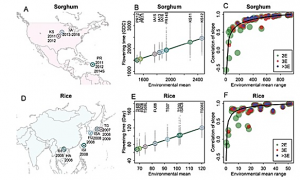
Phenotypic plasticity is an important topic in biology and evolution. However, how to generate broadly applicable insights from individual studies remains a challenge. Here, with flowering time observed from a large geographical region for sorghum and rice genetic populations, we examine the consistency of parameter estimation for reaction norms of genotypes across different subsets of environments and searched for potential strategies to inform the study design. Both sample size and environmental mean range of the subset affected the consistency. The subset with either a large range of environmental mean or a large sample size resulted in genetic parameters consistent with the overall pattern.
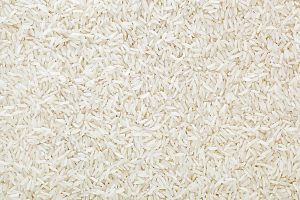
Researchers from the Sanming Academy of Agricultural Sciences in China reported the gene in rice's formation of chlorophyll and chloroplast. Their findings are published in Plant Growth Regulation. Chlorophyll production and chloroplast development are vital in studying leaf color, a highly important agronomic trait, especially in rice. The research team found mutant rice oryza sativa albino leaf 50 (osal50), which lacks the usual green pigments and exhibits white stripes on the leaves and with white panicles.
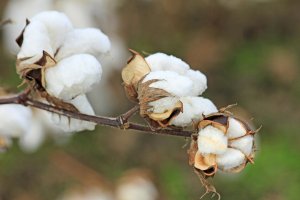
A study published in Frontiers in Plant Science shows that the loss of TAC1 homeologous genes in cotton reduces branch angle and altered petiole angles. The results of this study provide significant insights into understanding optimal light interception in cotton, which can potentially improve crop yield. arious environmental factors, such as light capture, carbon assimilation, and photosynthetic efficiency, affect crop performance.
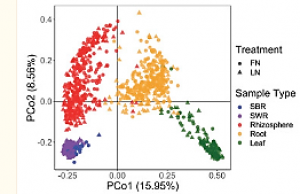
The development of cereal crops with high nitrogen use efficiency (NUE) is a priority for worldwide agriculture. In addition to conventional plant breeding and genetic engineering, the use of the plant microbiome offers another approach to improving crop NUE. To gain insight into the bacterial communities associated with sorghum lines that differ in NUE, a field experiment was designed comparing 24 diverse Sorghum bicolor lines under sufficient and deficient nitrogen (N). Amplicon sequencing and untargeted gas chromatography-mass spectrometry were used to characterize the bacterial communities and the root metabolome associated with sorghum genotypes varying in sensitivity to low N.
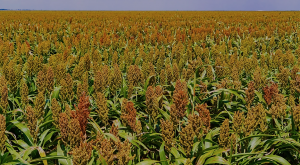
In a race against a devastating parasite, African researchers are pioneering using CRISPR to improve local crops. Led by scientists like Steven Runo of Kenya, these efforts tackle challenges like witchweed infestations in sorghum and lethal diseases in maize, with promising results. Sorghum, a staple food and versatile crop, suffers greatly from Striga, a parasitic weed siphoning off nutrients and crippling yields. Runo's team, though not the first to field-test gene-edited crops in Africa, is working on sorghum resistant to this threat. Their CRISPR-edited variety mimics natural mutations in resilient wild strains, offering hope for future field trials.

Scientists gene edited table grapes to produce a muscat flavor in the fruit. This will provide many beneficial properties to the grapes. Muscat flavor represents distinct aromatic attributes that can be found in certain grape varieties. Grapes with muscat flavor create high levels of monoterpenes, which have antioxidant, antidiabetic, and anticancer properties. Researchers from the USDA-Agricultural Research Service used prime editing on Scarlet Royal grapes to modify the VvDXS1 protein, which is the primary cause of making muscat flavor in grapes.
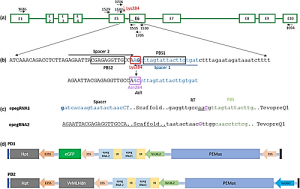
Muscat flavour represents a group of unique aromatic attributes in some grape varieties. Biochemically, grape berries with muscat flavour produce high levels of monoterpenes. Monoterpene biosynthesis is mainly through the DOXP/MEP pathway, and VvDXS1 encodes the first enzyme in this plastidial pathway of terpene biosynthesis in grapevine. A single-point mutation resulting in the substitution of a lysine with an asparagine at position 284 in the VvDXS1 protein has previously been identified as the major cause for producing muscat flavour in grapes.

Pairwise, a health-focused food and agriculture company, has received confirmation of nine new regulatory exemptions from the U.S. Department of Agriculture (USDA) for gene-edited blackberries and black raspberries. These new exemptions represent different traits that are important to both consumers and growers. The new nine exemptions bring the total number of Pairwise's confirmed trait exemptions for berries to 19, which include seedless, thornless, and higher-yielding traits in blackberry and black raspberry.

Using CRISPR technology, researchers from the School of Plant Sciences and Food Security at Tel Aviv University's Wise Faculty of Life Sciences were able to develop tomatoes that consume less water without affecting yield, quality, and taste. During transpiration, plants evaporate water from their leaves. At the same time, carbon dioxide enters the leaves and is assimilated into sugar by photosynthesis. Transpiration and carbon dioxide uptake occur simultaneously through the stomata, which open and close to regulate the plant's water status.
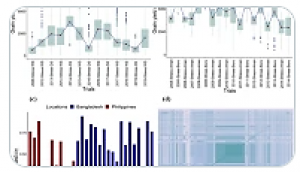
Genetic gain is a crucial parameter to check the breeding program's success and help optimize future breeding strategies for enhanced genetic gains. To estimate the genetic gains in IRRI’s salinity breeding program and identify the best genotypes based on high breeding values for grain yield (kg/ha), we analyzed the historical data from the trials conducted in the IRRI, Philippines and Bangladesh. A two-stage mixed-model approach accounting for experimental design factors and a relationship matrix was fitted to obtain the breeding values for grain yield and estimate genetic trends.
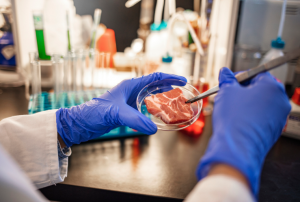
Researchers from Tufts University and Massachusetts Institute of Technology have successfully engineered autocrine signaling to reduce fibroblast growth factor 2 (FGF2), which causes substantial high costs of media components in cultivated meat. The findings of the study published in Cell Reports Sustainability offer an alternative approach to lowering the costs of growth factor requirements. Cultivated meat, also known as cultured meat or cell-based meat, is a promising technology that aims to reduce the environmental impact of meat production through cell culture.
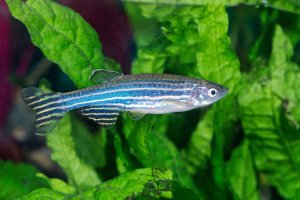
A study published in Neuron shows that deleting the Calmodulin-interacting peptide Pcp4a gene regulates the behavioral choice of zebrafish. This breakthrough is essential for understanding the influences on zebrafish's decision-making in response to various external stimuli and internal needs. Animals make fundamental behavioral decisions towards objects in their environment. To thrive and survive in complex environments, animals decide whether to approach or avoid potential danger.