


News & Events
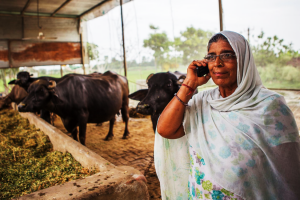
Food, land, and water systems face daunting challenges in the future, and the body of research exploring these challenges is growing rapidly. This note is part of a series developed by the CGIAR Foresight Initiative to summarize what we know today about the future of various aspects of food systems. The goal of these notes is to serve as a quick reference, point to further information, and help guide future research and decisions.
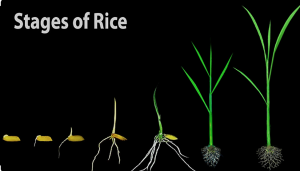
Seed germination is a critical trait for the success of direct seeding in rice cultivation. However, the underlying mechanism determining seed germination is largely unknown in rice. Here, we report that NAC transcription factor OsNAC3 positively regulates seed germination of rice. OsNAC3 regulates seed germination involving abscisic acid (ABA) pathway and cell elongation. OsNAC3 can directly bind to the promoter of ABA catabolic gene OsABA8ox1 and cell expansion gene OsEXP4

Various topics related to emerging challenges and opportunities in the allied areas of the seed sector were deliberated during the 2024 National Seed Congress. One such plenary session, entitled “Emerging opportunities in seed sector to include value-added traits, landraces, and crops,” focused on the potential of value-added traits, traditional landraces, and diverse crops and how they can be harnessed to improve both the nutritional value and marketability of agricultural produce.
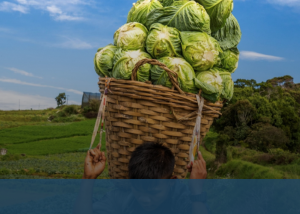
Food loss and waste reduction should be seen as a means towards achieving other objectives, including improving food security and nutrition, reducing greenhouse gas emissions and lowering pressure on water and land resources, which contribute towards increased productivity and economic growth. The formulation of effective policies to achieve food loss and waste reduction requires comprehensive information as to how much and where – both geographically and along the supply chain – various foods are lost or wasted.
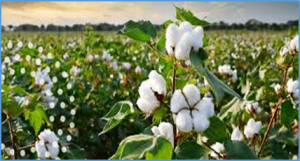
Identification of loci and underlying genes for fiber quality traits will facilitate genetic improvement in cotton fiber quality. In this research, a genome-wide association study (GWAS) was carried out for fiber quality attributes using a new multi-parent advanced generation inter-cross (MAGIC) population consisting of 372 recombinant inbred lines (RILs). Sixteen parents including 12 exotic germplasm lines derived from five tetraploid Gossypium species
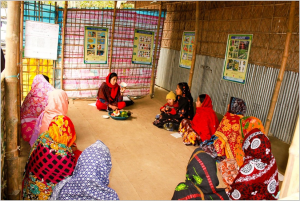
The southern coast of Bangladesh is highly susceptible to flooding, with climate change exacerbating the frequency and intensity of these events. Households affected by floods often resort to “maladaptive” coping strategies such as reducing expenditures, selling assets, borrowing, and drawing down savings—with possible gendered effects. Globally, social assistance programs such as cash or in-kind transfers have shown promise in supporting resource-poor rural households to better cope with weather shocks associated with climate change.
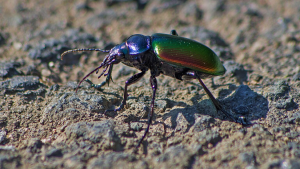
Simplemente agotado … how tired!! Sunburned, running low on water and my trousers caked with mud—that’s how my first day of field research in the Yeguare River valley, Honduras, ended back in 2002. From that day on, for two years, I imagined myself aboard Darwin’s Beagle or the Victoria, the carrack on which Magellan had circumnavigated the globe. On my daily journey of ecological discovery and exploration, I was alone yet more connected than ever.
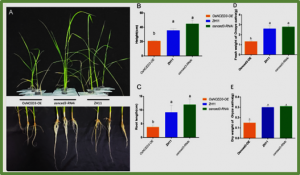
The gene encoding 9-cis-epoxycarotenoid dioxygenase 3 (NCED3) functions in abscisic acid (ABA) biosynthesis, plant growth and development, and tolerance to adverse temperatures, drought and saline conditions. In this study, three rice lines were used to explore the function of OsNCED3, these included an OsNCED3-overexpressing line (OsNCED3-OE), a knockdown line (osnced3-RNAi) and wild-type rice (WT).
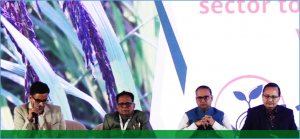
Various topics related to emerging challenges and opportunities in the allied areas of the seed sector were deliberated during the 2024 National Seed Congress. One such plenary session, entitled “Emerging opportunities in seed sector to include value-added traits, landraces, and crops,” focused on the potential of value-added traits, traditional landraces, and diverse crops and how they can be harnessed to improve both the nutritional value and marketability of agricultural produce.
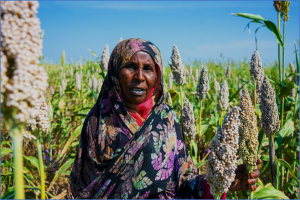
Four months after famine was first confirmed in Zamzam camp in Sudan’s North Darfur state, more areas in North Darfur and the Western Nuba mountains have been identified as experiencing famine conditions, as access to food and nutrition for millions of people across the country continues to deteriorate, the Food and Agriculture Organization of the United Nations (FAO,) World Food Programme (WFP) and UNICEF warned today.
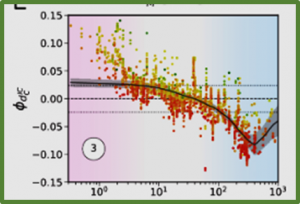
In view of changing climatic conditions and disappearing natural resources such as fertile soil and water, exploring alternatives to today’s industrial monocrop farming becomes essential. One promising farming practice is intercropping (IC), in which two or more crop species are grown together. Many experiments have shown that, under certain circumstances, IC can decrease soil erosion and fertilizer use, improve soil health and land management, while preserving crop production levels.
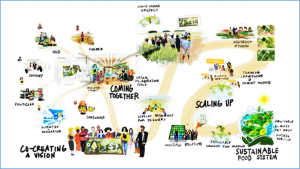
Mid this year, a gathering took place in Quebec, Canada, where global leaders, agricultural experts, farmers and farmer organizations, and biodiversity advocates convened to accelerate the transition from biodiversity commitments to tangible actions. Co-organized by University Laval, the Ministry of International Relations and La Francophonie (MRIF) of Quebec, the Food and Agriculture Organization of the United Nations (FAO),