


News & Events
In 2006, the Abuja Fertilizer Declaration was created to bring attention to soil fertility and crop productivity across Africa for food self-sufficiency. The outcome was a recommendation for the increase of fertilizer use from the current practice for Sub-Saharan Africa (SSA) to achieve food sufficiency and improve soil fertility status.
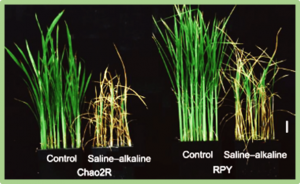
With the widespread use of the rice direct seeding cultivation model, improving the tolerance of rice varieties to salinity-alkalinity at the germination stage has become increasingly important. However, as previous studies have concentrated on neutral salt stress, understanding of alkalinity tolerance is still in its infancy, and the genetic resource data is scarce. Here, we used a natural population composed of 295 japonica rice varieties and a recombinant inbred population including 189 lines derived from Caidao (alkali-sensitive)
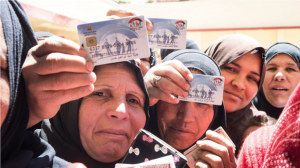
In many low- and middle-income countries, social protection programs such as cash transfers are seen as essential tools for alleviating poverty. Egypt’s Takaful program, launched in 2015, is a flagship example, targeting poor households with monthly cash transfers to improve their well-being. While cash transfers are increasingly popular and being scaled up globally, their effectiveness is often debated—especially when it comes to their short-, medium,- and long-term impacts.
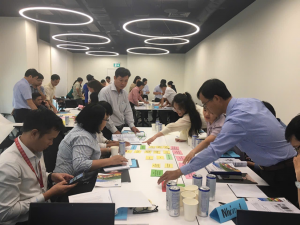
As part of the Zero Hunger National Action Program, led by the Department of Cooperatives and Rural Development (DCRD) under the Vietnam’s Ministry of Agriculture and Rural Development (MARD), DCRD-MARD collaborated with researchers from the Alliance of Bioversity International and CIAT-Asia under CGIAR Initiative on Asian Mega-Deltas (AMD) and CGIAR Research Initiative on Sustainable Healthy Diets through Food Systems Transformation (SHiFT) to co-design the guidelines and training materials.
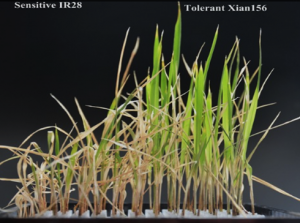
Salinity, as one of the most challenging environmental factors restraining crop growth and yield, poses a severe threat to global food security. To address the rising food demand, it is urgent to develop crop varieties with enhanced yield and greater salt tolerance by delving into genes associated with salt tolerance and high-yield traits. MiR396b/GRF6 module has previously been demonstrated to increase rice yield by shaping the inflorescence architecture. In this study, we revealed that miR396b/GRF6 module can significantly improve salt tolerance of rice.
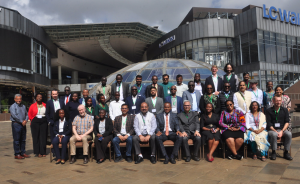
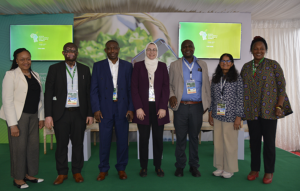
The event, organized by the International Crops Research Institute for the Semi-Arid Tropics (ICRISAT), in collaboration with the Kenya Agricultural and Livestock Research Organization (KALRO) under the aegis of CGIAR initiative on digital innovation, brought together a diverse group—including government representatives, NGOs, private companies, and farmer collectives—to explore how digital agriculture can revolutionize the region's farming practices.
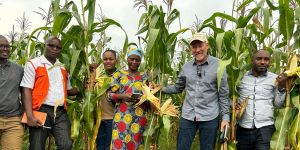
Lack of quality seeds and difficulties getting essential agricultural inputs have been significant challenges for farmers across Burundi. The IITA–CGIAR led AID-I GLR project – known as the Kugwiza Project in Burundi – is addressing this critical need by not only equipping farmers with the knowledge to acquire high-quality seeds but also forging strong connections between farmers and local input suppliers so that quality seeds are available to farmers. Consistent access to high-quality seeds and related inputs improves both productivity and profitability.
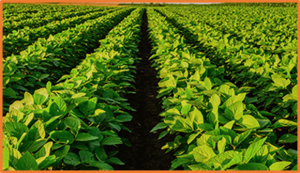
Phenotypic plasticity is characteristic of organisms that undergo phenotypic changes in response to environmental fluctuations. This phenomenon is pivotal in evolutionary processes and the emergence of new traits. Isoflavones, significant secondary metabolites found in soybeans, have garnered considerable attention owing to their beneficial physiological effects on human health. The variation in isoflavone content among different soybean varieties is influenced by diverse environmental factors, thereby influencing the evaluation of high and low isoflavone varieties.
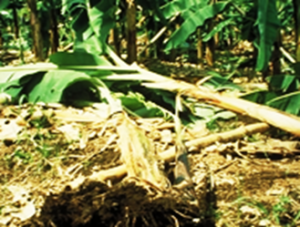
In Kenya, potatoes (Solanum tuberosum), is the second most important staple food crop after maize, and a cornerstone of global food security. It is under threat from root-knot nematodes (Meloidogyne spp.), microscopic soil-borne pests, which can severely impact potato yields. This compounds food security in a region where potatoes provide sustenance and livelihoods for millions of people. To address this, a groundbreaking study offers hope, in the form of a biodegradable innovation—banana fibre paper.
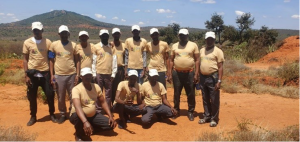
From 30 September to 5 October 2024, twelve Community Rangeland Health Workers (CRHWs) from Ethiopia’s Somali region (Moyale and Filtu districts) and Borana Zone (Moyale and Miyo districts) participated in a training program to equip them with the knowledge to promote rangeland health, prevent invasive species, and manage natural resources sustainably. The training covered rangeland health monitoring, invasive species identification and management, nursery establishment and the operational approach of One Health Units (OHUs).
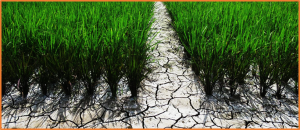
Drought is a major environmental stress limiting crop yields worldwide. Upland rice (Oryza sativa) has evolved complex genetic mechanisms for adaptative growth under drought stress. However, few genetic variants that mediate drought resistance in upland rice have been identified, and little is known about the evolution of this trait during rice domestication.
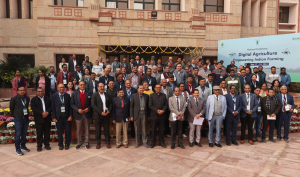
The conference, held from 17 to 18 December 2024, brought together a vibrant community of thought leaders, practitioners, policymakers, researchers, and industry stakeholders focused on charting the future course of digital agriculture in India by leveraging advancements in rural digital infrastructure. Supported by the CGIAR Initiative on Digital Innovation, the conference welcomed approximately 120 participants representing over 40 institutes spanning research, academia, and the private and public sectors.