


News & Events
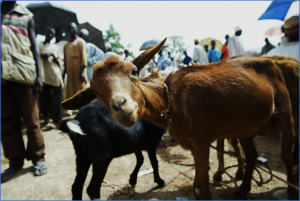
Nigeria boasts one of the largest livestock populations in Africa, significantly contributing to its agricultural gross domestic product. However, the crucial pastoral production system which encompasses millions of pastoralists faces significant challenges due to climate change. Rising temperatures, erratic rainfall, desertification, and extreme weather events are threatening livelihoods and food security.
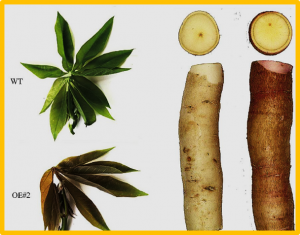
MeFtsZ2-1 is a key gene for plant plastid division, but the mechanism by which MeFtsZ2-1 affects pigment accumulation in cassava (Manihot esculenta Crantz) through plastids remains unclear. We found that MeFtsZ2-1 overexpression in cassava (OE) exhibited darker colors of leaves, with increased levels of anthocyanins and carotenoids. Further observation via Transmission Electron Microscopy (TEM) revealed no apparent defects in chloroplast structure but an increase in the number of plastoglobule in OE leaves.

Five years ago on 31 December 2019, WHO’s Country Office in China picked up a media statement by the Wuhan Municipal Health Commission from their website on cases of ‘viral pneumonia’ in Wuhan, China. In the weeks, months and years that unfolded after that, COVID-19 came to shape our lives and our world.
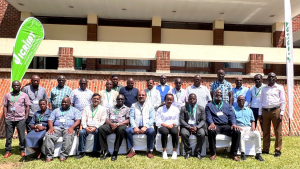
A two-day Stakeholders’ Workshop on Sustainable Transitioning of Farming Systems, held on 12-13 December 2024 at the Sunbird Capital Hotel in Lilongwe, brought together key agricultural stakeholders, researchers, policymakers, and development partners to explore solutions to enhance the resilience and sustainability of Malawi’s mixed farming systems.
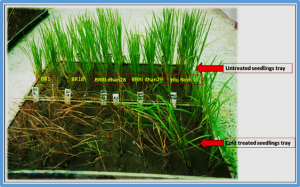
Cold stress limits rice (Oryza sativa L.) production in cooler climates. This study uncovers how abscisic acid (ABA) signaling enhances cold tolerance in the rice variety Zhonghua 11 (ZH11) compared to the cold-sensitive Kasalath. Under cold stress, ZH11 rapidly accumulates ABA through efficient regulation of key genes. The transcription factor OsWRKY71ZH11 represses the ABA catabolism gene OsABA8ox1 during early stress,
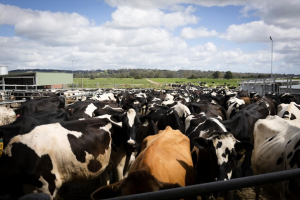
Amid a wave of reported avian influenza infections of cattle and other mammals, the Food and Agriculture Organization of the United Nations (FAO) has released new guidelines advising its Members how to implement effective surveillance programmes for early detection of influenza in cattle. Since its emergence over two decades ago, the highly pathogenic avian influenza (HPAI) H5N1 virus has evolved into various clades.
The benchmark for world food commodity prices declined in December compared to the previous month, led down by a drop in international sugar quotations, the Food and Agriculture Organization of the United Nations (FAO) reported Friday. The FAO Food Price Index, which tracks monthly changes in the international prices of a set of globally-traded food commodities, averaged 127.0 points in December, down 0.5 percent from November and up 6.7 percent from December 2023.
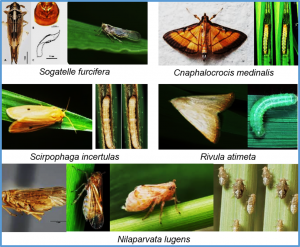
Three-line hybrid rice is produced by crossing male sterile (A line) rice with a fertility-restorer (R line). Fertile lines (B lines) are also required to maintain A line seed for breeding programs. We used a range of hybrids and their parental lines to assess the frequency and nature of heterosis for resistance to the whitebacked planthopper (Sogatella furcifera), brown planthopper (Nilaparvata lugens) and yellow stemborer (Scirpophaga incertulas). Heterosis is defined as trait improvement above the average of the parental lines as a result of outbreeding.
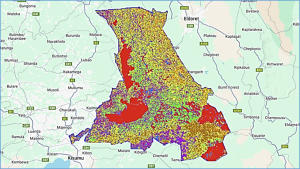
Crop mapping—identifying what farmers are growing on their fields—is essential to agricultural and land use planning and management. It is used to generate yield estimates and crop acreage statistics, predict food prices and assess damages from disasters and also to evaluate ecosystem health—all functions essential for agricultural export nations such as Kenya. In a recent study, we utilized time-series Sentinel-2 satellite imagery and advanced machine learning techniques to map key crop types and ecosystems in Nandi County in western Kenya.
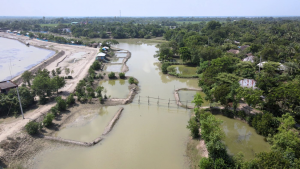
Despite significant progress in food production and human development, Bangladesh continues to face persisting inequalities, which are exacerbated by challenges related to natural resources sustainability, including elite capture of common pool resources. In the southern coastal deltaic regions of Bangladesh, freshwater canals are a lifeline to multiple food systems livelihoods, but these resources are mired in unequal conflicts and contestations,
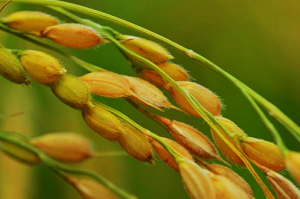
CRISPR-Cas9 genome editing systems have revolutionized plant gene functional studies by enabling the targeted introduction of insertion-deletions (INDELs) via the nonhomologous end-joining (NHEJ) pathway. Frameshift-inducing INDELs can introduce a premature termination codon and, in other instances, can lead to the appearance of new proteins. Here, we found that mutations in the rice jasmonate (JA) signaling gene OsJAZ10 by CRISPR-Cas9-based genome editing did not affect canonical JA signaling.
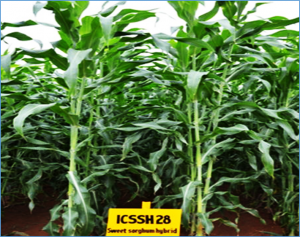
As fuel prices climb and climate goals intensify, the world needs fresh solutions. The latest contender is sweet sorghum, a resilient, high-sugar-content crop poised to power up the biofuel industry without draining food supplies. With its unique ability to grow on degraded soils, withstand drought conditions, and produce both bioethanol from stalk and grain and electricity from the crashed bagasse, sweet sorghum is capturing global attention as a cleaner, greener energy source.