


News & Events
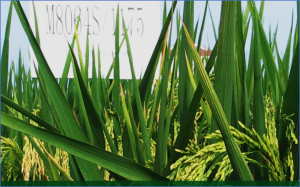
Rice, while a staple food for half of the world’s population, is also a significant contributor to greenhouse gas (GHG) emissions, primarily methane and nitrous oxide. With rice cultivation accounting for nearly 48% of all GHG emissions from croplands, solutions are urgently needed to address this global environmental challenge. A comprehensive study highlights hybrid rice enhanced by breeding and agronomic innovations as a promising avenue to reduce emissions while ensuring food security.
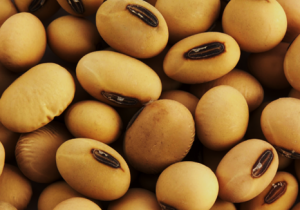
Seeds are complex structures composed of three regions, embryo, endosperm, and seed coat, with each further divided into subregions that consist of tissues, cell layers, and cell types. Although the seed is well characterized anatomically, much less is known about the genetic circuitry that dictates its spatial complexity. To address this issue, we profiled mRNAs from anatomically distinct seed subregions at several developmental stages. Analyses of these profiles showed that all subregions express similar diverse gene numbers and that the small gene numbers expressed subregion specifically provide information about the biological processes that occur in these seed compartments.
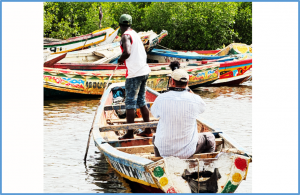
Behind the newspaper headlines and the data on migration flows are countless ordinary people who envision a bright future for their families. Wherever their journeys take them, each of their stories is unique. Ousmane and Adama are a couple from rural Senegal who dared to dream of a better future abroad – and, with IFAD’s support, ended up finding it at home. Ousmane, a fisherman from Kafountine in Senegal, boarded a small boat along with 80 others in 2023.
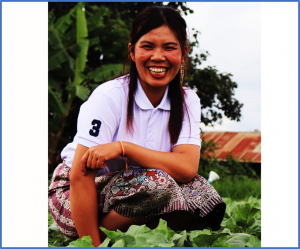
In a changing climate, many small-scale farmers can no longer depend on old ways of farming to produce enough food for their families and earn a good income. But by using climate-smart irrigation and sustainable farming techniques, rural women around the world are adapting to the new normal. Meet three women whose sustainable farms are reaping rewards beyond their previous imagination. Khampan’s village in north-eastern Lao PDR is famous for its vibrant, flavourful spring onions.
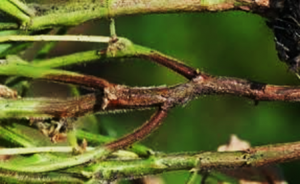
Host plants and various fungicides inhibit plant pathogens by inducing the release of excessive reactive oxygen species (ROS) and causing DNA damage, either directly or indirectly leading to cell death. The mechanisms by which the oomycete Phytophthora sojae manages ROS stress resulting from plant immune responses and fungicides remains unclear. This study elucidates the role of histone acetylation in ROS-induced DNA damage responses (DDR) to adapt to stress.
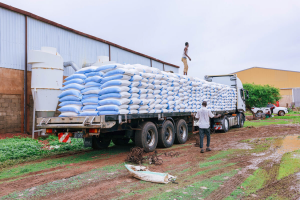
Urgent action, in particular immediate and unimpeded humanitarian access, is required to address the widening famine in Sudan, where almost 25 million people face acute food insecurity, the Deputy Director-General of the Food and Agriculture Organization of the United Nations (FAO), Beth Bechdol, told a UN Security Council meeting in New York.
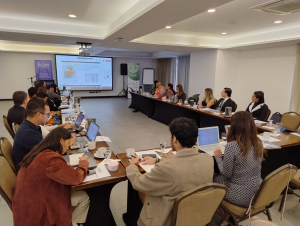
While previously well-suited for farming, this region increasingly sees high temperatures and erratic rainfall, and it is now part of what is known as the Central American Dry Corridor. Here, droughts and long dry spells are challenging farmers’ traditional practices. Some are forced to migrate to cities or neighboring countries to find work. Others might be pushed to turn toward more illicit activities. At the same time, the increasing competition over water and other natural resources is causing tensions and can spur conflict within communities.
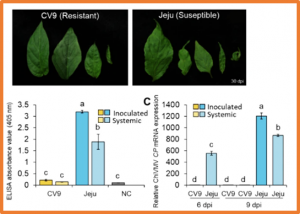
Chilli veinal mottle virus (ChiVMV) is a widespread pathogen affecting the production of peppers (Capsicum annuum L.) in Asia and Africa. Few loci conferring resistance to ChiVMV have been identified, severely limiting the development of resistant cultivars. To identify ChiVMV resistance genes, we constructed an F2:3 segregating population derived from a cross between the ChiVMV-resistant cultivar ‘CV9’ and the susceptible cultivar ‘Jeju’.
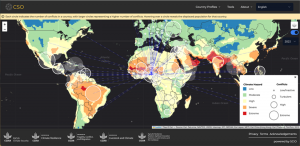
In 2023, the Climate Security Observatory (CSO) launched its first public version, aiming to bridge the gap between climate science and resilient peace. This open-source, online platform was created in partnership with Scio Systems, based on user-centric design principles to offer policymakers, researchers, and practitioners working at the intersection of climate, peace, and security a set of tools and analyses to support decision-making.
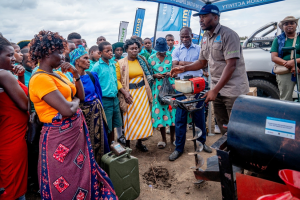
As part of the CGIAR Initiative on Agroecology, the Feed the Future Zimbabwe Mechanization and Extension activity participated in the 2024 Agroecology Fairs held in Murewa and Mbire districts on September 25 and October 17, respectively. The events provided an invaluable platform to collaborate with the initiative and showcase different scaling pathways for mechanization within the context of sustainable, efficient farming.
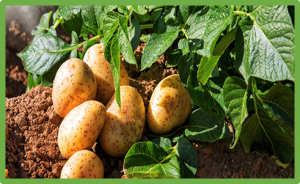
Potato is one of the four staple food crops in the world. It has a wide range of cultivation, high yield, and high nutritional value. Enhancing the photosynthesis of potato is particularly important as it leads to an increase in the potato yield. The light-harvesting pigment-binding protein complex is very important for plant photosynthesis. We identified 12 Stlhcb gene family members from the potato variety "Atlantic" using transcriptome sequencing and bioinformatics.
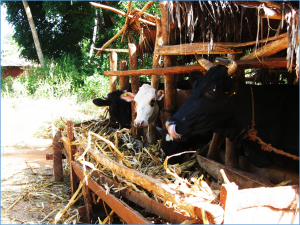
As part of efforts to enhance sustainable access to livestock inputs and services, the International Livestock Research Institute (ILRI) and partners in Tanzania are collaborating to equip youth and women with entrepreneurial skills and digital tool kits. The objective is to establish anchors for more widespread benefits across society. Under the CGIAR Initiative on Sustainable Animal Productivity (SAPLING), the institute, alongside the Tanzania Livestock Research Institute and Kuza Biashara,