


News & Events
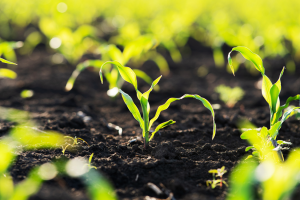
A study published in Entomologia Experimentalis et Applicata revealed that genetically modified (GM) maize MON810 expressing Cry1Ab toxin had no negative effects on the number of species, abundances, or species composition of surface-active springtails (Collembola) within the plots. The researchers studied the abundance and diversity of springtails in the temperate region of Central Europe (Western Slovakia) over three years in 10 plots with GM maize and 10 plots with near-isogenic non-Bt event DK440.
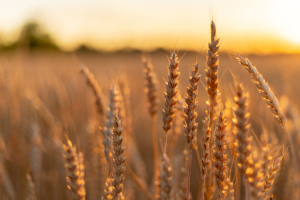
A study led by Prof. LIU Zhiyong from the Institute of Genetics and Developmental Biology (IGDB) at the Chinese Academy of Sciences identifies a wheat nucleotide-binding and leucine-rich repeat (NLR) gene pair that confers resistance against wheat powdery mildew disease. Wheat powdery mildew is a disease caused by Blumeria graminis f. sp. tritici (Bgt), which affects wheat crops worldwide resulting in yield losses of up to 40%.

Centuries of clonal propagation in cassava (Manihot esculenta) have reduced sexual recombination, leading to the accumulation of deleterious mutations. This has resulted in both inbreeding depression affecting yield and a significant decrease in reproductive performance, creating hurdles for contemporary breeding programs. Cassava is a member of the Euphorbiaceae family, including notable species such as rubber tree (Hevea brasiliensis) and poinsettia (Euphorbia pulcherrima). Expanding upon preliminary draft genomes, we annotated 7 long-read genome assemblies and aligned a total of 52 genomes, to analyze selection across the genome and the phylogeny.

Leaps by Bayer, Boston Consulting Group (BCG), and Ipsos released one of the largest surveys on global public perception towards four transformative technologies, namely artificial intelligence (AI) in medicine, cell and gene therapies, new genomic techniques (NGTs) in agriculture, and cultivated meat. The study surveyed over 13,000 participants in 13 countries, representing high, upper-middle, and lower-middle income countries worldwide.
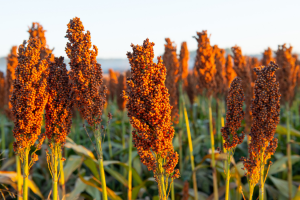
University of Nevada, Reno researcher Melinda Yerka and her team have unveiled 200 sorghum varieties that could be a game-changer for food, brewery, dairy feed, and biofuel industry. Results of preliminary experiments show that the sorghum varieties have drought tolerance with some varieties also exhibiting record levels of protein and digestible starch. In 2023, Yerka founded Yerka Seeds to complete the development and commercialization of the sorghum varieties.
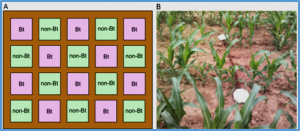
Springtails (Collembola) are an integral and beneficial component of soil communities. As part of a comprehensive study of the effects of the Bacillus thuringiensis-maize hybrid DKC4442YG (Bt event MON810) expressing Cry1Ab toxin on nontarget invertebrates, we studied abundance and diversity of surface-active springtails in the temperate region of central Europe (western Slovakia) over 3 years in 10 plots with Bt and 10 plots with the near-isogenic non-Bt event DK440.
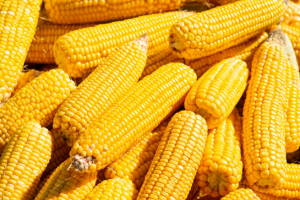
Mexico lifted GM corn restrictions to comply with the decision of the United States-Mexico-Canada Agreement (USMCA) dispute panel. The ruling revokes the decree of former President López Obrador protecting native corn species.The decision, published in the Federal Official Gazette and signed by Economy Minister Marcelo Ebrard, follows a complaint filed by the United States in 2023.

The United Kingdom's Advisory Committee on Releases to the Environment (ACRE) has approved the field trial of wheat with improved yields and stress tolerance using CHLORAD technology. The ACRE Advice to the Secretary of State under section 124 of the Environmental Protection Act 1990 said that it is satisfied that all appropriate measures have been taken to avoid adverse effects on human health and the environment from the proposed release. ACRE sees no reason for the release not to proceed.
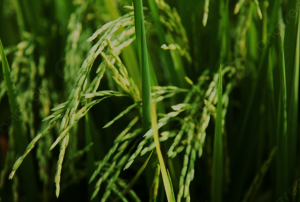
Controlled-release nitrogen fertilizers are gaining popularity in rice (Oryza stavia L.) cultivation for their ability to increase yields while reducing environmental impact. Grain filling is essential for both the yield and quality of rice. However, the impact of controlled-release nitrogen fertilizer on grain-filling characteristics, as well as the relationship between these characteristics and rice quality, remains unclear.
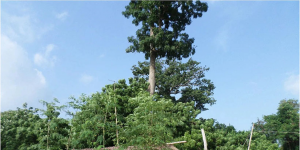
West Africa’s ecosystems are transforming, reshaping its vast savannas into forest islands or arable lands. This change, mainly driven by human activity, has profound implications for soil health and ecosystem sustainability. Researchers from Institut de L’Environnement Et de Recherches Agricoles, Burkina Faso; Crop Research Institute (CSIR), Ghana; Kwame Nkrumah University of Science and Technology (KNUST),

Recurring spikes and high volatility in international food and fertilizer prices (Figure 1) have triggered economic impacts around the world over the past two decades. These major shocks include the global food price crises of 2007-2008 and 2010-2011, the market disruptions of the COVID-19 pandemic, and the Russia-Ukraine war. In the months after Russia’s February 2022 invasion, real global food prices reached the highest levels on record in more than six decades, while key global fertilizer prices more than doubled over those of the previous year.
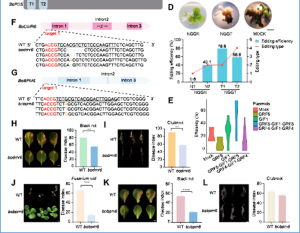
In recent years, the clustered regularly interspaced short palindromic repeats (CRISPR)/CRISPR-associated protein 9 (Cas9) technology has been extensively applied in major crops, including rice, wheat, and potato. This technology can be utilized to regulate or disrupt gene expression to develop high-quality, disease-resistant, or stress-tolerant crops (Gao, 2021). However, the current low regeneration efficiency of B. oleracea has led to a limited Agrobacterium-mediated transformation efficiency of less than 1.0%, consequently impacting CRISPR/Cas9 based gene editing efficiency