


News & Events
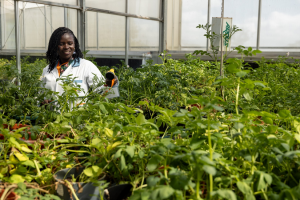
In agricultural science, success isn’t solely determined by technical prowess—it’s also reliant on effective organizational processes and strategies. Through ReOrganize, a Work Package of CGIAR Accelerated Breeding, process management working groups delved into how breeders do things. They didn’t focus on the technical intricacies but on the organization of breeding itself, monitoring of performance of breeding and the empowerment of CGIAR breeders and scientists in their mission to deliver the crop varieties that the world urgently needs.

Drylands are the backbone of global agriculture, supporting 44% of the world’s farming. Yet, they are under siege. Climate change, land degradation, and water scarcity are transforming these essential regions into barren landscapes, threatening the livelihoods of nearly three billion people. These lands, which already face some of the harshest conditions on Earth, are warming faster than other parts of the planet. Their decline imperils food security, biodiversity, and stability across vast swaths of the globe.
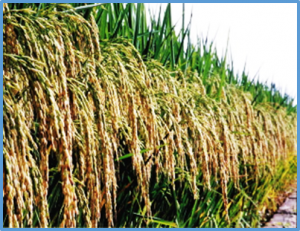
The two-line hybrid rice system, a cutting-edge hybrid rice breeding technology, has greatly boosted global food security. In thermo-sensitive genic male sterile (TGMS) lines, the critical sterility-inducing temperature (CSIT; the temperature at which TGMS lines change from male fertile to complete male sterile) acts as a key threshold. We recently uncovered that thermo-sensitive genic male sterility 5 (tms5), a sterile locus presenting in over 95% of TGMS lines

The Director-General of FAO Dr Qu Dongyu met with H.E. Abiy Ahmed, Prime Minister of Ethiopia in Addis Ababa on the margins of the 38th Summit of the African Union.The Prime Minister welcome the Director-General and expressed deep gratitude for the support that FAO has extended to the country throughout the years. He expressed appreciation for the technical assistance which has pivoted Ethiopia's food production particularly wheat production in a positive trajectory.

Experts from Fraunhofer Institute for Molecular Biology and Applied Ecology and partners in Germany conducted a review to classify mechanisms of RNA interference (RNAi) effects induced by short interfering RNA from different sources in plants and to identify technologies that can be used to detect these effects. The review paper is published in the Frontiers in Plant Science.
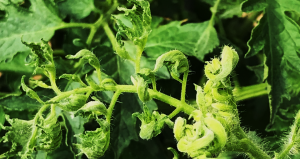
Tomato leaf curl New Delhi virus (ToLCNDV), a begomovirus, that causes severe leaf curling, stunting, and reduced yield in tomato plants is consistently threatening its production worldwide. CRISPR/Cas9-mediated genome editing has shown immense potential in developing disease-resistant crops. This study successfully focuses on designing a precise and efficient strategy for in planta defence against ToLCNDV

Artificial intelligence (AI) is being applied to gene editing to create more precise and effective tools, similar to its impact on drug development. While CRISPR-Cas9 revolutionized the field, off-target effects and genomic rearrangements remain a concern, especially for in vivo therapies. Other gene editing technologies like ZFNs and TALENs also face challenges, highlighting the need for advancements that AI is now poised to address. An article in Genetic Engineering and Biotechnology News tackles some advances in gene editing involving AI.
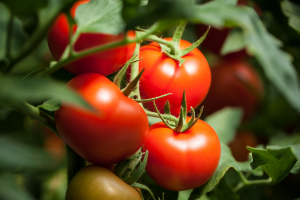
A study published in the Journal of Phytopathology demonstrates the efficacy of the CRISPR-Cas9 system in enhancing the resistance of tomato plants against tomato leaf curl New Delhi virus (ToLCNDV). ToLCNDV is a highly destructive plant virus that poses a significant threat to tomato plant production worldwide, particularly in Asia and the Mediterranean region.
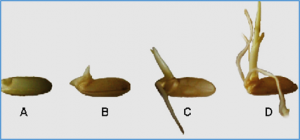
Submergence stress is a major obstacle limiting the application of direct seeding in rice cultivation. Rapid bud and root growth helps plants establish a stronger growth base and improve their submergence tolerance. Therefore, mining genes for bud length (BL) and root length (RL) helps in the development of varieties that are adaptable to submergence and improve seedling emergence and yield of direct-seeded rice
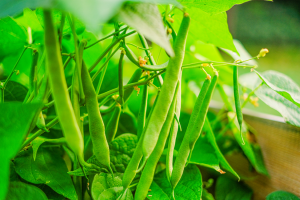
A team of researchers from the University of Cordoba in Spain used CRISPR gene editing technology to study the complexities of nitrogen metabolism in beans, revealing promising insights that could help enhance agricultural sustainability. Beans hold a unique position in global agriculture, not just as a major source of protein, but also because of their ability to fix atmospheric nitrogen into the soil.

Researchers from the Biotechnology Research Institute of the Chinese Academy of Agricultural Sciences (CAAS), in collaboration with Anhui Agricultural University and South China Agricultural University, have developed a gene-editing technique to reduce corn plant height, enabling the creation of compact, high-density varieties resistant to lodging.
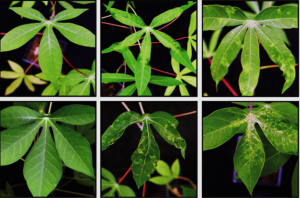
Cassava is an important root crop that is produced by smallholder farmers across Sub-Saharan Africa. Cassava mosaic disease (CMD), which is caused by a group of cassava mosaic begomoviruses (CMBs), is one of the most devastating diseases of cassava. A previous study showed that SEGS-1 (sequences enhancing geminivirus symptoms), which occur both in the cassava genome and as episomes during CMD, can increase CMD disease severity and overcome host resistance. In this report, we examined the effects of exogenously applied SEGS-1 on the incidence of CMB infection, symptom severity, and viral DNA copy number in five cassava cultivars that ranged from highly susceptible to highly resistant to CMD.