


Gustatory sensing by ovipositor drives maternal avoidance of hesperidin to benefit the offspring in a major agricultural fly pest
Bao Dong, Yuanyuan Peng, Ruohan Kou, Hongfei Li, Fu Cao, Xinyu Lan, Jinjun Wang, and Hongbo Jiang
PNAS; March 17 2026; 123 (12) e2526937123; https://doi.org/10.1073/pnas.2526937123
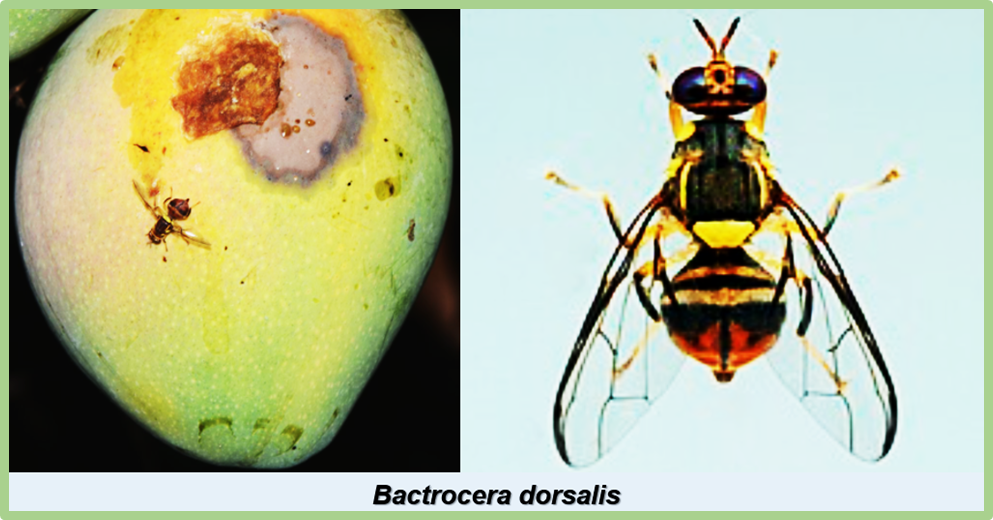
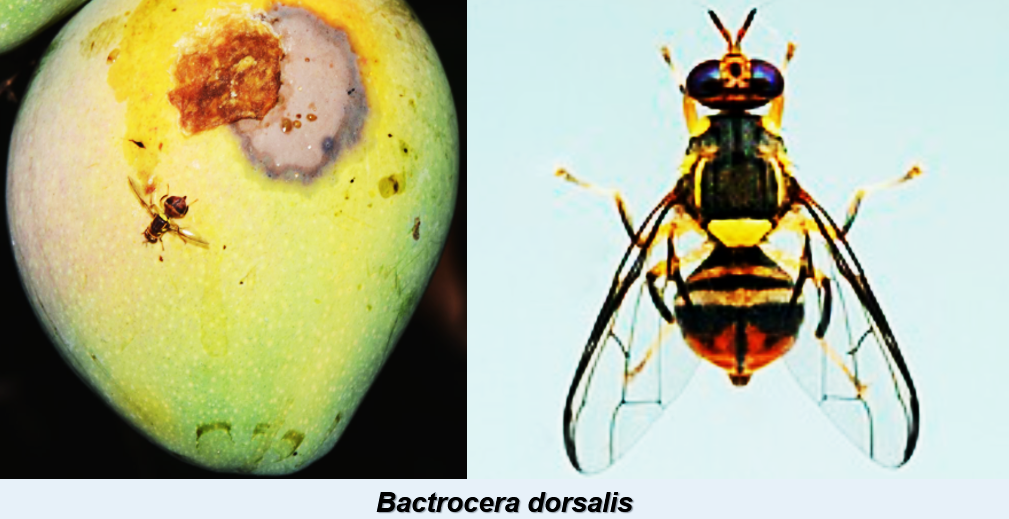 Figure: Mango Bactrocera dorsalis
Significance
Females of many insects choose egg-laying sites that balance their own preferences with the needs of their offspring. Oriental fruit fly females paradoxically prefer unripe mangoes, which are less nutritious than ripe fruits, and the basis of this behavior remains unclear. We show that this choice is shaped by a single plant compound, the flavonoid hesperidin, which accumulates as fruits ripen and directly harms developing larvae. Females detect hesperidin through a gustatory receptor on the ovipositor, and this detection drives their avoidance of laying eggs in hesperidin-rich ripe fruits. These findings reveal an unexpected role for ovipositor sensors in maternal oviposition decision-making and suggest unique ways to predict and manipulate oviposition of insects through fruit chemistry.
Abstract
Females of the oriental fruit fly (Bactrocera dorsalis) disproportionately oviposit in unripe fruits, despite their lower nutritional value compared to ripe fruits, but the sensory cues driving such counterintuitive site selection have not been determined. Here, using an oriental fruit fly–mango interaction system, we identified a specific flavonoid compound, hesperidin, as a major avoidance cue driving oviposition site selection in this species. Hesperidin accumulates as mango fruits ripen, and high concentrations suppress both larval growth and adult emergence. This indicates that higher levels of hesperidin exert a direct harmful effect on B. dorsalis larvae within ripe fruits. Interestingly, we found that B. dorsalis females perceive hesperidin via gustatory sensors on the ovipositor. The BdorGr28b gene is strongly expressed in the ovipositor, and we showed that the corresponding protein is the major hesperidin receptor. These results demonstrate that gustatory sensing via the ovipositor drives maternal avoidance of hesperidin to benefit the offspring in B. dorsalis. Our study provides insight into oviposition site selection in this species and the broader functional repertoire of insect gustation.
See https://www.pnas.org/doi/10.1073/pnas.2526937123
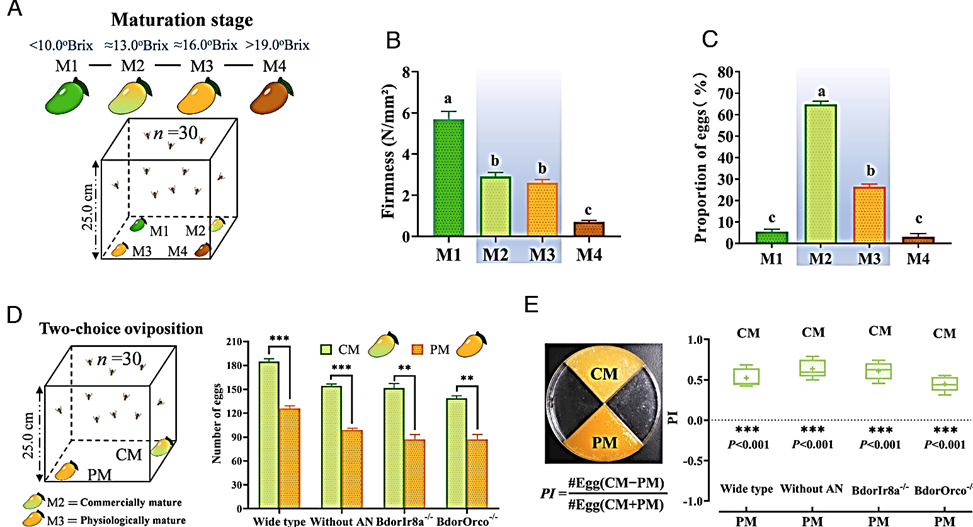
Figure 1: Oviposition preference of B. dorsalis on mango fruits at different maturity levels. (A) Experimental setup for oviposition preference tests using fruits at four stages of maturity (M1–M4) (n = 30). (B) Firmness measurements of fruits at each maturity stage. (C) Oviposition ratio of B. dorsalis on fruits at each maturity stage. (D) Two-choice oviposition assays comparing CM and PM fruits with wild-type (WT) flies, WT + antennal ablation, BdorOrco–/– mutants, and BdorIr8a–/– mutants (n = 30). (E) Two-choice oviposition assays using agar-based mango puree plates prepared from CM and PM fruits, with the same four categories of test insects (n = 8). The preference index (PI) calculation method is shown on the left. Firmness and oviposition ratios (B and C) were analyzed by one-way ANOVA, with significant differences (*P < 0.05) denoted by different lowercase letters (a, b, c). Oviposition frequency and PI (D and E) were analyzed using an independent-samples t test and one-sample t test, respectively.
Views: 133