


News & Events
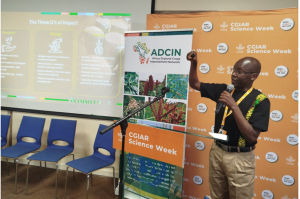
The “Delivering Resilient Drylands” session, held on April 10 during the CGIAR Science and Innovation Week in Nairobi, showcased research and strong collaborative leadership, with CIMMYT’s Dryland Crops Program (DCP) and the Africa Dryland Crops Improvement Network (ADCIN) at the forefront. The session featured insightful presentations and a dynamic panel that reinforced the power of partnerships across CGIAR and NARES systems.
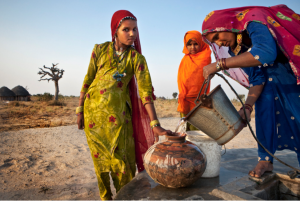
Research shows that women play pivotal roles in farming—across value chains, and in food systems as a whole. With harmful effects of climate change, conflict, forced migration, and other problems on the rise, many women around the world find themselves in increasingly fragile settings—creating new challenges in efforts to achieve gender equity and empowerment in food systems.
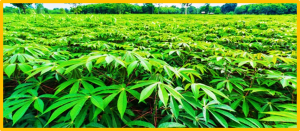
Nitrogen deficiency is a key constraint on crop yield. Cassava, the world's sixth-largest food crop and a crucial source of feed and industrial materials, can thrive in marginal soils, yet its yield is still significantly affected by limited nitrogen availability. Investigating cassava's response mechanisms to nitrogen scarcity is therefore essential for advancing molecular breeding and identifying nitrogen-efficient varieties.
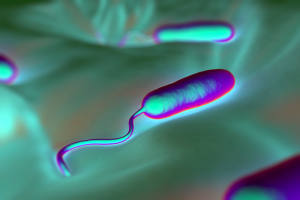
Plants detect bacterial attack using specialized receptors that trigger defensive responses upon detection of a special part of the bacterial flagellin. The University of Oxford researchers found that pathogenic bacteria like Pseudomonas syringae produce glycosyrin, a unique molecule that blocks the plant's sugar-removing enzymes. Since the bacterial flagellin is covered with sugar, the glycosyrin prevents exposure of the bacteria's flagellin fragments. This makes the bacteria undetected by the plant's immune surveillance.
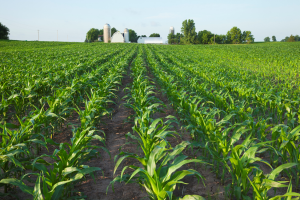
A study from the University of Illinois Urbana-Champaign collected multi-year, multi-site, field-scale, and whole in-season datasets to describe soil fluxes of greenhouse gas (GHG). The datasets can produce mitigation recommendations and also refine future climate models. The researchers took samples of nitrous oxide and carbon dioxide emissions from commercial corn and soybean fields over multiple years
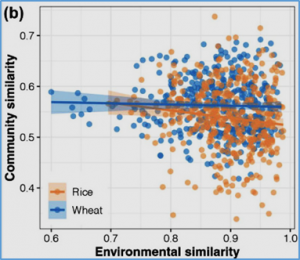
The results revealed a biphasic pattern in alpha diversity (Chao1 and Shannon) of soil microbial communities with increasing straw return duration, characterized by an initial increase followed by a subsequent decrease. Specifically, SR9 in the rice group exhibited the highest Chao1 and Shannon values, while SR3 in the wheat group showed the highest values. PCoA indicated significant shifts in microbial communities due to straw return, particularly in the wheat group compared to NR.
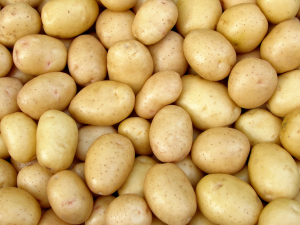
Institute for Plant Breeding Research, in collaboration with researchers from Wageningen University and Research conducted a study on the genetic basis of the European potato. The researchers selected 10 heritage potato varieties, some of which were already being cultivated in the 18th century. According to Ronald Hutten, the curator of the Potato Pedigree Database, these varieties represent the ‘Founding Fathers' of modern potatoes and date from the first phase of European breeding programs.
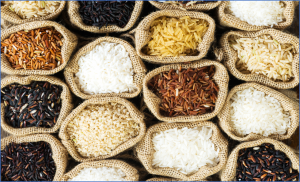
A study conducted at the Center for Excellence in Molecular Plant Sciences of the Chinese Academy of Sciences (CAS) has constructed an unprecedented pangenome map of wild and cultivated rice. The study also decoded the genetic architecture and diversity of rice. Led by Prof. HAN Bin's team, the study offers a powerful resource for breeding and agricultural innovation, and shows the evolutionary and domestication history of rice.
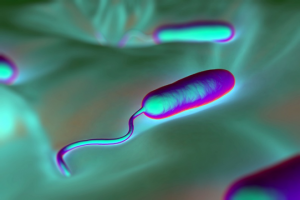
The extracellular space (apoplast) in plants is a key battleground during microbial infections. To avoid recognition, the bacterial model phytopathogen Pseudomonas syringae pv. tomato DC3000 produces glycosyrin. Glycosyrin inhibits the plant-secreted β-galactosidase BGAL1, which would otherwise initiate the release of immunogenic peptides from bacterial flagellin.
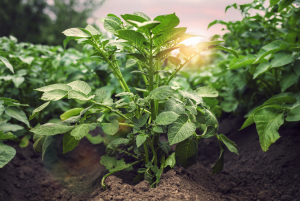
Swedish University of Agricultural Sciences researchers reported the late blight field resistance in potatoes (Solanum tuberosum L.) carrying resistance genes from a wild relative, American black nightshade (Solanum americanum). Their findings are published in GM Crops & Food. Potato is one of the world's most important crops, but potato fields can be severely damaged by late blight. It is caused by the pathogen Phytophthora infestans, which can cause economic concerns for potato growers
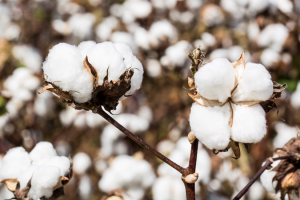
A policy paper from the Indian Council of Agricultural Research (ICAR) - Central Institute for Cotton Research (CICR) examined and provided policy imperatives on the trends and impact of Bt cotton adoption in India from 1996 to 2022. The data analyzed is based on the government cost of cultivation and trade data from the Food and Agriculture Organization Statistics (FAOSTAT).
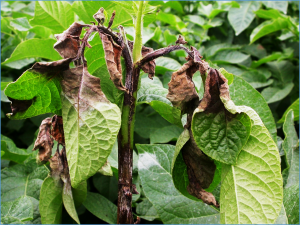
Potato (Solanum tuberosum L.) is an important global crop, but its production is severely impacted by late blight, caused by the pathogen Phytophthora infestans. The economic burden of this disease is significant, and current control strategies rely mainly on fungicides, which face increasing regulatory and environmental constraints. To address this challenge, potatoes with resistance genes from wild potato relatives offer a promising solution.