


News & Events
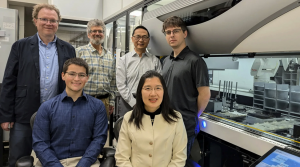
A team from the Center for Advanced Bioenergy and Bioproducts Innovation (CABBI) and partners used biofoundry to speed up genetic engineering in plants and use it to enhance oil production in plant cells. The study, published in The Plant Cell, is a breakthrough that reduces labor, time, and costs in plant bioengineering. Biofoundry is a laboratory that combines robotics, computer-aided design, and informatics to streamline the process of genetic engineering.

A research team led by Prof. Wout Boerjan at VIB-UGent used gene editing to allow precise modifications in poplar trees without leaving any traces of foreign DNA. This innovation could streamline the development of improved tree varieties while reducing regulatory hurdles. Integrating foreign DNA into the plant genome often encounters challenges in the approval process, especially for long-living species like poplar trees, which cannot be easily bred to remove genetic elements.

Clustered regularly interspaced short palindromic repeats (CRISPR)-CRISPR-associated nuclease (Cas) technologies facilitate routine genome engineering of one or a few genes at a time. However, large-scale CRISPR screens with guide RNA libraries remain challenging in plants. Here, we have developed a comprehensive all-in-one CRISPR toolbox for Cas9-based genome editing, cytosine base editing (CBE), adenine base editing (ABE),

A recent survey in the UK conducted by British Sugar reveals that 69% of UK adults strongly support gene editing to create a sustainable and resilient future for British farming. The survey also found that Gen Zs lead the call for gene editing to be used, with a staggering 80% supporting the technology. All age groups in the survey viewed sustainability as the leading motivator, with 44% citing green credentials as a key reason for backing gene editing.

Nanoparticle are being used to deliver gene editing tools because of their efficiency, ability to bypass species-specific barriers, and work across a wider range of crops. Some examples of these are gold nanoparticles, carbon nanotubes, and lipid-based nanoparticles. Gold nanoparticles (AuNPs) are popular because they are effective in living things and are easy to modify.

Doubled haploid (DH) technology using in vivo haploid induction has dramatically improved the efficiency of maize breeding programs worldwide. However, limitations from genome doubling create a bottleneck for DH line production. To overcome such limitations, spontaneous haploid genome doubling (SHGD) has gained prominence over the last decade, specifically in field corn materials. On the contrary, SHGD in sweet corn has been largely overlooked

Researchers from the University of Maryland, USA, developed a comprehensive all-in-one CRISPR toolbox that addresses the challenge of large-scale CRISPR screens in plants. Their study is published in The Plant Cell. The new CRISPR toolbox can be effectively used for cytosine base editing (CBE), adenine base editing (ABE), Cas12a-based genome editing and ABE, and CRISPR-Act3.0-based gene activation in both monocot (rice) and dicot (tomato) plants.

Researchers from Zheijang University and Northwest A&F University used gene editing to manipulate the light systemic signal HY5 and improve the fruit quality of tomatoes. The findings of the study are published in Advanced Science. Tomato fruit ripening involves major metabolic shifts influenced by environmental factors. Aside from photosynthesis, light also plays a critical role in regulating plant growth, development, and the quality of produce
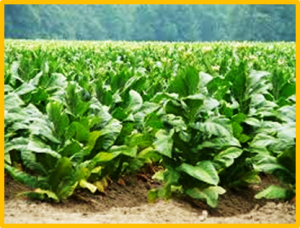
Metabolically engineered high-leaf oil plants have been developed to meet the increasing demand for plant oils. Oil production of these plants under controlled conditions is promising; however, their performance under field-like conditions with abiotic stresses remains uncertain. In this study, wild-type (WT) and high-leaf oil (HLO) transgenic tobacco (Nicotiana tabacum) plants were exposed to moderate and sustained water stress to mimic field conditions.
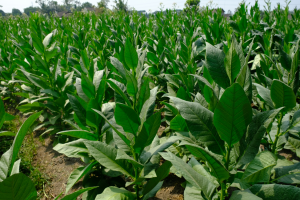
Experts from the Commonwealth Scientific and Industrial Research Organisation (CSIRO) in Australia investigated the effects of water stress on biomass and lipid accumulation in wild-type and high-leaf oil transgenic tobacco plants exposed to water stress. Their findings are published in Plant Physiology. High-leaf oil plants have been developed through molecular methods to address the need for more plant oils.
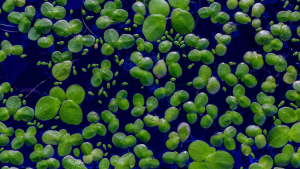
Duckweed is an aquatic plant that farms itself. It grows on wastewater, ponds, swamps, and even on puddles. Duckweed also has enormous potential as a soil enricher and fuel source. A study at Cold Spring Harbor Laboratory (CSHL) could help bring all that potential to life. CSHL Professor and Howard Hughes Medical Institute (HHMI) Investigator Rob Martienssen and Computational Analyst Evan Ernst started working with duckweed over 15 years ago.
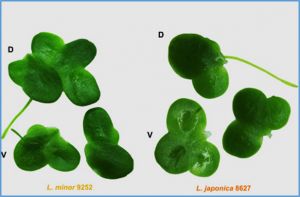
The Lemnaceae (duckweeds) are the world’s smallest but fastest-growing flowering plants. Prolific clonal propagation facilitates continuous micro-cropping for plant-based protein and starch production and holds tremendous promise for sequestration of atmospheric CO2. Here, we present chromosomal assemblies, annotations, and phylogenomic analysis of Lemna genomes that uncover candidate genes responsible for the unique metabolic and developmental traits of the family,