


News & Events
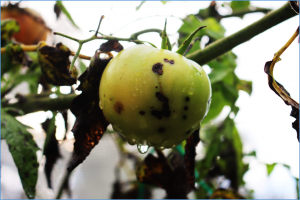
Tomatoes are a vital agricultural commodity in the US, representing a $1.9 billion annual crop grown across 330,000 acres. However, diseases like bacterial spot pose a major threat to this popular crop. These diseases can severely reduce yields and increase production costs, and their management is complicated by the genetic diversity, rapid evolution, and long-distance travel capabilities of the pathogens. Scientists and growers have been battling bacterial spot, caused by various forms of Xanthomonas bacteria, for over a century.
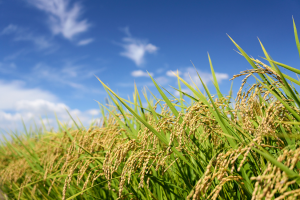
A new computational biology pipeline has successfully identified more than 13,000 groups of protein-coding genes conserved across grasses. This advancement provides researchers with a valuable resource for exploring gene function within these crucial plant species, which hold significant economic and ecological importance. The study identified 13,312 highly conserved "universal" groups of grass genes drawn from the genomic data of 16 fully sequenced grass species.

Advances in precision gene editing have enabled the rapid domestication of wild crop relatives, a process known as neo-domestication. During domestication, breeding rice for maximum productivity under optimal growth conditions reduced genetic diversity, eliminating variants for stress tolerance and grain nutrients. Wild rice varieties have rich genetic diversity, including variants for disease resistance, stress tolerance, and grain nutritional quality.
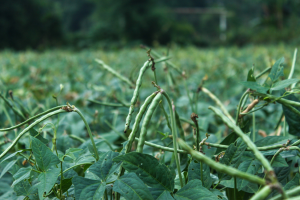
A study published in Pest Management Science found that the genetically engineered cowpea line CAP5, expressing a fusion of Cry1Ab-Vip3A and CP4-EPSPS genes, demonstrated strong resistance against major lepidopteran pests and high tolerance to glyphosate. The findings of the study demonstrate the potential of developing insect-resistant and herbicide-tolerant cowpea events.
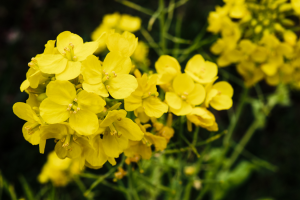
The two trait products, developed using Cibus' gene editing system called Rapid Trait Development System™ (RTDS®), enable targeted genetic changes without integrating recombinant DNA or foreign genetic material at any stage in the crop's development. USDA-APHIS confirmed the plants do not meet the definition of a “regulated article” under 7 CFR Part 340, which enables Cibus to proceed with product development without restrictions associated with regulated articles in the U.S.
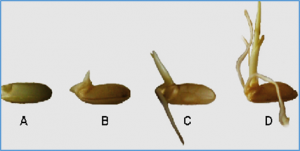
Submergence stress is a major obstacle limiting the application of direct seeding in rice cultivation. Rapid bud and root growth helps plants establish a stronger growth base and improve their submergence tolerance. Therefore, mining genes for bud length (BL) and root length (RL) helps in the development of varieties that are adaptable to submergence and improve seedling emergence and yield of direct-seeded rice.
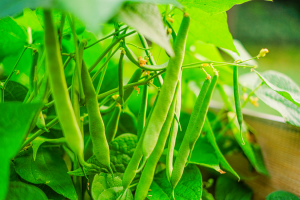
Beans hold a unique position in global agriculture, not just as a major source of protein, but also because of their ability to fix atmospheric nitrogen into the soil. In a groundbreaking study, the Molecular Physiology and Plant Biotechnology Group at the University of Cordoba studied the roles of two vital genes involved in the metabolism of purine nucleotides, focusing on the synthesis and recycling of adenine, an essential nitrogenous base integral to DNA and RNA.
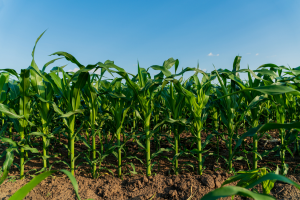
Researchers from the Biotechnology Research Institute of the Chinese Academy of Agricultural Sciences (CAAS), in collaboration with Anhui Agricultural University and South China Agricultural University, have developed a gene-editing technique to reduce corn plant height, enabling the creation of compact, high-density varieties resistant to lodging.
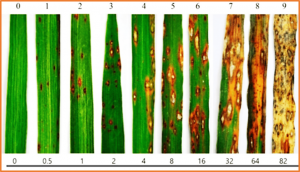
Rice (Oryza sativa L.) is an important food crop in China. Its growth and development are threatened by rice blast, which leads to huge grain losses in severe cases. Cultivating and deploying rice varieties that contain broad-spectrum resistance (R) genes is the most economical and effective strategy to prevent and control rice blast. In general, rice blast resistance genes code nucleotide-binding (NB), leucine-rich repeat (LRR) receptors (NLRs) that play a crucial role in the resistance to rice blast. Therefore, it is essential to clone NLR genes and elucidate the recognition and activation mechanisms between NLRs and effectors for rice disease resistance breeding.
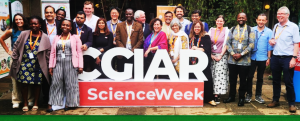
The inaugural CGIAR Science Week, held in Nairobi, Kenya, was a vibrant convergence of global research leaders and innovators aiming to reimagine the food system. One of the central themes was digital transformation, with the International Rice Research Institute (IRRI) offering substantial contributions to the discussions on data-driven agriculture, Artificial Intelligence (AI), and inclusion, aligning closely with the CGIAR’s 2025–2030 Research Portfolio. The CGIAR Digital Transformation Accelerator (DTA) is an initiative designed to accelerate the development of inclusive, AI-enabled, and data-driven digital solutions across food, land, and water systems.
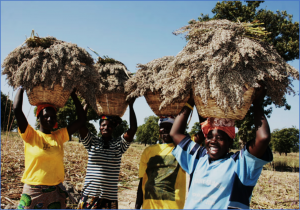
Millions of people across Africa are projected to face increased exposure to droughts, floods, and extreme heat. According to the State of the Climate in Africa 2023 report by the World Meteorological Organization, without adequate response measures, up to 118 million people living in extreme poverty (defined as living on less than US$1.90 per day) could be increasingly affected by these climate-related events by 2030.
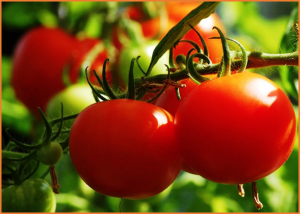
The functions of histone acetyltransferases (HATs) in the genetic control of crop traits and the underlying mechanisms are poorly understood. We studied the function of tomato HOOKLESS2 (SlHLS2), a member of the GCN5 family of HATs, through genetic, molecular and genomic approaches. Tomato hls2 mutants generated through CRISPR-cas9 gene editing show enhanced susceptibility to fungal infection, accelerated dark-induced senescence, grossly altered plant architecture, and loss of fertility accompanied by high levels of auxin accumulation.