


News & Events

ASCA has trained over 200 scientists, regulators, communication practitioners, and other stakeholders from various government agencies, private companies, and nonprofits in Asia since 2018. The program focuses on three key areas: agricultural biotechnology applications (genetic engineering and gene editing), policy environment, and science communication. International experts from these fields serve as resource speakers and facilitators of the discussions.
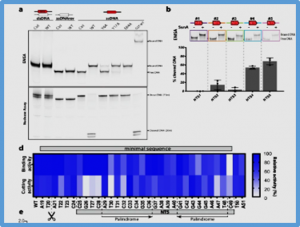
Site-specific endonucleases that exclusively cut single-stranded DNA have hitherto never been described and constitute a barrier to the development of ssDNA-based technologies. We identify and characterize one such family, from the GIY-YIG superfamily, of widely distributed site-specific single-stranded nucleases (Ssn) exhibiting unique ssDNA cleavage properties. By first comprehensively studying the Ssn homolog from Neisseria meningitidis,
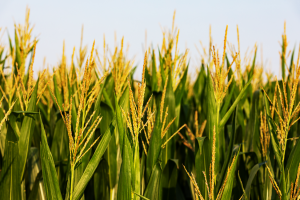
Maize is one of the top-produced crops globally, along with wheat and rice. With the advent of gene editing tools, new methods are being proposed to easily and rapidly breed new varieties. Transformation methods for the introduction of CRISPR-Cas9 constructs for gene editing into maize have been developed and utilized in several Western countries, but in South Korea, no local research institutes have reported on Hi-II A/B cultivars. Thus, PNU researchers established a maize transformation using the Hi-II A/B cultivar in South Korea.
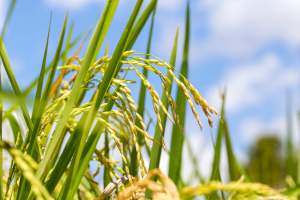
Researchers from Jiangsu University and partners found that editing the OsFAD2-1 gene in rice using CRISPR-Cas9 significantly increased the oleic acid content and reduced linoleic acid levels in rice bran oil. The findings of the study highlight the potential of gene editing in improving both the health value and processing quality of rice. Rice is a globally important food crop, and its bran oil is valued for its balanced fatty acid profile and health benefits.
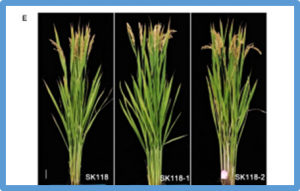
In summary, this study demonstrates the enormous potential of gene editing for crop qualityimprovement and validates the crucial function of the OsFAD2 gene in controlling fatty acid metabolisminrice. Future studies could examine how OsFAD2 interacts with other genes linked to fatty acid metabolismand how gene editing techniques could be used to further raise oleic acid levels.

A research team at the Institut National de la Recherche Scientifique (INRS) in Quebec, Canada, reported a new genetic tool based on a family of specific enzymes called Ssn, which enables targeted cuts to be induced exclusively in single-stranded DNA. Their findings, reported in Nature Communications, provide insights into a vital genetic mechanism that could revolutionize biotechnology applications in various fields.
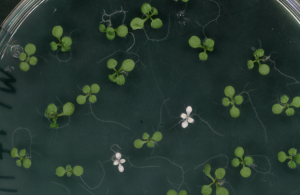
Steven Jacobsen, distinguished professor of molecular, cell, and developmental biology at UCLA, collaborated with CRISPR-Cas9 co-inventor Jennifer Doudna and Jill Banfield at UC Berkeley. Jacobsen engineered the tobacco rattle virus to carry ISYmu1, a compact CRISPR-like enzyme, to target specific DNA sequences in the model plant Arabidopsis thaliana. The genome changes can be passed on to future generations without the virus or any foreign DNA in the edited plant.
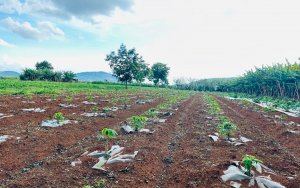
A cassava breeding project funded by Australia is being implemented in Vietnam to develop disease-resistant varieties that enhance yield potential and contribute to improving farmer livelihoods in Vietnam and its neighbors.Sponsored by the Australian Center for International Agriculture Research (ACIAR), the Australian government's specialist agricultural research for development agency, the 'Establishing sustainable solutions to cassava diseases in mainland Southeast Asia' project supports the development and commercialization of disease-resistant cassava varieties.
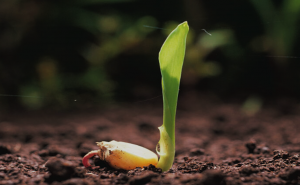
Seed dormancy (SD) and pre-harvest sprouting (PHS) affect the grain yield and quality of grain in cereal and hybrid seed production. Although the benefits of studying SD and seed germination (SG) during seed development are well established, research into the genetic variation and molecular regulation of SD, particularly during the transition from SD to SG, remains very limited. In this study, bulked segregant analysis (BSA) and linkage analysis were used to map the QTL for the maize vp16 mutant of PHS.

A study led by scientists from the University of Bristol demonstrated the potential of CRISPR to help discover the diversity of organisms present in a microbial community. The findings of the study, published in Royal Society Open Science, may improve understanding of a more productive soil and improved health. Microscopic organisms are essential to all ecosystems. However, identifying the full diversity of these microbes remains a major challenge,
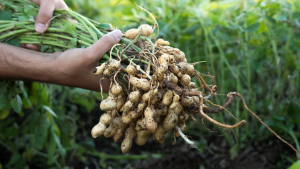
An international research team from Australia and China has identified the crucial structural variations that determine seed size and weight in peanuts. This discovery will lead to the development of higher-yielding crop varieties. Researchers from Murdoch University, Henan Agricultural University, Shanghai Jiao Tong University, and the Shandong Academy of Agricultural Sciences have assembled a pangenome of peanut that will serve as a fundamental resource for the genetic enhancement of legume crops
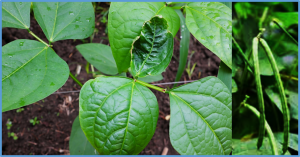
In this study, a Cry1Ab-Vip3A fusion gene, C1V3, was successfully introduced into the cowpea genome. Transgenic cowpea lines with resistance to broad-spectrum lepidopteran pests were obtained by an improved transformation method using glyphosate as selection. A promising line, CAP5, selected from 37 transgenic events, was characterized as a single T-DNA copy event with single insertion site at the Chr5 of cowpea genome.