


News & Events
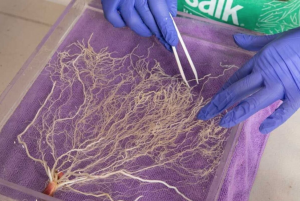
Researchers at the University of California, San Diego (UC San Diego) said that genetically enhanced crops with larger root systems can help remove carbon dioxide from the atmosphere. Their findings offer a scalable agricultural approach to carbon dioxide removal (CDR) and present a framework for assessing how emerging CDR technologies could be scaled in real-world conditions.
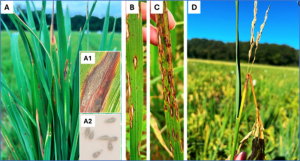
Rice blast, caused by Magnaporthe oryzae, is a major threat to global rice production, necessitating the development of resistant cultivars through genetic improvement. Breakthroughs in rice genomics, including the complete genome sequencing of japonica and indica subspecies and the availability of various sequence-based molecular markers, have greatly advanced the genetic analysis of blast resistance.

A new Joint Position Paper on NGT Traceability and Labeling in the EU was signed and released by 27 agri-food value chain partners on April 29, 2025. The joint position paper represents millions of farmers and thousands of agri-food businesses. The partners ask EU policymakers to support the Commission and Council proposal that allows freedom of choice for breeders, farmers, supply chain operators, and consumers in relation to the use of plants and food
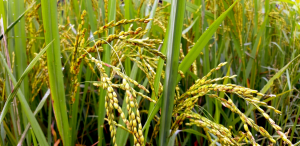
Hankyong National University scientists from South Korea investigated the role of rice genes and revealed their roles in abiotic stress tolerance. Their findings are published in Genes. The glyceraldehyde-3-phosphate dehydrogenase (GAPDH) enzyme plays a crucial role in glycolysis as well as in various physiological and stress response pathways. Thus, the researchers looked at the genes OsGAPDHC1 and OsGAPDHC6 in rice seedlings exposed to different stress conditions such as drought, salt, heat, and cold.
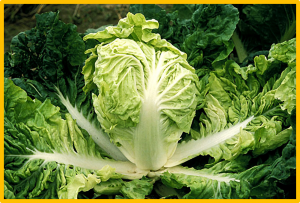
Trichomes negatively affect the quality of Chinese cabbage, a leafy vegetable crop in the family Brassicaceae. The short hair trait is caused by abnormal trichome development. In this study, the BraA07g025490.3C gene was identified as a candidate gene for the short hair trait in Chinese cabbage by BSA-seq and fine-mapping analyses. It was subsequently named BrGL2 because of its strong homology to AtGL2 (At1g79840)
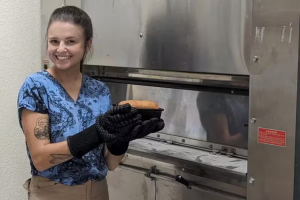
A team from the University of California, Davis (UC Davis) successfully deleted a cluster of genes in wheat responsible for producing gluten proteins that trigger immune responses. The findings of the study, published in Theoretical and Applied Genetics, mark a major step forward in celiac disease research. Wheat is a vital global food source, known for its gluten proteins that give bread and pasta their characteristic texture.
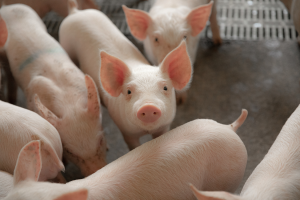
This landmark approval follows years of close collaboration of Genus with the FDA and is a significant step on the pathway to PRP commercialization in the U.S.. Genus continues to make progress with regulators in key U.S. export markets, including Mexico, Canada and Japan, as well as with other international regulators, including China. Brazil, Colombia and, more recently, the Dominican Republic have already issued positive determinations for PRP, meaning those countries will regulate the PRP the same as any other pigs.
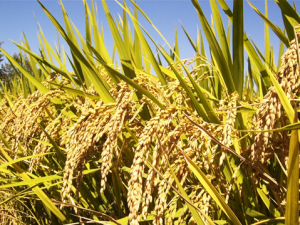
Background/Objectives: The glyceraldehyde-3-phosphate dehydrogenase (GAPDH) enzyme, encoded by OsGAPDHC6, plays a crucial role in glycolysis while participating in various physiological and stress response pathways. Methods: In this study, the expression levels of the OsGAPDHC1 and OsGAPDHC6 genes were investigated over time by treating various abiotic stresses (ABA, PEG, NaCl, heat, and cold) in rice seedlings
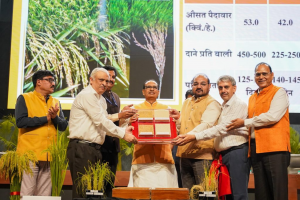
India's first genome-edited rice varieties, DRR Rice 100 (Kamala) and Pusa DST Rice 1, developed using genome editing technology based on CRISPR-Cas, were launched by Union Agriculture Minister Shri Shivraj Singh Chouhan at Bharat Ratna C. Subramaniam Auditorium, NASC Complex, New Delhi on May 4, 2025. With this release, India has become the first country in the world to develop genome-edited rice varieties.

ASCA has trained over 200 scientists, regulators, communication practitioners, and other stakeholders from various government agencies, private companies, and nonprofits in Asia since 2018. The program focuses on three key areas: agricultural biotechnology applications (genetic engineering and gene editing), policy environment, and science communication. International experts from these fields serve as resource speakers and facilitators of the discussions.

Modern grapevine (Vitis vinifera L.) breeding programs aim to create new varieties resistant to biotic and abiotic stresses, simultaneously. Developmental stages may affect many physiological processes in grapevine, especially berry composition. The shifts of phenological stages observed in the context of climate change challenge the selection of new varieties. In this paper, we evaluate how genotypes derived from a breeding program aimed at developing disease-resistant varieties may adapt to future climatic conditions
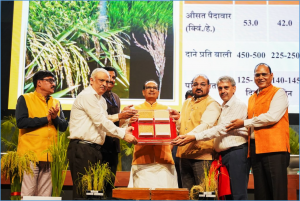
India's first genome-edited rice varieties, DRR Rice 100 (Kamala) and Pusa DST Rice 1, developed using genome editing technology based on CRISPR-Cas, were launched by Union Agriculture Minister Shri Shivraj Singh Chouhan at Bharat Ratna C. Subramaniam Auditorium, NASC Complex, New Delhi on May 4, 2025. With this release, India has become the first country in the world to develop genome-edited rice varieties.